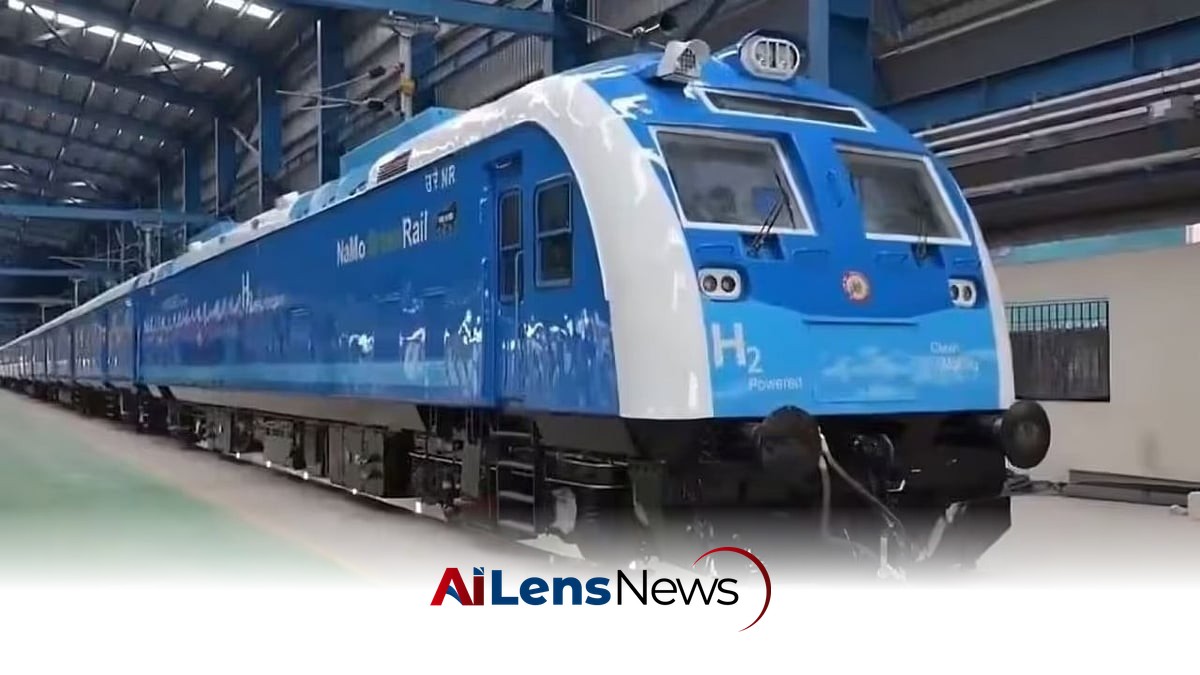


India's first hydrogen train marks a significant step towards sustainable rail transport, enhancing the nation's green initiatives.
Kuwait City, Kuwait Jul 16, 2026 ALN: Dubai: India is set to join a select group of countries operating hydrogen-powered passenger trains when Prime Minister Narendra Modi flags off the country’s first such service on Friday, marking a major milestone in Indian Railways’ transition to cleaner and more sustainable transportation.
The hydrogen fuel cell-powered train will begin operations on the 89-km Jind-Sonipat section in Haryana, making India one of only a handful of nations — including Germany, Japan, China, France, and the United States — to explore hydrogen technology for passenger rail services, Indian media reports said.
The launch represents the next phase of Indian Railways’ green transition after electrifying more than 99 percent of the country’s broad-gauge network. Officials see hydrogen-powered trains as an important solution for routes where conventional electrification may be less practical, while also supporting India’s National Green Hydrogen Mission and long-term net-zero ambitions.
Launch: July 17, 2026
Route: Jind-Sonipat, Haryana
Distance: 89 km
Coaches: 10
Capacity: Around 2,600 passengers
Top speed: 110 km/h
Power: Hydrogen fuel cells (3,200 hp)
Emission: Water vapor and heat only
Hydrogen storage: Nearly 3,000 kg at Jind
Future plan: Could expand to other routes, including heritage railways
Unlike diesel locomotives, hydrogen-powered trains emit only water vapor and heat during operation, significantly reducing carbon emissions while offering an environmentally friendly alternative for passenger transport.
India’s first hydrogen train is also notable for its size.
The 10-coach train, equipped with two hydrogen-powered driving cars and eight passenger coaches, can carry around 2,600 passengers and reach a top speed of 110 km/h. According to the Ministry of Railways, it is among the largest hydrogen-powered passenger trainsets developed globally.
Hydrogen stored in onboard cylinders is converted into electricity through Proton Exchange Membrane (PEM) fuel cells, which power the train’s traction motors. Unlike conventional electric trains, the system generates electricity onboard, eliminating the need for diesel fuel while producing virtually no harmful emissions.
The project extends beyond the train itself.
Indian Railways has established the country’s first integrated railway hydrogen ecosystem at Jind, where hydrogen is produced through electrolysis, compressed, stored, and supplied to the train through dedicated refueling infrastructure. The facility can store nearly 3,000 kg of hydrogen to support regular operations.
The Jind-Sonipat service has been selected as a pilot project to demonstrate the operational reliability, safety, and commercial viability of hydrogen-powered passenger services under regular operating conditions, according to the Railways. The Times of India reported that the experience gained is expected to support future deployment on other routes, including heritage railways such as the Kalka-Shimla line.
Given hydrogen’s highly flammable nature, safety has been a key focus of the project.
The train and refueling infrastructure are equipped with hydrogen leak detectors, flame, heat, and smoke sensors, continuous ventilation systems, and automatic shutdown mechanisms that isolate the hydrogen supply if abnormalities are detected. The project has also undergone independent safety assessment and complies with international standards as well as India’s Petroleum and Explosives Safety Organisation (PESO) requirements, according to the Ministry of Railways and The Times of India.
Globally, hydrogen-powered passenger rail remains at an early stage, with only a few countries operating commercial services or pilot projects.
For India, Friday’s launch is more than the introduction of a new train. It is a test of whether hydrogen can become a practical part of the country’s future transport network as Indian Railways looks beyond electrification towards cleaner, low-carbon mobility.
The implications of this development extend beyond just the operational capabilities of Indian Railways. The introduction of hydrogen trains could lead to a paradigm shift in the way India approaches its transportation challenges. With a growing population and increasing urbanization, the need for sustainable and efficient public transport solutions has never been more pressing. Hydrogen trains could provide a viable alternative to traditional diesel-powered locomotives, especially in regions where electrification may not be feasible due to geographical or financial constraints.
Moreover, this initiative aligns with global efforts to combat climate change and reduce carbon footprints. As countries around the world strive to meet their commitments under international agreements such as the Paris Agreement, the adoption of hydrogen technology in rail transport could serve as a model for other nations, particularly in the developing world, where infrastructure development is still in its nascent stages.
In addition to environmental benefits, the hydrogen train project could also stimulate economic growth through job creation in the green technology sector. As India invests in hydrogen production, storage, and distribution infrastructure, it could pave the way for new industries and opportunities, contributing to a more robust and resilient economy.
Furthermore, the successful implementation of hydrogen trains could enhance India's energy security. By developing domestic hydrogen production capabilities, India could reduce its dependence on imported fossil fuels, thereby increasing its energy independence and stability. This aligns with the government's broader goal of promoting renewable energy sources and reducing greenhouse gas emissions.
As the project progresses, it will be essential to monitor and evaluate the performance of the hydrogen train service. Data collected during the pilot phase will provide valuable insights into the operational efficiency, safety, and passenger acceptance of hydrogen-powered trains. This information could inform future investments and policy decisions regarding the expansion of hydrogen rail services across the country.
In conclusion, India's launch of its first hydrogen-powered train represents a significant step towards sustainable transportation. It reflects the country's commitment to exploring innovative solutions to meet its transportation needs while addressing environmental concerns. As the world watches, the success of this initiative could inspire similar projects globally, reinforcing the importance of collaboration and innovation in the fight against climate change.
-- With IANS inputs
To learn more about the latest developments in Software & Platforms, stay updated with our exclusive reports and analyses on AiLensNews.

