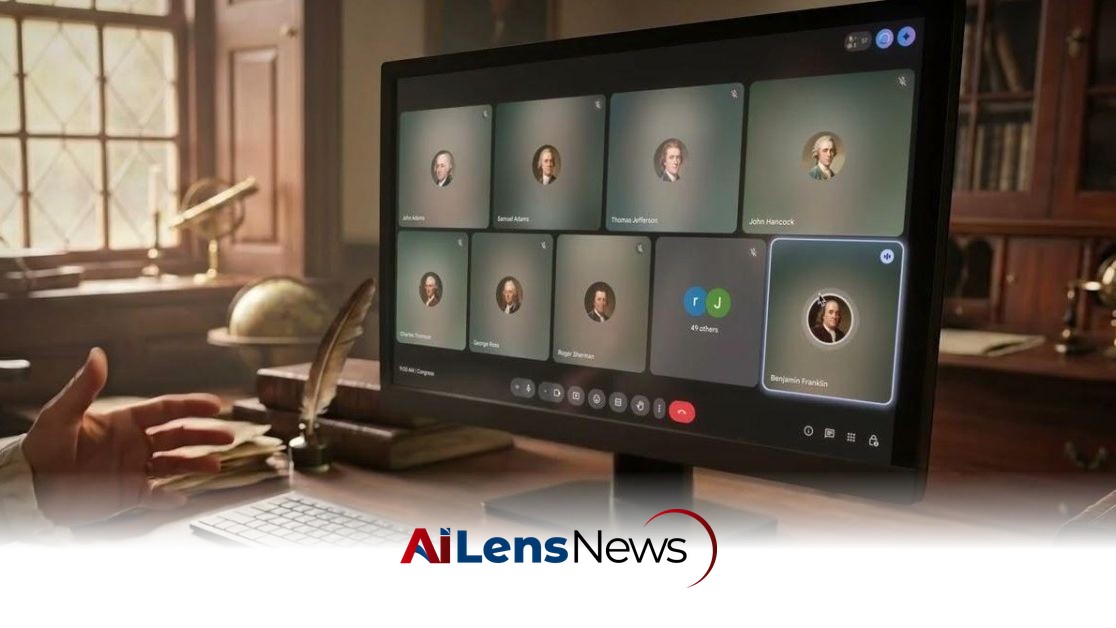


A new Google Workspace commercial envisions the Founding Fathers using AI tools to draft the Declaration of Independence, sparking mixed reactions.
New Delhi, India Jul 5, 2026 ALN: “Group project, but make it 1776.” This catchy phrase sets the stage for a new commercial by Google Workspace that has sparked significant debate and criticism. The attempts to blend historical context with modern nology, envisioning a scenario where the Founding Fathers of the United States utilize Google’s collaboration tools and advanced artificial intelligence, specifically Gemini, to draft the Declaration of Independence. However, the execution has left many viewers feeling uneasy and frustrated.
The commercial begins with Ben Franklin reaching out to Thomas Jefferson via text message, a modern communication method that starkly contrasts the historical setting of the late 18th century. Jefferson, in turn, captures a draft of the Declaration and employs AI to transcribe it into a Google Doc. This scene is emblematic of the broader trend in advertising to juxtapose contemporary nology with historical narratives, often leading to anachronisms that can feel forced or inappropriate.
As the commercial progresses, viewers see Franklin and John Adams joining the editing process in suggestion mode, a feature that allows for collaborative input on documents in real-time. The AI, Gemini, is depicted as an omnipresent assistant, finding suitable meeting times for the Founding Fathers and even taking notes during a Google Meet call. This portrayal raises questions about the nature of collaboration and the role of nology in historical events, as it implies that the Founding Fathers would have relied on digital tools to facilitate their revolutionary work.
One particularly humorous yet controversial moment occurs when a character named Nano Banana is shown creating a seal for the United States, featuring a turkey instead of the traditional eagle. This whimsical choice may have been intended to inject humor into the commercial, but it also risks trivializing the serious nature of the founding documents and the ideals they represent.
The climax of the features the Founding Fathers deliberating whether to grant King George III edit access to the Declaration of Independence. This moment is laden with irony and serves as a commentary on modern political dynamics, where the notion of collaboration with opposing views can be contentious. However, it also invites reflection on historical injustices and the exclusionary practices that characterized the founding of the nation. The question of whether the Founding Fathers would have engaged in discussions about women’s voting rights, slavery, or Manifest Destiny with the same levity as they consider King George's access to their document is a poignant one that underscores the complexities of American history.
The overall reception of this commercial has been overwhelmingly negative among historians, educators, and the general public. Critics argue that the is not only ill-conceived but also diminishes the gravity of the historical events it attempts to represent. Angus Johnston, a history professor at the City University of New York, articulated this sentiment succinctly on the social media platform Bluesky, stating, "Even in a corny fantasy joke, it’s impossible to make the case that AI is a useful tool for political organizing, writing, or human collaboration." This critique highlights a broader concern regarding the portrayal of history in popular media and the implications of using historical figures to sell modern nology.
The commercial also raises important questions about the role of artificial intelligence in contemporary society. As AI continues to evolve and integrate into various aspects of life, its application in fields such as writing, political discourse, and collaboration is increasingly scrutinized. While proponents of AI argue that these tools can enhance productivity and facilitate communication, critics caution against over-reliance on nology, particularly in contexts that require human empathy, understanding, and ethical considerations.
Furthermore, the use of historical figures in advertising is not a new phenomenon, but it often invites scrutiny regarding authenticity and respect for the past. The Founding Fathers are revered figures in American history, and their legacies are complex and multifaceted. By placing them in a contemporary setting with modern nology, advertisers risk oversimplifying their contributions and the historical context in which they operated. This can lead to a distorted understanding of history, particularly among younger audiences who may not have a comprehensive grasp of the events that shaped the nation.
In addition to the historical implications, the commercial also reflects a growing trend in marketing where companies seek to connect with consumers by invoking nostalgia. By referencing the Founding Fathers, Google Workspace aims to evoke a sense of patriotism and pride, positioning its products as tools that can empower individuals to engage in meaningful collaboration. However, the backlash against this particular suggests that consumers are increasingly discerning and critical of how brands engage with historical narratives.
The implications of this commercial extend beyond the immediate criticism it has received. It serves as a reminder of the importance of context when discussing historical events and figures. As society grapples with complex issues such as governance, civil rights, and social justice, it is essential to approach these topics with the seriousness and respect they deserve. The blending of historical narratives with modern nology in advertising can be seen as a reflection of our current cultural landscape, where the lines between past and present are often blurred.
In conclusion, the Google Workspace commercial featuring the Founding Fathers and AI has ignited a conversation about the intersection of history, nology, and marketing. While the intention may have been to create a humorous and relatable depiction of collaboration, the execution has drawn ire for its perceived insensitivity and trivialization of significant historical events. As the public continues to engage with these themes, it is crucial for advertisers and content creators to approach historical narratives with care, ensuring that they honor the complexities of the past while navigating the innovations of the present.
To learn more about the latest developments in Artificial Intelligence, stay updated with our exclusive reports and analyses on AiLensNews.

