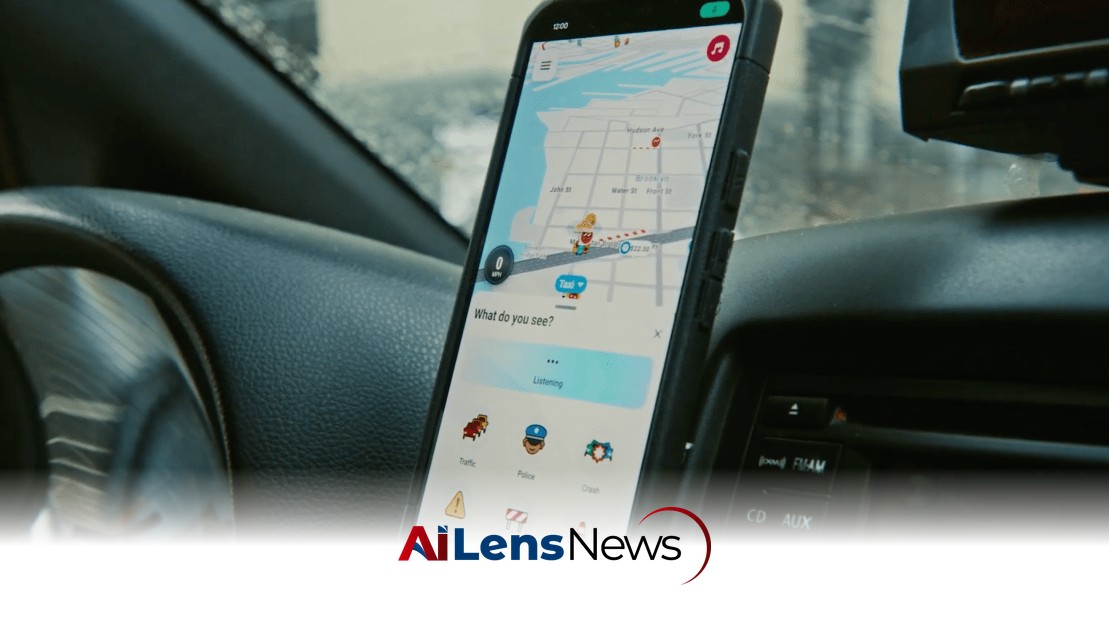


Waze is integrating Google's AI assistant, Gemini, to enhance user personalization with new features like conversational reporting and destination search.
New Delhi, India Jul 13, 2026 ALN: Waze is undergoing a significant transformation as it integrates advanced artificial intelligence features aimed at enhancing user experience. This update comes as part of a broader trend in the navigation app industry, where the incorporation of AI nologies is becoming increasingly common. The integration of Google’s AI assistant, Gemini, into Waze is expected to allow users to personalize their trips in ways that were previously not possible.
Among the four new updates announced, two are directly linked to the Gemini AI nology. One of the notable features is an enhancement to the conversation reporting tool, which was first introduced in 2024. This feature allows drivers to utilize conversational voice commands to report various traffic incidents, such as accidents, road closures, or even suggest updates to map data like outdated house numbers. This improvement is likely to make reporting more intuitive and seamless, enabling users to interact with the app in a more natural manner.
In addition to the conversation reporting feature, Waze has introduced a new capability called Destination Search. This feature enables users to find specific destinations using conversational voice commands. For example, drivers can ask the app to “Find me a coffee shop that’s open right now” or “Find me a gas station nearby with the lowest prices.” This level of interaction reflects the advancements in natural language processing and machine learning, which have made it easier for AI systems to understand and respond to user inquiries accurately.
The decision to incorporate conversational voice interactions is particularly relevant in today's fast-paced world, where drivers often seek to minimize distractions while on the road. The improvements in AI nology have made these interactions more fluid and responsive, enhancing the overall user experience. The ability to communicate with the app in a more conversational manner could lead to a significant reduction in the time it takes for users to find information, making their journeys more efficient.
In addition to the AI-driven features, Waze is also implementing non-AI updates to improve usability. One such feature is a “less chatty” mode for voice prompts. This mode allows users to reduce the frequency of voice alerts, enabling them to enjoy their music or podcasts without interruption while still receiving essential navigation instructions. This update acknowledges the diverse preferences of users and aims to create a more customizable experience.
Another significant addition is the introduction of a Motorcycle Mode. This feature is designed specifically for two-wheeled vehicles, incorporating shortcuts and providing more accurate estimated times of arrival (ETAs) tailored to motorcycle riders. This is an important development, as motorcyclists often face different routing challenges compared to car drivers, such as navigating through congested areas or taking advantage of narrower roads that are not accessible to larger vehicles.
Furthermore, Waze will now offer route suggestions based on a user’s historical trip data and local traffic patterns. This means that the app will learn from past journeys and preferences, allowing it to prioritize routes that align with individual user habits. For instance, if a driver consistently opts for highways over local roads, Waze will ensure that highway options are highlighted first. This personalized approach not only enhances the user experience but also has the potential to improve travel times by suggesting routes that are more likely to be preferred by the user.
The integration of AI into Waze is indicative of a larger trend within the navigation app landscape. While Waze is adopting AI features, Google Maps has already been incorporating AI-powered capabilities at a rapid pace. This raises questions about the future of both applications and how they will coexist under Google's umbrella. As Google continues to enhance its flagship navigation tool, it appears to be exerting greater control over the features and functionalities of Waze, potentially leading to a more unified approach to navigation across its platforms.
The implications of these updates extend beyond mere convenience for users. As AI becomes more ingrained in navigation nology, it could lead to broader changes in driving behavior and traffic management. For instance, improved route optimization based on real-time data could help alleviate congestion in urban areas, leading to a smoother flow of traffic and reduced travel times for all road users. Additionally, the ability to report incidents through conversational commands could empower users to contribute to traffic safety and awareness, fostering a more engaged community of drivers.
As Waze continues to evolve with these AI features, it will be essential to monitor user feedback and engagement levels. The success of these updates will depend not only on their functionality but also on how well they resonate with the user base. If Waze can effectively leverage AI to create a more personalized and efficient experience, it may solidify its position as a leading navigation app in an increasingly competitive market.
In conclusion, Waze's integration of AI features represents a significant step forward in enhancing user experience and personalization. With the ability to report incidents and search for destinations using conversational voice commands, alongside updates that cater to specific user preferences, Waze is well-positioned to meet the evolving needs of drivers. As the app continues to innovate, it will be interesting to see how these changes impact user behavior and the broader landscape of navigation nology.
Looking at the broader context, the integration of AI in navigation apps like Waze reflects a shift in user expectations. Today’s drivers are not only looking for basic navigation assistance but also for a more interactive and engaging experience. The rise of smart devices and voice-activated nologies has conditioned users to expect seamless interactions with their apps. This trend underscores the need for navigation apps to evolve continuously and adopt new nologies to remain relevant.
The advancements in AI and machine learning are also paving the way for more sophisticated traffic management systems. As more users engage with AI-driven navigation tools, the data collected can be utilized to improve traffic flow and reduce congestion. This data could be invaluable for city planners and traffic management authorities, providing insights into traffic patterns and helping to develop strategies to enhance urban mobility.
Moreover, as Waze and other navigation apps integrate more AI capabilities, they may also face challenges related to privacy and data security. Users are increasingly concerned about how their data is being used and shared. As Waze collects more data to enhance personalization and efficiency, it will need to ensure that user privacy is prioritized and that data is handled in compliance with regulations. Transparency about data usage and robust security measures will be essential to maintain user trust.
In summary, the introduction of AI features in Waze represents a proactive approach to meeting the evolving demands of users in a fast-paced digital landscape. By enhancing user experience through personalized interactions and improved functionalities, Waze is not only improving its service but also setting a benchmark for other navigation apps. The ongoing development of AI nologies will likely continue to shape the future of navigation, making it a critical area for innovation and growth in the coming years.
To learn more about the latest developments in Software & Platforms, stay updated with our exclusive reports and analyses on AiLensNews.

