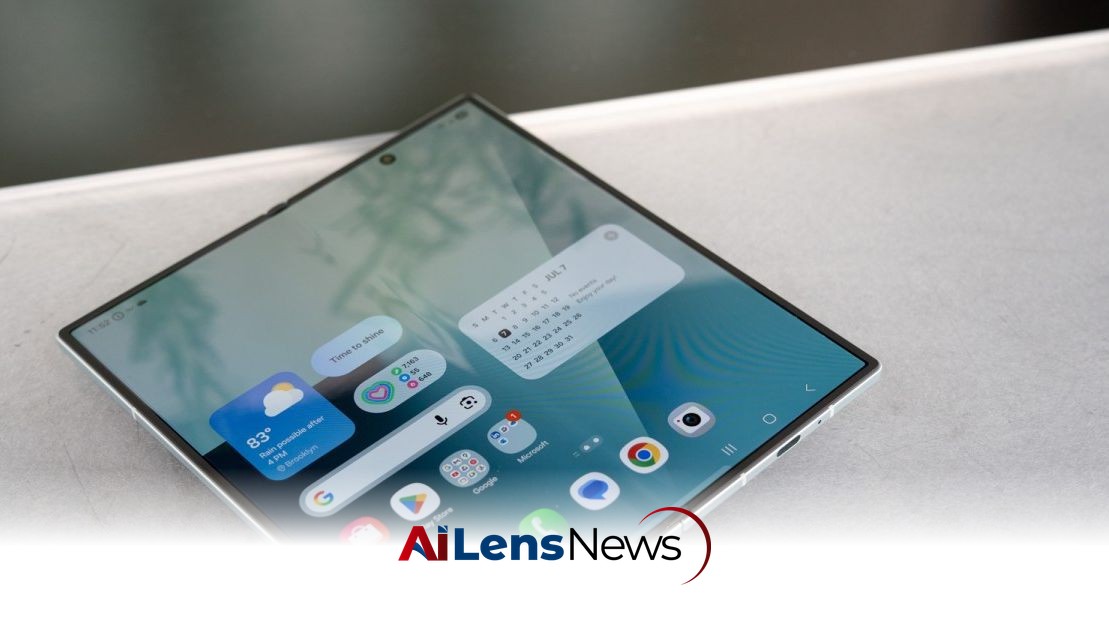


Samsung's new Flex Titanium display promises enhanced durability and reduced creasing for foldable devices, debuting with the Galaxy Z Fold 8.
New Delhi, India Jul 15, 2026 ALN: Samsung has unveiled a new flexible display nology for foldable phones that’s designed to be slimmer, more durable, and less prone to creasing. The Flex Titanium is the culmination of everything that the company has learned over seven generations of foldables, according to Samsung, and will debut with the upcoming Galaxy Z Fold 8 and Galaxy Z Fold 8 Ultra. Additionally, since Samsung Display is a long-time Apple supplier, this improved display might even appear in the rumored iPhone foldable expected later this year.
The announcement of the Flex Titanium display marks a significant milestone in the evolution of foldable smartphone nology. Foldable devices have gained traction in the smartphone market, with manufacturers striving to create devices that offer larger screens without compromising portability. Samsung has been at the forefront of this innovation, having introduced its first foldable device, the Galaxy Fold, in 2019. Since then, the company has refined its nology, learning from the challenges associated with foldable displays, including issues like screen durability and crease visibility.
As its name suggests, the Flex Titanium display uses a combination of two titanium-based components to improve strength, flexibility, and slimness. A titanium-alloy film provides structural support from underneath the OLED panel, offering 20 times greater mechanical stiffness compared to polymer film, and measures about one-third the thickness of an average human hair. This advancement is expected to significantly enhance the overall user experience by making the device more resilient to wear and tear associated with daily usage.
A titanium plate located under the film enables tighter bonding with the display module, improving stability when unfolded while “retaining the flexibility needed to accommodate repeated folding,” according to Samsung. This new display will also consume less power and produce ultra-vivid display visual resolution, which is crucial for users who rely on their smartphones for media consumption, gaming, and productivity tasks. The potential for enhanced battery life due to reduced power consumption is particularly appealing in an era where users demand more from their devices.
“Together, these advancements enable a strong foldable display that maximizes content immersion on a seamless screen and reduces crease visibility — all while keeping it slim,” Samsung said in its announcement. “By balancing strength, flexibility, and structural stability, Samsung continues to set the bar for foldable displays.” This statement underscores Samsung's commitment to pushing the boundaries of what is possible in smartphone nology, particularly in the foldable segment, which has seen both excitement and skepticism from consumers.
This is Samsung’s latest effort to reduce (or eradicate) visible creases in folding displays, an issue that still blights every foldable you can currently buy. The presence of creases has been a significant concern for consumers, as they can detract from the overall aesthetic and functionality of the device. A creaseless OLED prototype was also showcased by Samsung Display earlier this year, with speculation that it could be used in Apple’s highly anticipated folding iPhone. At the time, Samsung Display said the creaseless OLED was “an R&D concept, with no fixed timeline or plan for commercialization,” but it’s since been reported that the company has signed a three-year exclusivity deal to provide screens for the supposedly crease-free Apple foldable.
The implications of these advancements extend beyond just Samsung and Apple. As more manufacturers enter the foldable market, the competition will likely drive further innovation, leading to even more refined nologies that could benefit consumers. The success of the Flex Titanium display could set a new standard for foldable devices, influencing design choices and manufacturing processes across the industry.
In addition to the nological advancements, the business aspect of foldable phones is also worth noting. The foldable smartphone market is expected to grow significantly in the coming years, with various companies investing heavily in research and development to capture market share. Samsung's lead in this space, bolstered by its new display nology, could solidify its position as a market leader, especially if the Flex Titanium display performs well in real-world conditions.
Further details about the display will be available at Samsung’s Galaxy Unpacked event on July 22nd, where Samsung’s latest foldables are expected to be showcased. This event is highly anticipated by enthusiasts and industry analysts alike, as it will provide insights into not only the new display nology but also the overall direction Samsung is taking with its foldable devices. The reception of the Galaxy Z Fold 8 and Z Fold 8 Ultra will be closely monitored, as their performance and user feedback could impact future developments in the foldable smartphone market.
As consumers become increasingly accustomed to the idea of foldable devices, the success of the Galaxy Z Fold 8 and its associated nologies may pave the way for broader acceptance of foldable phones in mainstream markets. With the potential for larger screens in a compact form factor, Samsung's innovations could redefine how users interact with their devices, leading to new use cases and applications that take advantage of the unique form factor of foldable smartphones.
The foldable smartphone market is still in its infancy, but it has shown promise as a segment that can innovate and differentiate itself from traditional smartphone offerings. The Flex Titanium display represents a critical step forward in addressing some of the key pain points that have hindered the adoption of foldable devices, such as durability and usability. The ability to create a foldable display that minimizes creasing and maximizes visual fidelity could attract a wider audience, including those who have been hesitant to invest in foldable nology due to concerns over its longevity and practicality.
Moreover, as Samsung continues to refine its foldable nology, it is likely that other manufacturers will follow suit, leading to a more competitive landscape. Companies like Huawei, Motorola, and even newer entrants are also exploring foldable devices, and the advancements made by Samsung could inspire them to innovate further. The result may be a rapid evolution of foldable nology, with improvements in materials, design, and functionality that could transform how consumers view smartphones.
In conclusion, the unveiling of the Flex Titanium display by Samsung is not just a nological breakthrough but a pivotal moment in the foldable smartphone market. The advancements in durability, flexibility, and visual quality could redefine user expectations and pave the way for broader adoption of foldable devices. As the industry moves forward, the focus will be on how these innovations are received by consumers and how they influence the competitive landscape of the smartphone market as a whole.
To learn more about the latest developments in Gadgets & Devices, stay updated with our exclusive reports and analyses on AiLensNews.

