

More
Checking your session
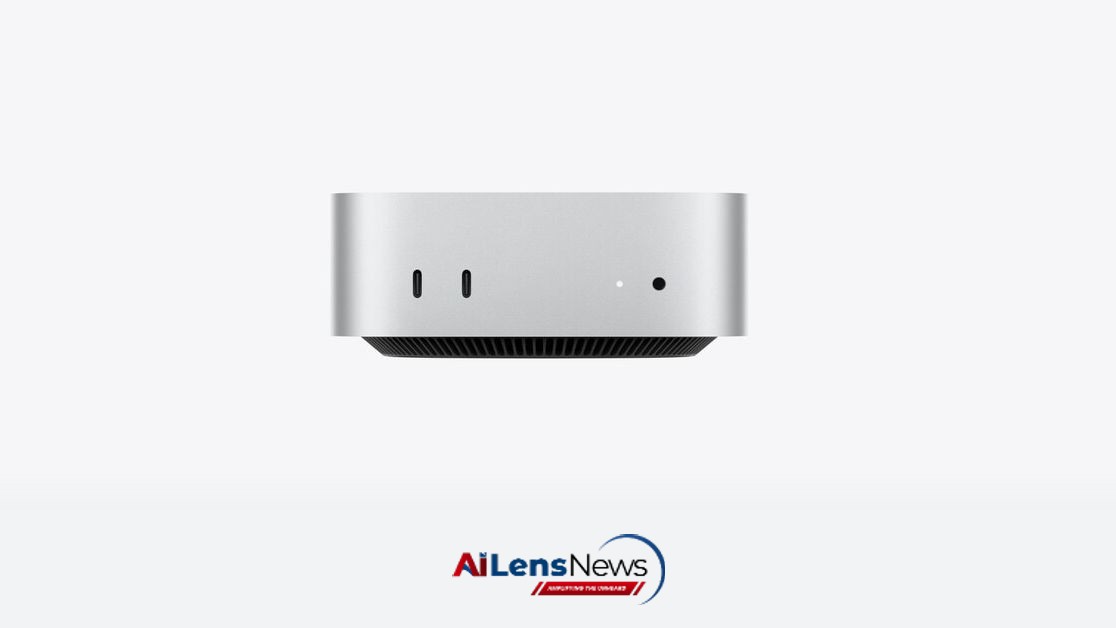



Apple has unveiled the updated Mac mini featuring the M6 chip, promising enhanced performance and AI capabilities. Here's what you need to know about pricing and availability in India.
New Delhi, India Aug 26, 2026 ALN: Apple has recently unveiled an updated version of its compact desktop computer, the Mac mini, which is now powered by the new M6 chip. This launch marks a significant refresh of the Mac mini lineup, which had remained unchanged for two years. The introduction of the M6 chip is particularly noteworthy as it represents Apple’s latest generation of silicon, showcasing the company’s commitment to enhancing performance and efficiency in its computing devices. In addition to the M6 variant, Apple is also offering a choice of the M5 Pro chip, catering to users with varying needs, from everyday computing tasks to more demanding creative and artificial intelligence (AI) workloads.
The M6 chip is designed to deliver substantial improvements in performance metrics. Apple claims that the new chip offers up to four times faster AI performance, double the graphics and storage speeds, and a 40 percent increase in CPU performance compared to its predecessor. This leap in technology positions the Mac mini as a versatile option for a wide range of users, including professionals in creative fields, developers working with AI, and everyday consumers seeking a robust desktop experience.
In terms of pricing and availability in India, the new Mac mini starts at ₹99,900 for the M6 variant and ₹2,09,900 for the M5 Pro model. The pricing reflects Apple's strategy of positioning its products as premium offerings in the technology market, appealing to consumers who value high performance and build quality. The Mac mini with M6 comes with memory options ranging from 16GB to 64GB, while storage options range from 256GB to a substantial 8TB, catering to users with varying storage needs.
The M5 Pro version of the Mac mini is available in two processor configurations. The base model features a 15-core CPU and a 26-core GPU, while the higher-end configuration boasts an 18-core CPU paired with a 20-core GPU, providing users with options based on their performance requirements. The latter configuration incurs an additional cost of ₹24,000. This flexibility in configurations allows users to customize their Mac mini to better suit their specific tasks, whether they be graphic design, video editing, or software development.
Pre-orders for the new Mac mini began on August 25, with deliveries expected to start by September 22. This timeline reflects Apple’s typical product release strategy, where pre-orders generate excitement and anticipation among consumers. Additionally, the company has introduced educational pricing, making the M6 model available at ₹88,900 and the M5 Pro variant at ₹1,97,900, thereby appealing to students and educators who might benefit from discounted pricing on high-performance computing devices.
Apple is also promoting financing options such as up to six months of no-interest equated monthly installments (EMI) and offering cashback incentives for customers using eligible credit cards. These financial options can make the purchase of a Mac mini more accessible to a broader audience, potentially increasing sales and market penetration.
The M6 model of the Mac mini comes equipped with 16GB of unified memory as standard, with the option to configure it up to 32GB. This increase in memory bandwidth to up to 170GB/s is particularly significant for users engaged in memory-intensive applications, as it allows for smoother multitasking and improved performance in demanding scenarios.
One of the key features of the new Mac mini is its compact form factor, which makes it an appealing choice for users with limited desk space. Apple has strategically focused on enhancing on-device AI capabilities in the M6 model, enabling it to handle tasks such as running local AI models, applying AI effects to images, and creating AI agents for automation. This focus on AI reflects a broader trend in the technology industry, where machine learning and AI are increasingly integrated into consumer devices.
On the other hand, the M5 Pro variant is positioned as an always-on desktop solution for professional workflows and AI agents. Its higher memory capacity and bandwidth are designed for users who require robust performance for larger models and more demanding applications, such as data analysis and complex simulations.
The M6-powered Mac mini features a 12-core CPU, which is two cores more than the previous generation. This enhancement is aimed at improving single-threaded performance, which is critical for many applications that rely on efficient processing of individual tasks. The 12-core GPU also sees an increase in cores, contributing to enhanced graphics performance.
For the first time, each GPU core in the Mac mini includes a Neural Accelerator, which Apple claims enables up to four times faster AI performance and twice the graphics speed compared to the M4-powered Mac mini. The introduction of a dual 16-core Neural Engine further amplifies the device's capabilities, purportedly making it up to twice as fast as its predecessor in handling AI-related tasks.
In practical terms, the new Mac mini is said to process large language model (LLM) prompts in LM Studio up to 13.5 times faster than the M1 version and 4.8 times faster than the M4 model. Additionally, users can expect spreadsheet calculations in Microsoft Excel to be up to 2.3 times faster compared to the M1. The gaming performance has also been touted, with claims that it can handle ray tracing in Cyberpunk 2077: Ultimate Edition up to twice as fast as the M4 model, appealing to gamers who seek high-performance computing in a compact form factor.
Overall, the launch of the new Mac mini with M6 and M5 Pro chips signifies Apple's ongoing commitment to innovation and performance in its desktop offerings. As the demand for powerful, compact computing solutions continues to grow, the Mac mini is poised to attract a diverse range of users, from casual consumers to professionals in creative and technical fields. The implications of this launch extend beyond just hardware; it reflects Apple's strategic focus on integrating advanced technology into user-friendly devices that cater to the evolving needs of modern computing.
To learn more about the latest developments in Software & Platforms, stay updated with our exclusive reports and analyses on AILensNews.

Shylesh Muralidharan of Portulans Institute highlights increasing global resista…

A police complaint has been filed against Arun Srinivas, Meta's Director for Ind…
Tencent has launched a new open-source AI model designed to assist in coding and…
This week on The Vergecast, we discuss Apple's latest announcements, including t…

The World Humanoid Robot Games in Beijing highlighted China's advancements in ro…