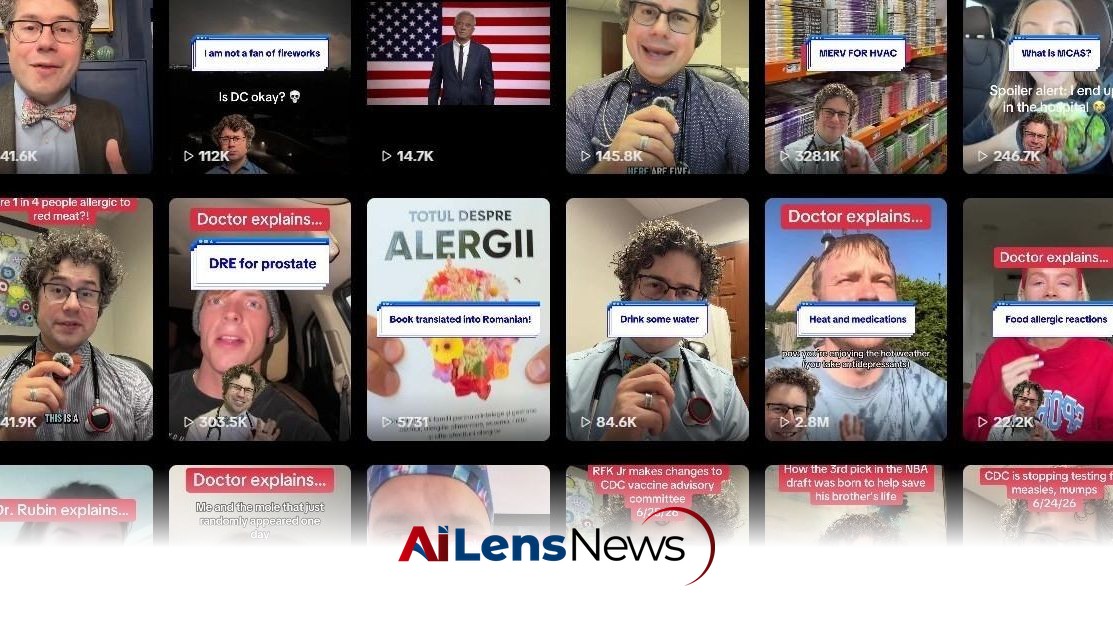


Dr. Zachary Rubin discusses his fight against misinformation in medicine and science, emphasizing the importance of critical thinking and scientific literacy.
New Delhi, India Jul 6, 2026 ALN: In an era where misinformation spreads rapidly, Dr. Zachary Rubin stands out as a beacon of truth. A pediatric allergist and immunologist, he is dedicated to combating scientific and medical misinformation through social media platforms. His engaging style, characterized by a small mic and a signature bowtie, allows him to connect with audiences while providing evidence-based information. The rise of digital communication has transformed the landscape of information dissemination, and Dr. Rubin has adeptly navigated this environment to ensure that accurate scientific knowledge reaches a broad audience.
Dr. Rubin emphasizes that misinformation is not just an online issue; it often walks into his exam room daily. He believes that patients deserve access to understandable, evidence-based information before they even need to consult a doctor. This perspective is particularly crucial in the context of a healthcare system where patients may feel overwhelmed by complex medical terminology and conflicting advice. By leveraging social media, he aims to reach millions, facilitating critical discussions about health claims. The accessibility of platforms like Twitter, Instagram, and TikTok allows him to break down complex topics into digestible formats, making science relatable and understandable for everyday individuals.
Moreover, Dr. Rubin's approach reflects a broader trend in the medical community where professionals are increasingly recognizing the need to engage with the public directly. The COVID-19 pandemic has highlighted the consequences of misinformation, particularly in relation to vaccines and public health measures. As a result, many healthcare providers have taken to social media to clarify misconceptions and provide accurate information. Dr. Rubin’s efforts are part of a larger movement aimed at fostering a more informed public that can make better health choices.
One of the core messages Dr. Rubin wishes to convey is that uncertainty is not a weakness in science; rather, it is one of its greatest strengths. Science is a dynamic process aimed at getting closer to the truth, and good scientists are willing to adapt their views based on new evidence. This adaptability can sometimes appear as inconsistency to the public, but it is essential for progress. The scientific method relies on questioning, testing, and revising theories based on new data, which can be a challenging concept for those who seek definitive answers.
In an age where instant gratification is the norm, the iterative nature of scientific inquiry may seem slow or frustrating. Dr. Rubin works to illustrate that scientific knowledge is built over time and that changes in recommendations are often based on the latest research rather than arbitrary decisions. By normalizing discussions about uncertainty, he helps demystify the scientific process and encourages critical thinking among his audience. This approach not only fosters a better understanding of science but also cultivates a culture of inquiry where individuals feel empowered to ask questions and seek out information.
Dr. Rubin finds immense satisfaction in hearing from individuals who have changed their minds after engaging with his content. The feedback he receives underscores the impact of effective communication in altering perceptions and improving health literacy. However, he acknowledges the challenges posed by the rapid spread of misinformation, which often outpaces nuanced discussions. The speed at which false information can circulate on social media platforms poses a significant obstacle for those attempting to provide accurate scientific insights.
Algorithms that favor sensationalism further complicate the landscape, making it crucial for more scientists and physicians to participate in public discourse. The reality is that sensational headlines often garner more attention than factual, nuanced discussions. This tendency can skew public perception and lead to a misinformed populace. Dr. Rubin advocates for a proactive approach, urging more healthcare professionals to take up the mantle of public education. He believes that by amplifying credible voices in the scientific community, the tide of misinformation can be turned.
Reflecting on America's scientific legacy, Dr. Rubin notes that while the country has made significant contributions to science and medicine, there is room for improvement in scientific literacy. He advocates for education that focuses on teaching individuals how to evaluate evidence rather than merely memorizing facts. This educational shift is essential for fostering a generation that can critically assess information sources and make informed decisions about their health.
Additionally, he stresses the importance of scientists and physicians becoming better communicators to foster trust and transparency. The ability to convey complex ideas in a relatable manner is an invaluable skill that can bridge the gap between scientific communities and the public. Dr. Rubin's use of social media exemplifies this principle, as he utilizes engaging formats to simplify complicated topics. Workshops and training programs aimed at enhancing communication skills among healthcare professionals could further empower them to share their knowledge effectively.
Dr. Zachary Rubin's commitment to fighting misinformation and promoting scientific literacy is a vital contribution to public health. By engaging audiences through social media, he not only informs but also empowers individuals to think critically about health claims. As misinformation continues to pose challenges, the role of knowledgeable communicators like Dr. Rubin becomes increasingly important. His work highlights the necessity of integrating science communication into medical training and emphasizes the responsibility of healthcare professionals to engage with the public actively.
In conclusion, as society grapples with the implications of misinformation, the efforts of individuals like Dr. Rubin serve as a reminder that informed discourse is essential for public health. The ongoing battle against misinformation requires a collective effort from scientists, healthcare providers, and educators to ensure that accurate information prevails. By fostering a culture of inquiry and critical thinking, we can hope to build a healthier, more informed society.
To learn more about the latest developments in Artificial Intelligence, stay updated with our exclusive reports and analyses on AiLensNews.

