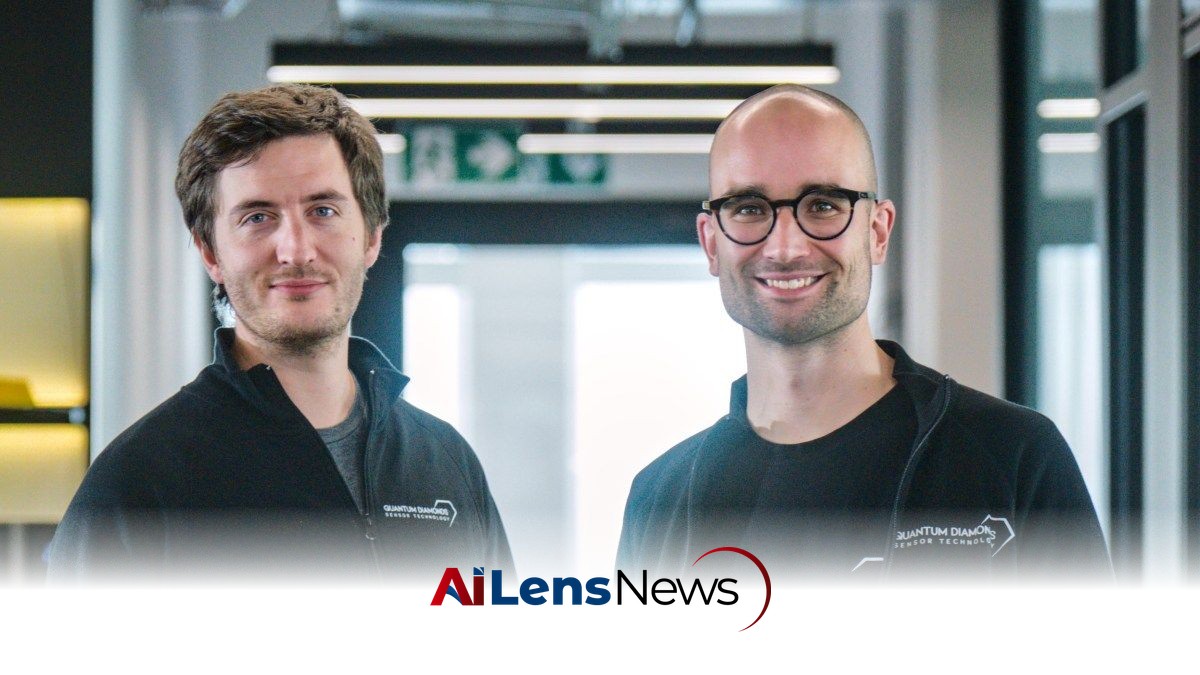


QuantumDiamonds, a German startup, secures €76 million to enhance semiconductor testing, leveraging quantum technology for faster chip inspections.
New Delhi, India Jul 9, 2026 ALN: The race to produce more chips is on, and Europe is in. ASML, the Dutch company that has a near-monopoly on manufacturing the machines used for chipmaking, may soon no longer be an isolated success story.
The semiconductor industry is at the forefront of technological advancements in various sectors, including consumer electronics, automotive, telecommunications, and artificial intelligence. As demand for chips continues to surge, particularly with the rise of AI applications and smart devices, the need for efficient and effective chip manufacturing processes has never been more critical. This has prompted a concerted effort by governments and private sectors worldwide to bolster their semiconductor capabilities.
In response to this growing need, the European Union has taken significant steps to foster its semiconductor industry. The European Chips Act is a strategic initiative aimed at increasing the EU's share of global semiconductor production, which currently stands at around 10%. This act not only seeks to enhance the manufacturing capacity within Europe but also aims to secure supply chains that have been disrupted in recent years due to geopolitical tensions and the COVID-19 pandemic. By providing state subsidies and financial support, the EU hopes to stimulate innovation and attract investments in semiconductor technology.
One of the beneficiaries of this initiative is QuantumDiamonds, a German startup that specializes in innovative solutions for chip inspection. Founded as a spinout from the Technical University of Munich (TUM), QuantumDiamonds has emerged as a promising player in the semiconductor testing arena. The company has recently received €76 million in non-dilutive funding, backed by Germany’s federal economy ministry and the state of Bavaria, with the approval of the European Commission. This funding is part of a larger $178 million investment plan aimed at establishing a new facility for the production of semiconductor testing equipment in Munich.
In addition to the funding from the EU, QuantumDiamonds has successfully raised a €15 million equity round led by the venture capital firm World Fund. Other notable investors include Bayern Kapital and existing backers such as Creator Fund, Earlybird, First Momentum, IQ Capital, Onsight Ventures, and UnternehmerTUM. Although the company has not disclosed its valuation, the swift fundraising process underscores the growing interest in semiconductor technologies and the demand for innovative inspection solutions in the industry.
QuantumDiamonds' CEO, Kevin Berghoff, highlighted the company's ability to demonstrate significant customer pull, which contributed to the rapid fundraising. The startup's technology addresses a critical need in the semiconductor ecosystem: the demand for solutions that expedite the manufacturing process while enhancing output quality. The semiconductor manufacturing process is intricate, and any defects can lead to substantial financial losses, making efficient inspection processes essential.
Traditionally, defect detection in semiconductor manufacturing can take weeks, leading to production delays and increased costs. QuantumDiamonds claims to have revolutionized this process by compressing defect detection into a two-minute inspection that does not halt production lines. This innovative approach has the potential to save companies, such as Taiwan-based foundries and Korea’s memory makers, hundreds of millions of dollars. The quick return on investment for their hardware, which can be recouped within a couple of months, makes it an attractive option for manufacturers.
The technology employed by QuantumDiamonds represents one of the first practical applications of quantum technology in the semiconductor industry. Unlike traditional chips, which are often the focus of technological advancements, quantum sensing technology is already operational and capable of generating magnetic fields that detect defects with high precision. Berghoff humorously noted that customers are primarily concerned with the results rather than the underlying quantum technology. This pragmatic approach aligns with the industry's focus on efficiency and effectiveness.
The synthetic diamonds used in QuantumDiamonds' technology play a crucial role in their defect detection capabilities. By leveraging the unique properties of these diamonds, the company can observe electricity flow through chips, allowing for defect detection across all layers of a chip without causing damage. This capability is particularly relevant as the semiconductor industry increasingly shifts towards multi-layered chips, which are essential for meeting the demands of modern applications, including artificial intelligence and data processing.
As the industry evolves, startups like QuantumDiamonds are positioning themselves to capitalize on the demand for advanced inspection technologies. While larger competitors, including established U.S.-based inspection companies with substantial market capitalizations, may eventually adapt to this new technology, QuantumDiamonds currently enjoys a first-mover advantage. Berghoff noted that there are no U.S. or Asian companies that have shipped tools similar to theirs, giving them a unique position in the market.
The startup is transitioning from a laboratory-based tool to a high-throughput testing solution that can perform 100% quality control directly in semiconductor fabrication plants (fabs). This shift represents a significant advancement in the ability to ensure quality in chip production, as current methods often involve sample-based testing, where only a small fraction of chips are inspected.
While the machines developed by QuantumDiamonds are costly, they are relatively affordable compared to other equipment in the semiconductor manufacturing landscape. The lab tools are priced in the single-digit millions, while the high-throughput systems may reach $10 to $15 million. In contrast, machines produced by ASML, which are critical for chip manufacturing, can cost upwards of $400 million. Berghoff emphasized that while their tools are expensive, they are considered cost-effective solutions for manufacturers.
The potential for QuantumDiamonds to become a leading player in the semiconductor inspection market has drawn attention from venture capitalists. Daria Saharova, managing partner at World Fund, expressed optimism about the company's future, suggesting it could become Europe’s next ASML. However, Berghoff also acknowledged the possibility that ASML might seek to acquire the startup in the future, given their interest in expanding their inspection capabilities. While ASML has recently expressed reluctance towards mergers and acquisitions, the landscape of the semiconductor industry is dynamic, and strategic partnerships or acquisitions could reshape the market.
QuantumDiamonds is still in the early stages of its growth trajectory but has ambitious plans for international expansion. In 2026, the company opened a regional hub in Taiwan and successfully completed its first commercial deployments in both Taiwan and the United States, where it installed a system at Eurofins EAG Laboratories in Sunnyvale, California. This international footprint is crucial for the startup as it seeks to establish itself as a global player in the semiconductor testing market.
The funding received by QuantumDiamonds will not only facilitate its growth but also contribute to job creation in Munich, where the majority of its 70-person team is based. Berghoff and his co-founder, CTO Fleming Bruckmaier, plan to double their engineering team over the next 12 months, leveraging the region's pool of talent in both quantum technology and semiconductor expertise. This strategic focus on building a skilled workforce will be essential for the company as it prepares to scale its operations and meet the increasing demands of the semiconductor industry.
To learn more about the latest developments in Funding & Investments, stay updated with our exclusive reports and analyses on AiLensNews.

