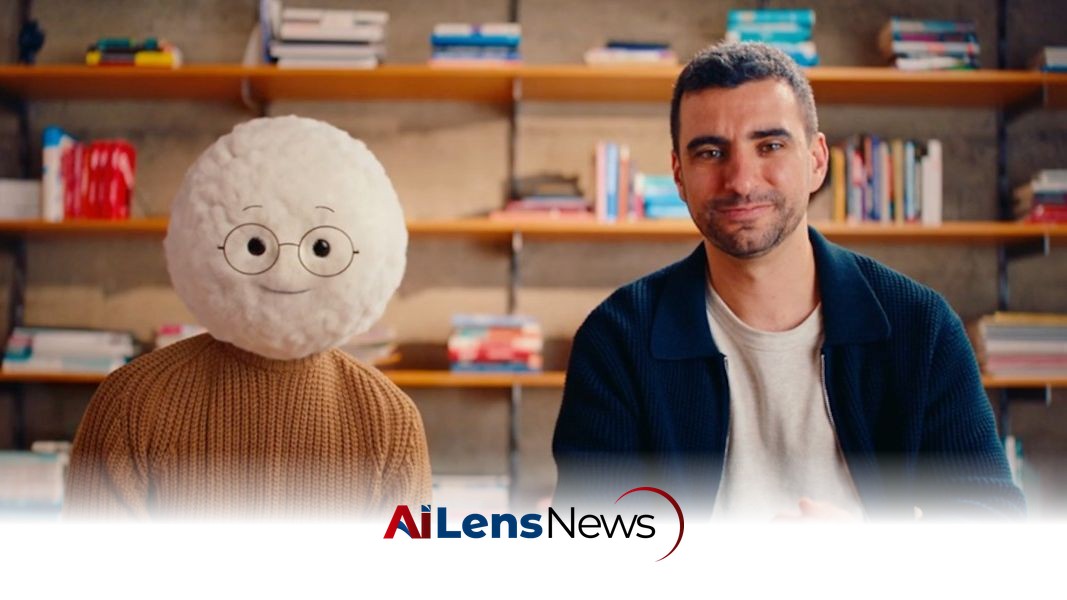


Sable's innovative AI agent Aiden, designed to enhance customer interactions, has attracted a $45 million investment from Sequoia Capital, showcasing the future of automated sales.
Washington DC, United States Jul 16, 2026 ALN: Sequoia partner Shaun Maguire's pivotal moment with Sable was marked by a compelling demonstration that showcased the capabilities of the startup's AI sales representative, Aiden. During this demo, Aiden seamlessly guided a potential buyer through a product presentation, exhibiting the ability to switch languages fluidly between Mandarin and Spanish. This feature struck Maguire as revolutionary, reminiscent of the transformative impact Stripe had on the payments industry. The ability to communicate effectively across language barriers is particularly significant in today's global marketplace, where businesses increasingly operate on an international scale.
Sable, a relatively new player in the tech landscape, has developed Aiden, an AI “employee” designed to reside on a company's website. The startup’s innovative approach allows Aiden to conduct live product demonstrations and respond to intricate inquiries in real-time. This functionality not only enhances customer engagement but also streamlines the sales process, making it more efficient. Recently, Sable secured a substantial investment of $45 million from prominent venture capital firms Sequoia Capital and 8VC. The funding round also attracted notable investors, including Antonio Gracias from Valor and HubSpot cofounders Brian Halligan and Dharmesh Shah, which underscores the confidence the investment community has in Sable's vision and technology.
The founder and CEO of Sable, Nim Ravid, brings a unique perspective to the development of AI tools, shaped by both personal and professional experiences. Ravid, originally from Israel, faced personal tragedy when he lost friends during the attack at the Nova music festival on October 7. This loss has informed his commitment to fostering dialogue and understanding, as evidenced by his work at Harvard, where he focused on building cross-community dialogue groups aimed at reducing polarization. Ravid's background has led him to contemplate how to create AI models that are more human-centric, emphasizing empathy and understanding in technology.
Unlike conventional chatbots that often appear as small, static bubbles on a webpage, Aiden is designed to engage users in a more dynamic and interactive manner. It operates within a shared online window that mimics a laptop interface, allowing users to observe and interact with the product in real-time. Aiden possesses the capability to autonomously monitor changes on the webpage and intervene in the conversation as necessary, thereby providing a more personalized experience. Ravid argues that this approach resembles the interaction one might have with a skilled human sales engineer, who can adapt to the buyer's needs and guide them through the nuances of a product demo, rather than following a rigid script.
Sable's strategy for developing Aiden involves utilizing recordings of a customer's most successful sales calls, along with internal documentation and marketing materials. This process enables the creation of a reusable "brain" for Aiden, which can facilitate demos, onboarding processes, and international rollouts. By leveraging existing resources, Sable aims to enhance Aiden's performance and effectiveness, reducing the need for repetitive training and allowing for a more streamlined implementation across various customer interactions.
The early traction Sable has gained is noteworthy, with initial customers including Notion, a popular workspace platform, and Decagon, an AI-driven customer service startup. Aiden is currently operational within these organizations, demonstrating its practical applications and effectiveness in real-world scenarios. The deployment of Aiden in production environments not only validates Sable's technology but also highlights the growing demand for AI solutions in customer-facing roles.
The broader context surrounding Sable's emergence is the rapid growth of "agentic" AI—software that goes beyond mere responses to actively taking actions within a computer environment. This segment of the AI market has quietly evolved into a substantial industry, projected to reach approximately $9 to $10 billion by 2026, with forecasts suggesting it could soar to $57 billion by 2031. As businesses increasingly automate customer-facing tasks, the demand for sophisticated AI agents like Aiden is expected to rise significantly. Notion's transformation into an AI agent hub and Decagon's efforts to implement AI concierges for customer service are indicative of this trend, as companies seek to enhance efficiency and improve customer experiences.
Ravid envisions Aiden as capable of fulfilling multiple roles simultaneously, including sales development, demo specialization, solutions engineering, and customer success onboarding. This multifaceted approach is touted as a "win-win" situation; buyers gain access to an expert who is patient and available on demand, while human employees can transition to managing teams of AI counterparts instead of repeatedly conducting the same explanatory calls. This shift could lead to a more efficient allocation of human resources, allowing employees to focus on higher-level tasks that require critical thinking and creativity.
Despite the promising potential of Sable and Aiden, several challenges remain on the horizon. Issues of trust, job displacement, and competition from established players like Notion, which has developed its own AI agents, pose significant hurdles. Ravid acknowledges that many prospective buyers are still grappling with the aftermath of negative experiences with traditional chatbots, which have often been characterized by poor performance and frustrating interactions. This skepticism could hinder the adoption of new AI solutions, as businesses may be reluctant to invest in technology that does not meet their expectations or address their specific needs. To overcome these challenges, Sable will need to demonstrate the reliability, effectiveness, and human-like qualities of Aiden, ensuring that it can deliver on its promises and build trust with users.
As the landscape of customer engagement continues to evolve, Sable's innovative approach with Aiden positions it at the forefront of a rapidly changing industry. The investment from Sequoia and other notable backers not only provides the necessary capital for growth but also serves as a validation of Sable's vision for the future of AI in sales and customer service. The implications of this technology extend beyond just improving sales processes; they could redefine the relationship between businesses and their customers, fostering more meaningful interactions in an increasingly digital world.
To learn more about the latest developments in Startup Sectors & Industries, stay updated with our exclusive reports and analyses on AiLensNews.

