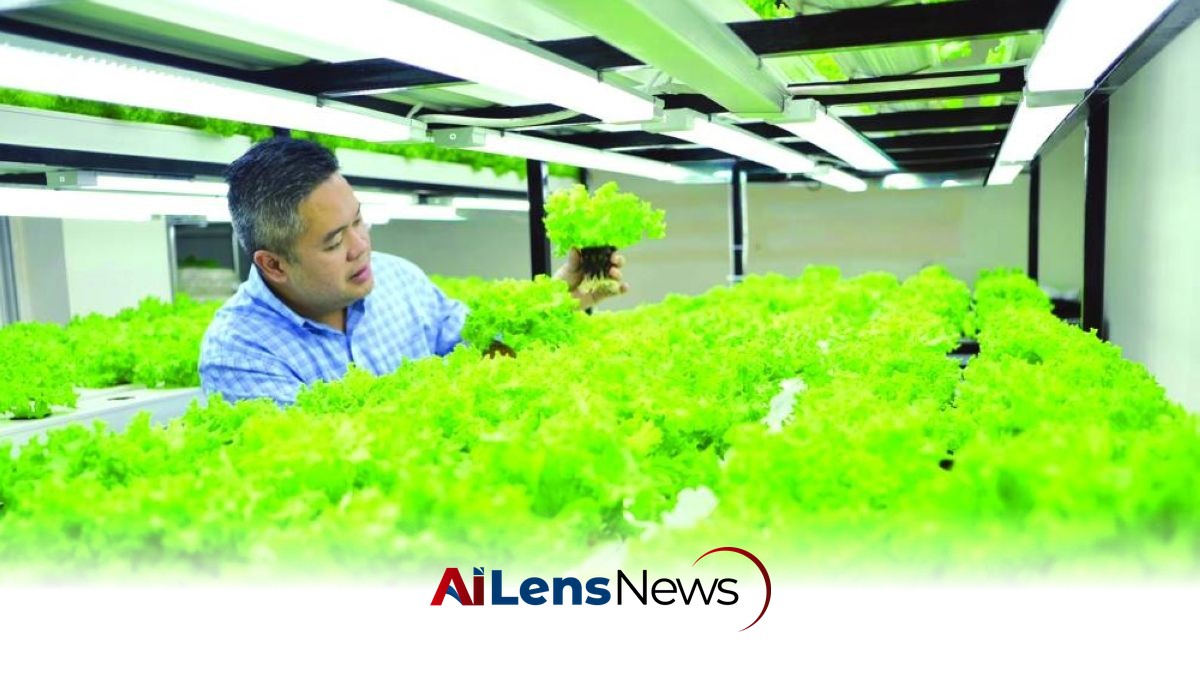


Hydrovest Technology, founded by Jeacim Francis Adaya, is transforming local agriculture in Qatar through innovative hydroponic solutions tailored for arid environments.
Doha, Qatar Jul 21, 2026 ALN: Development and deployment of agricultural solutions engineered for arid environments are underway within Qatar’s premier technology hub, driven by growing demand for localized food security measures. This initiative comes at a critical time as countries around the world are re-evaluating their food supply chains in light of climate change, global pandemics, and geopolitical tensions that can disrupt food imports. Qatar, a nation with limited arable land and water resources, is particularly vulnerable to these challenges, making the pursuit of sustainable agricultural practices not just beneficial but essential for the nation's food security.
What began as a simple family gardening activity during the Covid-19 pandemic has evolved into a structured agricultural enterprise, accountant-turned-entrepreneur Jeacim Francis Adaya told Gulf Times in an exclusive interview. The pandemic created a unique situation where many individuals turned to gardening as a way to cope with lockdowns and restrictions. Adaya's experience is a testament to how personal interests can blossom into impactful business ventures, particularly when they address pressing societal needs.
He founded Hydrovest Technology, which has scaled up its operations from a home hydroponics hobby into a dedicated research project based at the Qatar Science and Technology Park (QSTP). The QSTP is a vital part of Qatar’s strategy to diversify its economy away from oil and gas dependency. It serves as an incubator for innovative startups, providing them with the resources and environment necessary to thrive. Hydrovest Technology is emblematic of this vision, aiming to harness technology to transform agriculture in a region where traditional farming methods face significant hurdles.
Adaya, who has lived in Qatar for more than 15 years, discovered the potential of soilless cultivation while looking for meaningful ways to spend time with his family during the global health crisis. The success of producing fresh food at home prompted him to share his experience through social media and small community workshops, he said. This grassroots approach not only educated others about hydroponics but also fostered a sense of community around sustainable practices, illustrating how local initiatives can lead to broader societal change.
“We started growing vegetables through hydroponics at home, and I was amazed that we could produce fresh, healthy food without soil. As I shared our journey on social media and through small community workshops, I realized many people in Qatar were eager to learn about modern farming but didn’t know where to begin,” he explained. Adaya's story underscores the importance of knowledge sharing and community engagement in promoting sustainable practices. By leveraging social media and workshops, he has created a platform for education that empowers individuals to take control of their food production.
This localized interest led to the launch of the ‘Future of Agriculture – Hydroponics’ advocacy, noted Adaya, adding that the initiative aims to make modern farming practices accessible to families, schools, and local entrepreneurs. The advocacy not only promotes hydroponic techniques but also encourages a broader dialogue about food security and sustainability in Qatar. As more individuals and organizations engage in this conversation, it could lead to systemic changes in how food is produced and consumed in the region.
The transition from financial services to agricultural technology proved natural for Adaya, who explained that his finance background provided critical perspective in data analysis, risk management, and the formulation of sustainable business models. “People often think finance and agriculture are completely different fields, but I see many similarities. My background in finance taught me how to analyze data, manage risks, create sustainable business models, and make informed long-term decisions,” he pointed out. This interdisciplinary approach highlights the importance of diverse skill sets in tackling complex issues like food security and sustainability.
Adaya said, “Agriculture today is no longer just about planting crops. It involves technology, resource management, innovation, and sustainability. Financial discipline helped me understand how to build solutions that are both environmentally sustainable and economically viable.” His insights reflect a growing recognition that modern agriculture must adapt to technological advancements and changing environmental conditions. The integration of technology into agriculture can lead to increased efficiency, reduced waste, and enhanced food production capabilities.
Operating within Qatar requires navigating specific environmental constraints, he pointed out. “Qatar’s climate presents unique challenges. The extreme summer temperatures, limited freshwater resources, and high cooling requirements make farming difficult. In the beginning, we experienced crop failures, equipment issues, and many trial-and-error experiments. Instead of seeing those as failures, we treated every challenge as valuable research,” he said. This resilience and adaptive mindset are crucial in an environment where traditional farming methods are often impractical. By viewing challenges as opportunities for learning and innovation, Hydrovest Technology is better positioned to develop solutions tailored to Qatar's specific needs.
Adaya continued, “Those experiences convinced me that Qatar doesn’t need to copy farming methods from other countries. We need technologies specifically designed for desert environments. That belief continues to drive our research and development today.” This perspective is critical as it emphasizes the importance of localized solutions in agriculture. By focusing on technologies that are specifically designed for arid climates, Hydrovest Technology can lead the way in creating sustainable agricultural practices that are both effective and culturally relevant.
According to Adaya, the establishment of Hydrovest Technology was intended to address an identified gap in the domestic market. While large-scale public investments have enhanced national food security, affordable technology and technical guidance remained scarce for smaller, community growers. “I noticed that while Qatar has made remarkable investments in food security, there was still a need to make advanced farming technologies more accessible to the wider community. Many people were interested in hydroponics but lacked practical knowledge, affordable solutions, and technical guidance. Hydrovest Technology was created to bridge that gap by combining education, research, and innovation,” he stressed. This commitment to accessibility is vital as it encourages more individuals to engage in sustainable practices, ultimately leading to a more resilient food system.
The company focuses on a broader definition of commercial success, said Adaya, who also emphasized that leadership in sustainability must balance financial metrics with societal value, focusing on inspiring local communities to adopt independent food production. “Success should not be measured only by financial performance but also by the positive impact we create for society. If our work inspires one child to love agriculture or helps one family grow their own food, then we are already making a meaningful difference,” Adaya added. This holistic approach to success is essential in today’s business landscape, where consumers and stakeholders increasingly demand accountability and social responsibility from organizations.
As Qatar continues to navigate its path toward sustainable agricultural practices, Hydrovest Technology stands as a beacon of innovation and community engagement. The company's efforts not only contribute to national food security but also promote a culture of sustainability and self-sufficiency. In a world where food systems are increasingly vulnerable to external shocks, the work being done by Adaya and his team underscores the importance of local solutions that empower individuals and communities. The implications of their work extend beyond agriculture; they represent a shift toward a more sustainable future for Qatar and potentially serve as a model for other nations facing similar challenges.
To learn more about the latest developments in Startup Ecosystem Trends, stay updated with our exclusive reports and analyses on AiLensNews.

