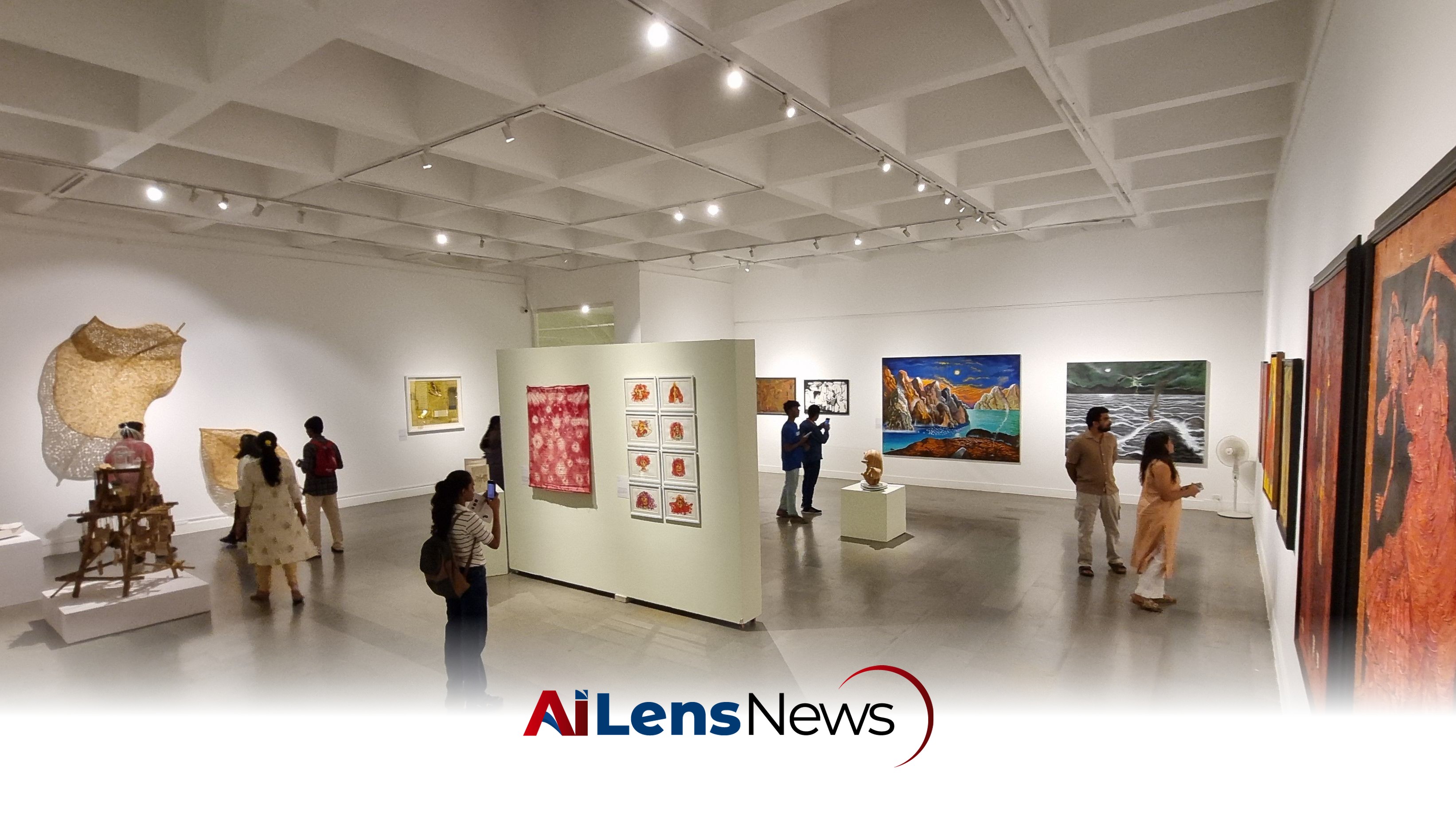


The exhibition 'Mapping Periphery & Centre' showcases diverse artistic expressions and insights from curator Lina Vincent, highlighting over 60 artists.
New Delhi, India Jul 5, 2026 ALN: Launched in 2014, PhotoSparks is a weekly feature celebrating creativity and innovation through various artistic mediums. Earlier posts have highlighted art festivals, cartoon galleries, and more.
Karnataka Chitrakala Parishath (KCP) recently hosted the second edition of its ‘Namma Art Bengaluru’ festival, featuring a special exhibition curated by art historian Lina Vincent, titled Mapping Periphery & Centre – A Pan-India Dialogue. This exhibition showcases the works of over 60 accomplished artists across various genres and themes.
“Each curatorial project evolves organically; one formula does not fit all. It is researched, developed, and assembled with the artists involved in discussions,” Vincent explains.
She is also leading the Visual Arts section for the upcoming Abhivyakti City Arts project, scheduled from 27th November to 13th December in Ahmedabad.
“When I receive the goodwill and continued support of artists, gallerists, and my curatorial peers, I feel I have done something right,” Vincent adds.
The artist lineup in the KCP exhibition includes notable names such as Arunkumar HG, Balaji Ponna, Bhartti Verma, Chippa Sudhakar, Girish Kulkarni, Harsha Durugadda, Kanchan Chander, Manveer Singh, Nikhileswar Baruah, and Prashant Pandey.
Other featured artists are Rani Rekha, Ruchita Madhok, Shanker Kumawat, Shweta Raina, Venugopal VG, Shyam Pahapalkar, Venkat Raman Singh Shyam, Harsha Kancharla, and the Vayeda brothers, Mayur and Tushar.
Arunkumar H.G. is a Bengaluru-based contemporary artist whose work investigates the relationship between humans, animals, and the urban environment. Balaji Ponna is known for evocative figurative paintings that explore memory, identity, and everyday experiences.
Bhartti Verma's multidisciplinary practice spans painting, sculpture, installation, and mixed media. Chippa Sudhakar, a Hyderabad-based artist, focuses on rural life and agricultural landscapes.
Girish Kulkarni's contemporary paintings explore memory, architecture, and the passage of time. Harsha Durugadda combines various media to examine identity, migration, and social change.
Kanchan Chander is celebrated for her vibrant abstract paintings inspired by nature and emotional experiences. Manveer Singh's figurative works delve into identity and cultural heritage.
Nikhileswar Baruah draws inspiration from the landscapes and folklore of Northeast India. Prashant Pandey focuses on expressive works that reflect social realities and personal identity.
Rani Rekha's sculptural installations transform everyday materials into explorations of gender, labor, and social inequality. Ruchita Madhok's practice encompasses painting, drawing, and installations.
Shanker Kumawat's paintings are influenced by Rajasthan's cultural heritage. Shweta Raina investigates memory and emotion in her work.
Venugopal VG examines the interconnectedness of humans and ecological systems in his paintings. Shyam Pahapalkar engages with landscape and architecture in his expressive works.
Venkat Raman Singh Shyam extends the traditions of Gond painting into new conceptual territories. Harsha Kancharla explores identity and memory in the changing social landscape.
Mayur and Tushar Vayeda, from the Warli tribal community, preserve traditional Warli painting while addressing contemporary issues like environmental conservation.
Visiting such an exhibition provides a unique opportunity to immerse oneself in diverse artistic expressions. This variety showcases how art communicates emotions, stories, and ideas.
Viewers gain deeper insights into different cultures and social issues, sparking new ideas and fostering appreciation for creative talent.
Curator Vincent advocates for more public spaces for art exhibitions, stating, “I hope Bengaluru's corporate and industrial sectors will support such spaces and invest in arts infrastructure.”
She encourages aspiring artists to follow their instincts and remain truthful in their work, emphasizing the importance of embracing change.
Now what have you done today to pause in your busy schedule and harness your creative side for a better world?
(All photographs taken by Madanmohan Rao at Karnataka Chitrakala Parishath.)
The Namma Art Bengaluru festival has become a significant platform for artists from various backgrounds to showcase their work and engage with the public. This year's exhibition, Mapping Periphery & Centre – A Pan-India Dialogue, emphasizes the importance of dialogue in the contemporary art scene, highlighting how art can bridge gaps between different cultures and perspectives.
Vincent's curatorial approach reflects a growing trend in the art world where collaboration and community involvement are prioritized. By involving artists in the curatorial process, the exhibition not only becomes a platform for their work but also a space for their voices and narratives to be heard. This method encourages a more inclusive representation of diverse artistic practices.
Art exhibitions like this serve as a mirror to society, reflecting the complexities of modern life and the myriad of experiences that shape our realities. The artists featured in this exhibition tackle themes such as identity, migration, social inequality, and environmental issues, which resonate with audiences on multiple levels.
For instance, Arunkumar H.G.'s exploration of the relationship between humans and the urban environment invites viewers to consider their own interactions with the space around them. Similarly, Balaji Ponna’s figurative works challenge viewers to reflect on their memories and identities, prompting a personal connection to the art.
The inclusion of artists from various regions of India, such as Nikhileswar Baruah from Northeast India and the Vayeda brothers from the Warli community, emphasizes the rich tapestry of cultural narratives present in the country. This diversity not only enriches the exhibition but also fosters a greater understanding of the social issues faced by different communities.
Moreover, the exhibition underscores the role of art as a catalyst for social change. Many of the works presented challenge the status quo, provoke thought, and encourage dialogue around pressing issues. For example, Rani Rekha's installations address gender and labor, encouraging viewers to engage with and reflect on societal norms and inequalities.
As the exhibition unfolds, it becomes evident that art is not merely a form of expression but also a powerful tool for advocacy and awareness. It can inspire action and foster empathy, making it an essential component of societal progress.
In addition to the exhibition, the festival also hosts workshops, discussions, and performances, providing a comprehensive experience for attendees. These events are designed to engage the community, fostering a deeper appreciation for the arts and encouraging participation in the creative process.
Vincent’s call for more public art spaces highlights an ongoing challenge faced by many artists and curators. The availability of such spaces is crucial for the growth of the arts ecosystem, allowing for greater visibility and accessibility of artistic practices. Increased investment in arts infrastructure can lead to more opportunities for artists to showcase their work and engage with the public.
As the art world continues to evolve, initiatives like Namma Art Bengaluru play a vital role in shaping the future of contemporary art in India. By prioritizing dialogue, collaboration, and community engagement, these exhibitions not only celebrate artistic talent but also contribute to a broader cultural discourse.
In conclusion, Mapping Periphery & Centre – A Pan-India Dialogue serves as a reminder of the transformative power of art. It encourages viewers to reflect on their own experiences, engage with diverse perspectives, and recognize the importance of creativity in fostering a better world. As Vincent poignantly asks, it invites us to pause and consider how we can harness our creative sides for the greater good.
To learn more about the latest developments in Startup Ecosystem Trends, stay updated with our exclusive reports and analyses on AiLensNews.

