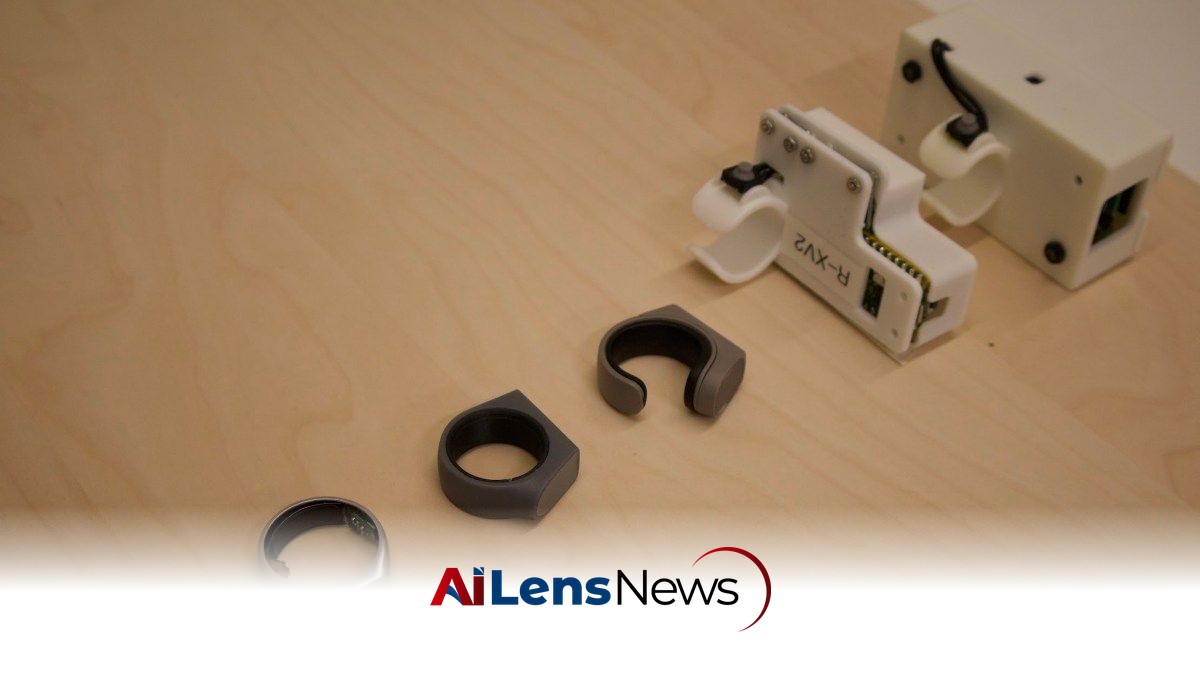


Sandbar's innovative voice ring, Stream, aims to revolutionize AI wearables by capturing thoughts and ideas seamlessly. The startup has raised $36 million to date.
New Delhi, India Aug 12, 2026 ALN: AI notetaking hardware has taken off over the past couple of years, with credit-card-sized devices, pendants, pins, and even transcribing earbuds all promising to capture your meetings and turn them into summaries and action items. These innovations have become increasingly popular as professionals seek to streamline their workflows and minimize the cognitive load associated with note-taking during meetings. The advent of artificial intelligence has enabled these devices to not only transcribe spoken words but also analyze and summarize the content, making it easier for users to focus on the discussion at hand rather than on documenting it.
Now, a whole wave of wearables — rings especially — are betting people want to capture stray thoughts and ideas the same way. This trend towards smaller, more discreet devices reflects a broader shift in consumer preferences, where users are looking for technology that integrates seamlessly into their daily lives without being intrusive. Wearable technology, particularly in the form of rings, offers a unique proposition: they are lightweight, unobtrusive, and can be worn without drawing attention, making them ideal for capturing spontaneous thoughts and ideas.
One of the companies chasing that bet is Sandbar, the startup behind the private voice ring Stream, which has raised $36 million to date, including a $23 million Series A led by Adjacent and Kindred Ventures. This significant funding underscores the growing interest in wearable technology that prioritizes user privacy and control, particularly in a landscape where data security and personal information management are paramount concerns for consumers. The investment reflects not only confidence in Sandbar's product but also an acknowledgment of the increasing demand for devices that can help users manage their thoughts in a secure manner.
The Stream ring is designed to function as a personal assistant, allowing users to record voice notes and ideas on the go. Its compact design means it can be worn comfortably throughout the day, and its functionality aims to eliminate the need for more cumbersome devices that can interrupt the flow of conversation. With the rise of remote work and hybrid models, the demand for such technology has surged, as individuals look for ways to manage their time and tasks more efficiently. The ability to capture thoughts instantly could be a game changer for professionals who often find themselves in fast-paced environments where ideas need to be noted quickly.
On this episode of the Equity podcast, Rebecca Bellan talks with Sandbar co-founder and CEO Mina Fahmi about why he thinks so many voice hardware devices before Stream struggled to break through, and why he’s betting that keeping the human firmly in control is what it’ll take to get wearable tech right. Fahmi emphasizes the importance of user agency in the design and functionality of wearable technology, arguing that previous devices often failed to resonate with consumers because they did not adequately address the needs and preferences of their users. This perspective is crucial in understanding the market dynamics and consumer expectations surrounding wearable tech.
One of the key challenges that previous voice hardware devices faced was the balance between functionality and user experience. Many early voice recorders and smart devices were often clunky, with complicated interfaces that deterred users who preferred simplicity and ease of use. Sandbar’s approach, as articulated by Fahmi, seeks to create a device that is intuitive and user-friendly, enabling users to engage with technology without feeling overwhelmed or frustrated. This focus on user experience is vital, as it can determine whether a product becomes a part of daily life or remains a novelty.
Moreover, the issue of privacy is at the forefront of the conversation surrounding wearable technology. With increasing awareness of data breaches and privacy violations, consumers are more cautious about the devices they choose to integrate into their lives. Sandbar has positioned the Stream ring as a private solution that allows users to capture their thoughts without the fear of their data being misused or compromised. This focus on privacy could be a significant differentiator in a crowded market, where many consumers are looking for devices that respect their personal information. The implications of this focus on privacy extend beyond individual users; they also influence how companies design and market their products.
The implications of this technology extend beyond individual users. As more people adopt wearable devices like the Stream ring, there could be broader societal shifts in how we communicate and manage our thoughts. The ability to capture ideas instantly could enhance creativity and productivity, allowing users to focus more on ideation and less on the logistics of remembering or documenting their thoughts. This could lead to a more dynamic work environment, where ideas flow freely and collaboration is enhanced by the ease of capturing and sharing information. In this context, the Stream ring could serve as a catalyst for more innovative workplaces.
Furthermore, the rise of AI-driven wearables could have significant implications for industries such as education, healthcare, and creative fields. For instance, in educational settings, students could use such devices to record lectures and discussions, allowing them to revisit complex topics at their own pace. This could lead to improved learning outcomes and a more personalized educational experience. In healthcare, professionals could capture and relay patient information more efficiently, potentially improving patient outcomes through better communication and reduced errors. In creative industries, artists and writers could use wearable technology to document their inspirations in real time, fostering a more fluid creative process. These applications highlight the versatility of wearable technology and its potential to transform various sectors.
As Sandbar continues to develop its technology, the company will likely face competition from both established tech giants and emerging startups. The wearable technology market is rapidly evolving, with numerous players vying for consumer attention. Sandbar's emphasis on user control and privacy may serve as a competitive advantage, but it will need to continuously innovate and adapt to changing consumer preferences and technological advancements. The landscape of wearable technology is marked by rapid innovation, and companies that fail to keep pace risk losing their competitive edge.
In conclusion, the introduction of the Stream ring by Sandbar represents a significant step forward in the evolution of AI wearables. By focusing on user-centric design, privacy, and functionality, Sandbar aims to carve out a niche in a competitive market. As the demand for wearable technology continues to grow, the success of the Stream ring could pave the way for future innovations in how we capture and manage our thoughts and ideas, potentially transforming the way we interact with technology in our daily lives. The implications of this technology extend far beyond personal use, influencing how we communicate, collaborate, and create in an increasingly digital world. As we look to the future, it will be fascinating to see how products like the Stream ring shape our interactions with technology and each other.
To learn more about the latest developments in Funding & Investments, stay updated with our exclusive reports and analyses on AiLensNews.

