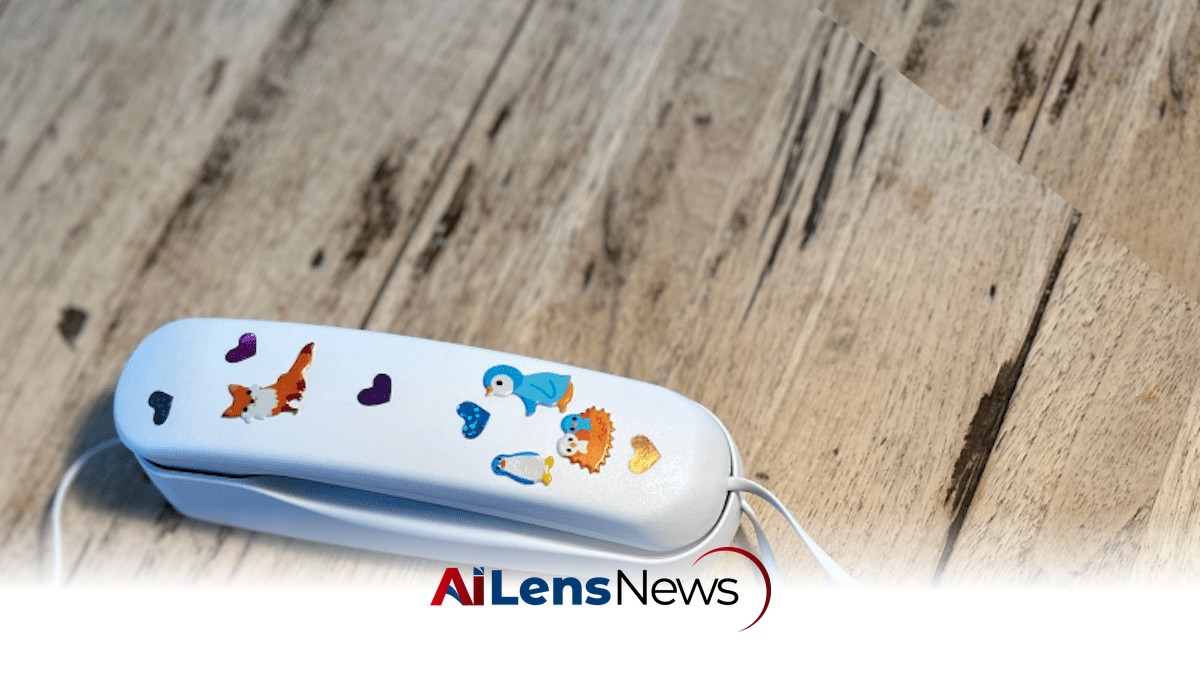


Pinwheel launches a modern landline phone designed for children, promoting meaningful conversations without smartphone distractions.
New Delhi, India Jul 14, 2026 ALN: If you remember racing home after school to grab the family landline to call your best friend before dinner, a new device from Pinwheel is aiming to reboot that experience for a new generation.
The kid-focused tech company announced Tuesday the launch of Pinwheel Home, a modern take on the classic household phone designed to let children stay connected without the distractions of a smartphone.
Pinwheel is positioning the phone as an intro to phones for children ages 5 to 10 before they’re ready for a smartphone. The company already sells kid-friendly smartphones and launched a smartwatch last year. This strategic move reflects a growing trend among parents seeking to manage their children's exposure to technology while still allowing for communication with family and friends.
Instead of texting or doomscrolling on social media, Pinwheel Home is built solely for voice calls. The company says the phone encourages more meaningful, one-on-one conversations while giving kids the independence to call friends and family and practice basic phone skills without borrowing a parent’s device. This focus on voice communication seeks to foster interpersonal skills and emotional intelligence in children, which can sometimes be overlooked in a digital-first world.
The launch comes as more parents look for ways to cut back on their children’s screen time amid growing concerns about technology’s impact on their development. Studies have linked excessive screen time to emotional, behavioral, and social challenges. For instance, research has shown that children who spend significant amounts of time in front of screens may exhibit increased levels of anxiety, depression, and attention problems. Additionally, recent research from the University of Georgia found that children who spend more time on social media tend to show weaker vocabulary development over time, including greater difficulty recognizing and pronouncing words. This highlights the need for alternatives that promote healthy communication without the pitfalls associated with smartphones and social media.
Notably, while Pinwheel Home looks like a traditional landline, it operates over Wi-Fi, eliminating the need for a phone jack. This innovation is particularly relevant in today's homes, where many families have transitioned away from traditional landlines in favor of mobile devices and internet-based communication. The phone comes in two models. The Spark starts at $68 and comes in white, black, blue, and purple. The Classic costs $79 and includes a retro-style handset and customizable stickers, with color options of pink, black, and white. The design choices are likely to appeal to children, allowing them to express their personalities while using the device.
For safety purposes, parents control the device through Pinwheel’s Caregiver Portal, where they can approve contacts, block unknown callers, spam, and robocalls, and set calling schedules and time limits. This level of parental control is crucial in today’s digital landscape, where children can be exposed to inappropriate content and interactions. Speed dial and voicemail are also available, ensuring that children can easily communicate with their trusted contacts without the complexity often associated with smartphones.
The company notes that future updates will introduce three-way calling and allow Pinwheel Home to integrate with its watches and smartphones, enabling children to use the same phone number across devices while still limiting screen time at home. This integration could enhance the overall user experience, making it easier for children to stay connected in a safe and controlled manner.
Countries like Australia have restricted social media access for children, and the U.K. has announced plans for similar measures. These international trends underscore a growing recognition of the potential harms of unrestricted access to digital platforms for young users. As governments take steps to protect children online, products like Pinwheel Home may become increasingly relevant as parents seek safe communication alternatives.
The device also joins other screen-free communication products for kids, competing with Tin Can, a $100 Wi-Fi-enabled landline that allows parents to manage approved contacts through a companion app. The competition in this niche market is indicative of a broader demand for child-friendly technology that prioritizes safety and development over the distractions of traditional smartphones.
Calls between Pinwheel Home devices are free through the company’s Pinwheel Circle service. Families who want to call standard phone numbers can choose plans starting at $6.99 per month for up to five approved contacts or $9.99 per month for unlimited calling. This pricing structure is designed to be accessible for families while still providing essential communication capabilities. For comparison, calls between Tin Can devices are also free, while its friends and family plan is $9.99 per month, illustrating the competitive landscape of child-focused communication devices.
Pinwheel Home is available now through the company’s website and is expected to launch on Amazon this fall. This availability on major retail platforms will likely enhance its reach and accessibility, allowing more families to consider this option as a viable alternative to traditional smartphones for their children.
In conclusion, the introduction of Pinwheel Home represents a significant development in the realm of child-focused technology. By providing a safe, distraction-free communication tool for young children, Pinwheel is addressing the concerns of parents while also fostering essential communication skills in the next generation. As technology continues to evolve, products like Pinwheel Home may pave the way for a more balanced approach to childhood development in the digital age.
The significance of this launch extends beyond merely offering a new gadget for children; it taps into the broader conversation about childhood development in an increasingly digital world. The impact of technology on young minds is a topic of ongoing research and debate, with many experts advocating for balanced approaches to screen time. The Pinwheel Home device could be seen as a step towards addressing some of these concerns by allowing children to engage in meaningful conversations without the distractions that often accompany smartphones.
The design of the Pinwheel Home also reflects a nostalgic element that may resonate with parents who grew up using traditional landlines. This retro aesthetic not only appeals to adult consumers but also provides children with a tangible connection to a simpler form of communication. Such design elements could play a crucial role in bridging generational gaps in technology use, fostering discussions between parents and children about the importance of communication.
Moreover, the parental control features built into the Pinwheel Home device are vital in today’s digital landscape. As children navigate their social worlds, the ability for parents to manage interactions can provide peace of mind. This is particularly important as children’s social lives increasingly move online, where risks such as cyberbullying and inappropriate content loom larger than ever. By offering a controlled environment for communication, Pinwheel Home could help mitigate some of these risks while allowing children to develop their social skills.
The implications of this product launch also touch on broader societal trends regarding technology regulation and children's online safety. As governments around the world begin to implement stricter regulations for social media use among minors, products like Pinwheel Home could serve as a model for how technology can be adapted to meet the needs of children while adhering to safety standards. This could pave the way for further innovations in child-friendly technology that prioritize safety and development.
In essence, the introduction of Pinwheel Home is not just about providing a new communication tool; it is a reflection of changing attitudes towards technology and its role in childhood development. As families increasingly seek alternatives to smartphones, products like Pinwheel Home may become essential components of a balanced approach to parenting in the digital age. By fostering communication skills and providing a safe space for interaction, Pinwheel Home could contribute positively to the social development of children in a world that is constantly evolving in terms of technology.
To learn more about the latest developments in Founders' Stories, stay updated with our exclusive reports and analyses on AiLensNews.

