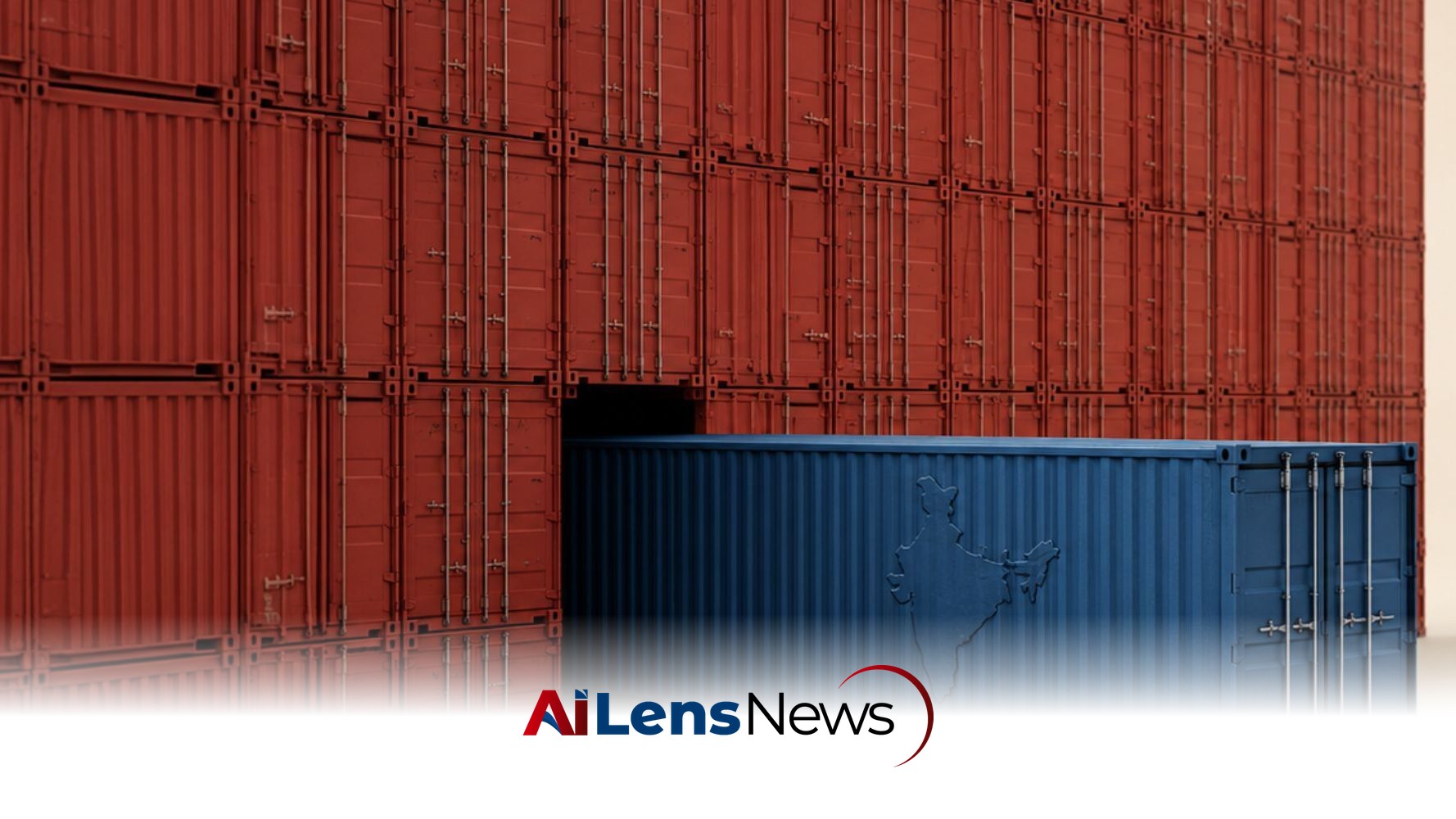


India's first Maersk-approved EXIM container marks a significant challenge to China's dominance in global shipping containers, backed by a ₹10,000 crore investment.
New Delhi, India Jul 23, 2026 ALN: In the realm of global trade, the container has become an indispensable component, facilitating the movement of goods across oceans and borders. The steel box that is a shipping container is often overlooked, yet it is a crucial element in the logistics and supply chain management of international commerce. The fact that more than 95% of the world's dry cargo containers and nearly 100% of refrigerated containers are produced in China highlights the significant monopoly that the country holds in this sector, as reported by shipping consultancy Drewry. The dominance of Chinese manufacturers in container production is not just a matter of scale; it also reflects a strategic positioning that has evolved over decades, making it difficult for other nations to compete effectively in this market.
The implications of this monopoly are far-reaching. For instance, in May 2026, the U.S. Justice Department unsealed an indictment against four Chinese container manufacturers and several executives for allegedly engaging in a price-fixing cartel that reportedly doubled container prices between 2019 and 2021. This legal action underscores the challenges faced by countries and companies that rely on Chinese-made containers, as they are subject to price fluctuations driven by monopolistic practices. In response to these challenges, on July 3, 2026, India took a significant step to disrupt this monopoly by unveiling its first export-import (EXIM) grade container manufactured domestically.
Union Minister Sarbananda Sonowal announced the launch of India's first EXIM grade container at the Maersk-CONCOR Inland Container Depot in Dadri, Uttar Pradesh. This container was produced by the DCM Shriram Group, a company primarily known for its operations in fertilizers, sugar, and chemicals, rather than container manufacturing. The significance of this development cannot be overstated; it marks a critical milestone in India's efforts to establish a foothold in the global container manufacturing market.
While it is important to note that India has had some container manufacturing capabilities in the past, such as the Jupiter Wagons' Indore plant, the new EXIM grade container represents a higher standard of quality and certification. This certification means that the container can be accepted into the fleets of international shipping lines, a requirement that was previously unmet by Indian manufacturers. The immediate follow-up order from Maersk for an additional 1,000 India-made containers signals a shift from prototype development to actual procurement, which is a crucial step for any manufacturer seeking to establish itself in the global market.
Maersk's involvement in this initiative is particularly noteworthy given its history in the container manufacturing sector. In September 2021, the company sold its refrigerated container arm, Maersk Container Industry, to China International Marine Containers (CIMC) for approximately $987 million. This sale was indicative of Maersk's retreat from manufacturing, as it sought to avoid consolidating production in a market dominated by Chinese state-owned enterprises. The collapse of this venture in August 2022, following an antitrust investigation by the U.S. Department of Justice, further emphasizes the challenges faced by companies trying to operate within a monopolistic structure.
The reasons behind China's overwhelming dominance in container production are multifaceted. Historically, the production of shipping containers saw a shift in leadership from the United States to Japan and South Korea, which collectively produced over 70% of the world's containers by the 1980s. However, the rise of China as the leading manufacturer can be attributed to several factors, including economies of scale, access to cheap steel, and substantial state support for manufacturing industries. Companies like CIMC account for approximately 42% to 45% of global container production, with other players like Dong Fang and CXIC capturing significant market shares.
The cost of production is a major barrier for countries attempting to compete with Chinese manufacturers. For example, the cost of building a 40-foot container in China is estimated to be around ₹1.5-2 lakh, while in India, the same container costs approximately ₹3.5-4 lakh. This disparity can be attributed to various factors, including logistics costs associated with transporting empty containers to export markets and the unit economics of production, which involve steel prices, manufacturing throughput, and the amortization of production facilities. Thus, the design and implementation of subsidies and support mechanisms become critical to bridging this cost gap.
In light of these challenges, the Indian government allocated ₹10,000 crore over five years in the Union Budget of 2026 for a container manufacturing initiative. This program, referred to in budget documents as the Container Manufacturing Assistance Scheme and known as the Container Manufacturing Promotion Scheme by the shipping ministry, aims to significantly increase India's container manufacturing capacity. The goal is to boost annual production from the current levels to 7.5 lakh TEUs through capital support for new manufacturing plants, operational subsidies to offset cost differences, and funding for research and development. This initiative was reportedly inspired by a meeting between Prime Minister Modi and Maersk's Robert Maersk Uggla in February 2025, which laid the groundwork for collaboration between the Indian government and Maersk.
India is not the first country to challenge China's container monopoly. Vietnam has made strides in this area as well, with companies like Hoa Phat establishing container manufacturing plants adjacent to their steel mills. In August 2025, Hoa Phat delivered 1,000 twenty-foot containers to CMA CGM and operates a facility capable of producing 200,000 TEUs annually, with a designed capacity of 500,000 TEUs. This competition illustrates that while China's dominance is formidable, it is not insurmountable. The contest for market share in container production requires not only access to steel and proximity to export markets but also a commitment to long-term investment and innovation.
The significance of India's foray into container manufacturing extends beyond the immediate context of a single container. Containers serve as a foundational infrastructure for global trade, providing the physical units through which goods are measured, priced, and transported. A nation that lacks the capability to manufacture containers becomes reliant on those who do, exposing itself to the vulnerabilities associated with monopolistic pricing and supply chain disruptions. While the introduction of the DCM Shriram container is unlikely to significantly alter China's dominant position overnight, it represents a crucial entry point into a market that has seen little competition for over a decade. It serves as a reminder that the most impactful manufacturing advancements may not always be about high-tech or high-profile products. Sometimes, they are about the essential, yet often overlooked, components that facilitate the movement of global commerce.
To learn more about the latest developments in Funding & Investments, stay updated with our exclusive reports and analyses on AiLensNews.

