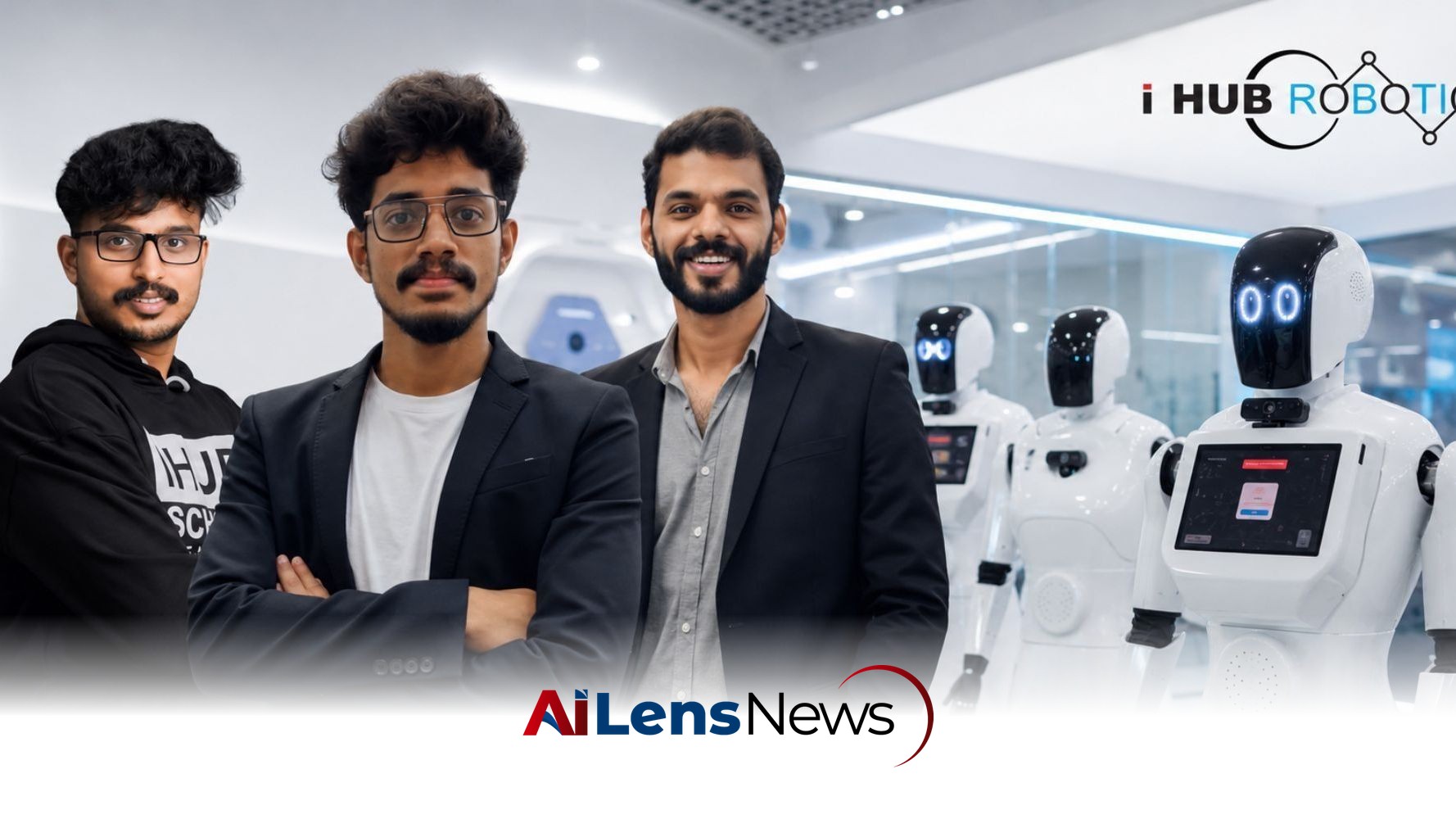


iHUB Robotics, based in Kerala, is revolutionizing the robotics industry by creating humanoid robots locally, aiming to reduce reliance on imports.
New Delhi, India Jul 15, 2026 ALN: India has long been recognized as a hub for information technology and software development, yet when it comes to robotics, particularly humanoid robots, the country has relied heavily on imports. This dependency not only inflates costs but also complicates maintenance and servicing, making advanced robotics technology inaccessible to many businesses that could benefit from automation. The landscape is shifting, however, with the emergence of innovative companies like iHUB Robotics, which is determined to change the narrative by developing humanoid robots entirely within India.
Founded in 2022 in Ernakulam, Kochi, iHUB Robotics aims to bridge the gap in India's robotics ecosystem by creating humanoid robots from scratch. This includes everything from the chassis and embedded systems to the artificial intelligence that powers these machines. By focusing on local production, iHUB Robotics hopes to make humanoid robots more affordable and accessible to a broader range of industries.
The journey to establish iHUB Robotics was not an overnight success. Athil Krishna, Akhil K Haridasan, and Sarath S, three friends from Kerala, began their exploration into humanoid robotics while studying mechatronics in Coimbatore in 2018. At that time, the Indian ecosystem was not fully equipped to support such advanced research and development in robotics. Nevertheless, they were undeterred and decided to pitch their ideas to the government, submitting defense proposals in 2019. Their persistence paid off when, in 2020, they received responses from both the Border Security Force (BSF) and the Prime Minister's Office (PMO), with the BSF expressing interest in a demonstration of their concepts.
Unfortunately, the onset of the COVID-19 pandemic delayed their plans, and they were unable to produce a working prototype in time for the planned demonstration. After regrouping in 2022, they officially launched iHUB Robotics, transforming their research into tangible products that could be brought to market.
Their first product, Tara Gen-1, was released in 2024 and represents a significant step forward in humanoid robotics. This semi-humanoid service robot is capable of speaking over 100 languages, recognizing faces and gestures, engaging in contextual conversations, and autonomously navigating spaces using advanced Simultaneous Localization and Mapping (SLAM) technology. Tara Gen-1 is available in several variants, including Tara Greet, Tara Learn, and Tara Care, each tailored for specific sectors such as hospitality, healthcare, education, banking, and public services. To date, around 35 units of Tara Gen-1 have been deployed in three different countries, marking a promising start for the company.
Following the success of Tara Gen-1, iHUB Robotics introduced Daksha, a more robust industrial humanoid capable of lifting payloads of up to 25 kg and operating at heights of eight to ten feet. This versatility positions Daksha as a valuable asset in various industrial applications, from manufacturing to logistics.
What sets iHUB's robots apart is their use of what the company refers to as "physical AI." Unlike traditional large language models that operate on a text-in, text-out basis, iHUB's robots utilize Vision-Language-Action models. This innovative approach connects the visual input the robot receives to the language processing capabilities and the physical actions it can perform. Such integration allows for more intuitive and efficient interactions between humans and machines, enhancing the overall user experience.
iHUB Robotics takes pride in its vertical integration, managing the entire production process in-house. Their facility in Kalamassery, Kochi, spans approximately 24,000 square feet, providing ample space for robots to learn tasks through repetition. This level of control over the manufacturing process not only ensures quality but also allows for competitive pricing. Entry-level systems start at around $10,000, significantly lower than the cost of imported humanoid robots, making them more accessible to businesses in India.
In January 2025, iHUB Robotics achieved a notable milestone by becoming the first Indian company selected for NVIDIA's prestigious Humanoid Robotics Program. This recognition underscores the potential of iHUB's innovations and their commitment to advancing the field of robotics in India.
iHUB Robotics primarily targets businesses across various sectors, including hospitality, healthcare, education, banking, manufacturing, and logistics. Additionally, they have developed a separate line of products aimed at defense and security applications. The company has signed memorandums of understanding (MoUs) with prominent organizations such as EY Global and SAP Germany, as well as several Indian IT and industrial firms. Their flagship product, Tara Gen-1, has already been exported to the UAE and Saudi Arabia, indicating a growing international interest in their technology.
Despite their early success, iHUB Robotics has relied primarily on revenue generated from initial projects and prototypes rather than seeking substantial outside capital. In March 2025, the company announced a pre-seed funding round in which it raised ₹4.3 crore, backed by angel investors from the United States. This funding is earmarked for what the company describes as India's largest humanoid manufacturing facility, which will be crucial for scaling production to meet growing demand.
The company's near-term goals are ambitious and multifaceted. They aim to scale production capabilities, secure research grants, and establish an industrial-humanoid research and development center in Bengaluru. Over the next two years, iHUB plans to hire more than 150 employees to support these initiatives. In addition to hardware development, the founders envision creating an iHub School of Learning, which would focus on training students in robotics and artificial intelligence, thus nurturing the next generation of talent in this rapidly evolving field.
The overarching ambition of iHUB Robotics is both clear and challenging: to position India as a producer of humanoid robots rather than a consumer reliant on imports. This vision not only seeks to foster innovation within the country but also aims to create a self-sustaining ecosystem that can support the growth of robotics technology in India. By investing in local talent and infrastructure, iHUB Robotics is striving to ensure that India can compete on the global stage in the field of humanoid robotics.
As the robotics industry continues to evolve, the implications of iHUB Robotics' efforts could be profound. A successful transition to local production of humanoid robots could lead to increased job creation, technological advancements, and a stronger position for India in the global robotics market. Furthermore, by addressing the challenges of accessibility and affordability, iHUB Robotics could empower a wide range of industries to adopt automation technologies, ultimately enhancing productivity and efficiency across the board.
In conclusion, iHUB Robotics stands at the forefront of a transformative movement in India's robotics landscape. With a commitment to innovation, local production, and education, the company is not only building humanoid robots but also laying the groundwork for a robust ecosystem that could redefine the future of robotics in India.
To learn more about the latest developments in Founders' Stories, stay updated with our exclusive reports and analyses on AiLensNews.

