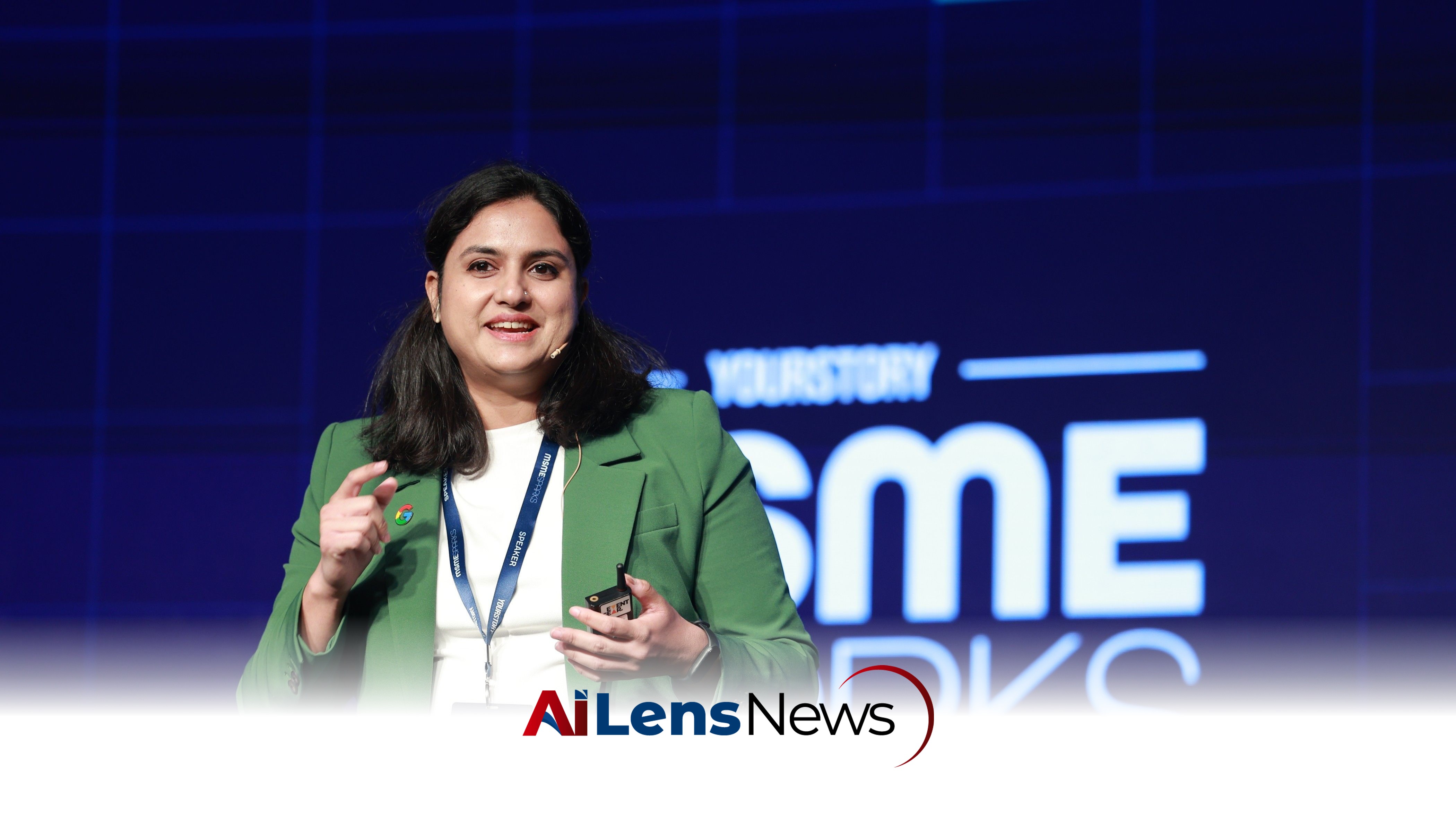


At MSME Sparks 2026, Google Cloud's Nikhila Gudipati showcased how Gemini Enterprise empowers businesses to leverage AI for smarter decision-making.
New Delhi, India Jul 14, 2026 ALN: Artificial Intelligence (AI) has become a pivotal element in the modern business landscape, driving efficiency and innovation across various sectors. As businesses grapple with the integration of AI technologies, there remains a significant divide between recognizing the importance of AI and effectively implementing it to enhance decision-making processes. This gap is not merely a reflection of ambition or financial resources; rather, it often stems from a lack of clarity regarding which specific challenges AI should address first and which decisions should remain under human control. This critical question was the focal point of the keynote address delivered by Nikhila Gudipati, Customer Engineering Leader at Google Cloud, during the grand finale of MSME Sparks 2026.
MSME Sparks 2026 served as a significant platform for discussing the evolution of Micro, Small, and Medium Enterprises (MSMEs) in India. The event spanned four virtual days, delving into various themes that influence the growth of these enterprises, including digital transformation, access to capital, and the transformative role of AI in everyday operations. The grand finale, held on June 26 at the prestigious ITC Gardenia in Bengaluru, marked the only in-person gathering of the week, bringing together founders, industry leaders, and other key stakeholders to engage in meaningful discussions that had been initiated during the virtual sessions.
In her keynote titled ‘Smarter Decisions with AI,’ Gudipati illuminated the potential of AI to revolutionize business decision-making processes. She began her presentation with a compelling statistic: "254 is the average number of business applications that a typical company works with." This figure starkly illustrates the complexity and fragmentation that many organizations face, where data is often dispersed across multiple siloed applications. The implications of this disarray extend beyond mere inefficiency; it creates a "toggle tax," which refers to the cognitive and operational burden associated with constantly switching between applications to achieve a unified view of the business. Gudipati posited that Gemini Enterprise is designed to mitigate this issue by serving as a centralized hub for the creation, publication, and governance of AI agents throughout an organization’s workflows.
To provide a tangible understanding of how Gemini Enterprise operates, Gudipati showcased two live demonstrations that highlighted the practical applications of AI in business contexts. In the first demonstration, a contract lifecycle management agent was tasked with identifying expiring client contracts. The agent not only flagged these contracts but also pulled relevant data from Customer Relationship Management (CRM) and compliance systems, identified the highest-risk accounts based on revenue, and drafted outreach messages for contract renewals. Furthermore, the agent offered options to schedule or automate follow-up communications, thereby streamlining a typically labor-intensive process.
Gudipati emphasized the transformative capability of AI, stating, "It's not just about asking based on prompts. It's actually the ability to execute on your behalf, so that you can focus on the more strategic and important things for your business." This perspective underscores the potential of AI to take on routine tasks, thereby allowing human employees to concentrate on higher-level strategic initiatives.
The second demonstration involved a retail operations Vice President attempting to diagnose the underperformance of a specific store. The AI agent analyzed data from point-of-sale systems, inventory records, and employee performance metrics to identify three fundamental issues contributing to the store's challenges, including low customer satisfaction and high employee turnover. In addition to diagnosing the problems, the agent proactively offered to schedule a follow-up meeting with the store manager, complete with pertinent data points. Such capabilities illustrate how AI can enhance operational efficiency and decision-making through data-driven insights.
Examples of organizations utilizing multi-agent systems were also highlighted, such as investment firms that leverage AI to enable analysts to research five times more companies than they could manually, and large manufacturing entities that have achieved near-automation in Human Resources query resolution while simultaneously reducing defect turnaround times. These cases exemplify the scalability and effectiveness of AI solutions in various business environments.
For the MSME leaders present at the event, Gudipati offered practical advice on how to begin integrating AI into their operations. She encouraged them to start with low-stakes, reversible decisions that could be delegated to AI agents. By doing so, businesses can gradually familiarize themselves with AI technologies while maintaining control over critical aspects of their operations.
"What are some of those reversible decisions that you can make that you can hand off to an agent, so that you are able to focus again on the critical and strategic aspects of your role?" Gudipati asked, prompting attendees to reflect on their own business processes and consider where AI could provide the most value.
Addressing a common concern regarding the security implications of AI implementation, Gudipati asserted that security is a key differentiator for Gemini Enterprise. She acknowledged that while security may not be the most glamorous topic in discussions about AI, it is a fundamental aspect that organizations must prioritize. "It is the most boring thing. It is the least fabulous thing that companies worry about, but it is actually our biggest differentiator," she stated, emphasizing the importance of robust security measures in building trust and ensuring the safe deployment of AI technologies.
To facilitate the adoption of AI, Gemini Enterprise offers a 30-day free trial that can be accessed directly through Google Search. This initiative provides businesses with a low-risk opportunity to explore AI capabilities, aligning perfectly with the guidance Gudipati provided during her session. By encouraging businesses to experiment with AI in a controlled manner, the trial aims to empower organizations to make informed decisions about the integration of AI into their workflows.
The implications of AI adoption in the business sector are profound. As organizations increasingly turn to AI to enhance decision-making and operational efficiency, the potential for transformative change becomes evident. The ability to leverage data-driven insights can lead to improved performance, increased competitiveness, and ultimately, greater success in the marketplace. However, the journey toward AI integration requires careful consideration of the specific challenges faced by each organization, as well as a commitment to addressing security and ethical concerns associated with the use of AI technologies.
In conclusion, the keynote by Nikhila Gudipati at MSME Sparks 2026 highlighted the critical role of AI in shaping the future of business decision-making. By providing practical insights and real-world examples, Gudipati illustrated how tools like Gemini Enterprise can empower organizations to navigate the complexities of modern business environments. As AI continues to evolve, its potential to drive innovation and improve operational efficiency will only grow, making it an essential consideration for business leaders seeking to thrive in an increasingly competitive landscape.
To learn more about the latest developments in Startup Ecosystem Trends, stay updated with our exclusive reports and analyses on AiLensNews.

