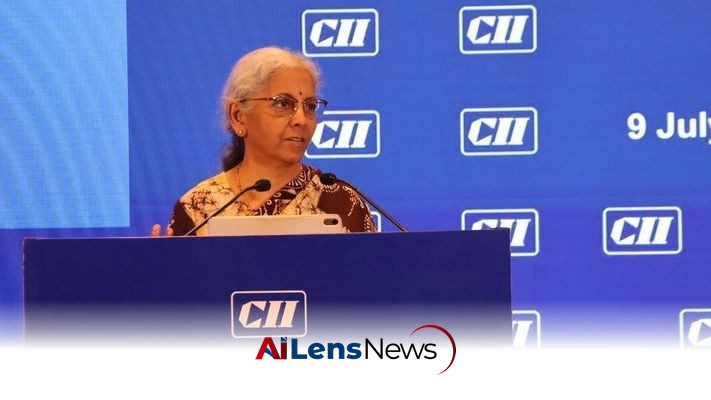


Finance Minister Nirmala Sitharaman announced India's ambition to lead in hosting Global Capability Centres (GCCs) during the CII GCC Business Summit 2026.
New Delhi, India Jul 10, 2026 ALN: India's ambition to emerge as a strategic leader in hosting global capability centres (GCCs) is a significant aspect of its broader economic strategy, reflecting the country's growing importance in the global knowledge economy. Finance Minister Nirmala Sitharaman's remarks at the CII GCC Business Summit 2026 underscore the government's commitment to transforming India into a hub for innovation and strategic decision-making for multinational corporations (MNCs).
The concept of global capability centres refers to specialized facilities established by MNCs to leverage local talent and resources for various functions, including research and development, technology services, and business operations. These centres serve as critical nodes in the global supply chain, allowing companies to tap into the expertise and skills available in different regions. India, with its vast pool of skilled professionals, particularly in technology and engineering, has become a preferred destination for such centres.
In recent years, India has witnessed a remarkable growth trajectory in the GCC sector. The statement that India has progressed from establishing one new GCC every week in 2024 to averaging one new addition every day is indicative of the rapid expansion of this ecosystem. Currently, India is home to over 2,100 GCCs, which employ approximately 2.3 million professionals and generate nearly $100 billion in annual revenue. This growth not only highlights the country's capabilities but also reflects the increasing confidence of global companies in India's potential as a strategic partner.
However, Sitharaman emphasized that the evolution of India's GCC ecosystem is not solely about scale. The focus has shifted towards enabling global enterprises to develop next-generation products and frontier technologies. This transition signifies a broader ambition: to not only host capability centres but to also shape the future of technology and enterprise strategies from within India. The Finance Minister articulated this vision, stating, "Our aspiration is not merely to host the world's capability centres, but to shape next-generation technologies and products and enterprises of the future. This is how India transitions from capability to leadership."
Such a shift in focus has significant implications for India's economy. By positioning itself as a leader in technology and innovation, India aims to enhance its long-term economic resilience and strategic relevance. As global markets evolve, the demand for advanced technologies and innovative solutions is likely to increase, providing India with an opportunity to redefine its role in the global economy. The Finance Minister's assertion that the transition from capability to global leadership will define India's next decade underscores the importance of this strategic pivot.
Despite the impressive growth in the GCC sector, there remains considerable room for expansion. Notably, around two-thirds of Fortune Global 2000 companies have yet to establish a GCC in India, representing one of the largest untapped investment opportunities available. This gap presents a significant opportunity for the Indian government and industry stakeholders to attract more global companies to set up their GCCs in the country.
In her address, Sitharaman highlighted that Indian GCCs are increasingly taking on larger shares of global leadership mandates and strategic decision-making responsibilities. This evolution indicates a shift in the value proposition of Indian GCCs from merely being cost-efficient options to becoming leaders in capability and innovation. The Finance Minister remarked, "Indian GCCs are increasingly taking on a larger share of global leadership mandates and strategic decision-making responsibilities. In essence, India's value proposition has shifted from cost-efficiency to capability leadership."
As the global business landscape becomes more competitive, enterprises are now focusing on maximizing innovation, accelerating discovery, and strengthening long-term competitiveness. This shift in focus aligns with India's vision for its GCCs, as highlighted by Sitharaman's statement that the ambition for the next decade should not only be about hosting more GCCs but also ensuring that a growing share of the world's ideas, patents, products, algorithms, platforms, and enterprise capabilities are conceived, engineered, and led from India.
For India to realize this vision, it is essential to create an enabling policy ecosystem that reduces friction, enhances certainty, and supports long-term investments in the GCC sector. The Finance Minister acknowledged that several measures have already been introduced in the 2026-27 Union Budget to facilitate this growth. These measures are aimed at creating a conducive environment for both domestic and international players to thrive in India's GCC landscape.
Moreover, Sitharaman urged the industry to engage proactively with state governments, educational institutions, and local communities to prepare Tier-2 and Tier-3 cities for the next wave of GCC investments. This call to action is crucial, as it emphasizes the need for a collaborative approach to develop the necessary infrastructure and talent pool in smaller cities, which could play a vital role in the future of India's GCC ecosystem.
Additionally, the Finance Minister encouraged industry stakeholders to decisively move up the value chain by creating intellectual property, leading frontier research, developing artificial intelligence applications, and driving global innovation. This focus on innovation is critical for ensuring that India remains at the forefront of technological advancements and can effectively compete on a global scale.
Furthermore, deepening engagement with India's knowledge institutions is essential to ensure that innovation transitions smoothly from laboratories to markets. By fostering collaboration between academia, industry, and government, India can create a robust ecosystem that nurtures talent, encourages research, and facilitates the commercialization of innovative ideas.
In conclusion, India's ambition to become a strategic leader in hosting global capability centres is a multifaceted endeavor that involves not only attracting more GCCs but also fostering innovation and leadership in technology and enterprise strategies. As the country navigates this transformative journey, it is essential to focus on creating a supportive ecosystem that encourages collaboration, investment, and growth. The implications of this vision extend beyond economic metrics; they encompass India's role in shaping the future of the global knowledge economy and enhancing its strategic relevance in an increasingly interconnected world.
To learn more about the latest developments in Events & Summits, stay updated with our exclusive reports and analyses on AiLensNews.

