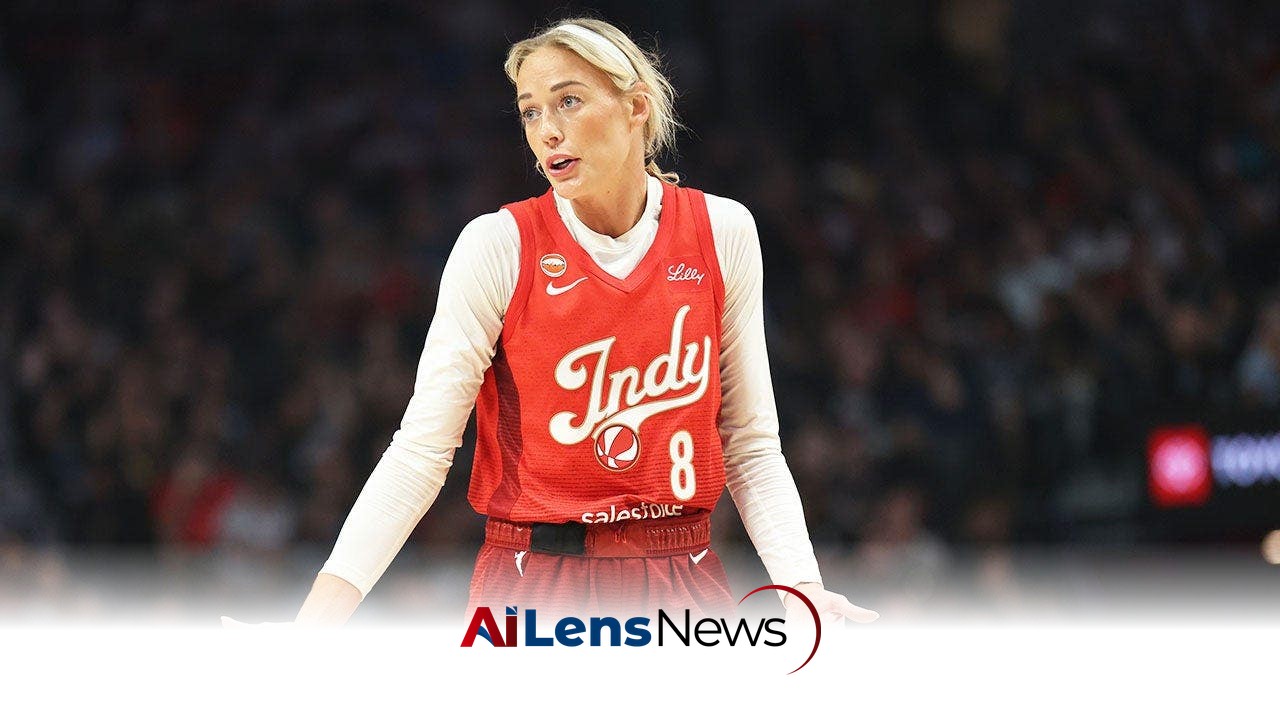


In a controversial op-ed, sportswriter Howard Bryant labels WNBA star Sophie Cunningham as the right's 'anti-Black, anti-transgender culture war ambassador,' igniting debate over gender and race in sports.
Washington DC, United States Aug 4, 2026 ALN: In a provocative op-ed published in The Guardian, sportswriter Howard Bryant has accused WNBA star Sophie Cunningham of embodying the right's 'anti-Black, anti-transgender culture war ambassador.' This statement follows Cunningham's public stance against biological males competing in women's sports, a position that has sparked significant controversy. The debate over transgender athletes in women's sports has become a flashpoint in contemporary discussions about gender identity, fairness, and inclusion, drawing passionate responses from various sides of the political spectrum.
During a recent confrontation in Minneapolis, tensions flared as trans activists confronted supporters of Cunningham, who was backed by women's sports advocates. The event took place outside the Indiana Fever vs. Minnesota Lynx game, where Jennifer Sey, founder of XX-XY Athletics, and Kendall Kotzmacher described facing hostility from counter-protesters. Sey noted that despite the loud demonstrations, over 50 peaceful supporters gathered to show solidarity with female athletes advocating for fairness in competition. This incident highlights the increasingly polarized environment surrounding discussions of gender and sports, where passionate advocates on both sides often clash in public forums.
In his op-ed, Bryant likened Cunningham's political stance to that of Colin Kaepernick, suggesting that her comments reflect a broader right-wing agenda. He stated, "Cunningham plays the role of the blithe and bubbly iconoclast, oblivious to the world around her as she unapologetically speaks her truths, but she is every bit as political as Colin Kaepernick." Kaepernick, a former NFL quarterback, became a national figure for his protests against racial injustice, specifically through kneeling during the national anthem. By drawing this parallel, Bryant implies that Cunningham’s advocacy for women’s sports is not merely a personal belief but part of a larger, politically charged narrative that seeks to undermine the rights of marginalized groups, particularly transgender individuals.
Cunningham, in response to the backlash, expressed her intentions to extend love while also being honest about her beliefs. "I want to protect young girls in a locker room, or young girls in sport who shouldn’t have to go against biological men," she told ESPN last month. Her comments underscore a common argument made by those who oppose the inclusion of transgender women in women's sports: the belief that biological differences create an uneven playing field that could disadvantage cisgender female athletes. This perspective has gained traction among certain segments of the population, particularly among those who prioritize the protection of women's sports and opportunities for female athletes.
According to a recent Pew Research Center survey, a significant majority of Americans—79%—oppose allowing individuals who were male at birth to compete in female sports categories. This statistic suggests that Cunningham's views resonate with a large segment of the population, despite the loud opposition from a radical minority. The survey results indicate a complex landscape in which public opinion is often at odds with the narratives promoted by some advocacy groups and media outlets. As such, the issue of transgender athletes in women's sports continues to be a contentious topic that elicits strong emotions and divergent viewpoints.
Bryant's op-ed further accused Cunningham of engaging in 'anti-blackism,' claiming that her stance on women's sports aligns her with a culture war narrative that seeks to undermine the rights of marginalized groups. He stated, "Indiana Fever guard Sophie Cunningham is now in the act, accepting the role as the right’s anti-Black, anti-transgender culture war ambassador, the role originally intended for Caitlin Clark." However, he failed to clarify the connection between Cunningham's advocacy for women's sports and racial issues. This omission raises questions about the validity of his claims and whether they are grounded in a genuine concern for equity or if they are more reflective of a broader political agenda aimed at discrediting those who hold differing views on gender and sports.
In a broader context, Bryant's critique reflects a trend within sports media, where figures like Jemele Hill and Sarah Spain have reacted strongly against Cunningham's comments. The narrative suggests that those who oppose the inclusion of biological males in women's sports are often labeled as transphobic or racially insensitive. This labeling can create an environment where open dialogue is stifled, as individuals may fear backlash for expressing their opinions. The implications of such narratives extend beyond the sports world, influencing public perceptions of gender identity and the rights of transgender individuals.
Interestingly, Cunningham's rise to prominence has been attributed to her willingness to defend fellow athlete Caitlin Clark, who has faced unfair treatment in the media. Fans appreciate Cunningham for acknowledging Clark's status as a significant draw in the WNBA and for standing up against perceived injustices. This solidarity among athletes can be crucial in a landscape where public opinion is often shaped by media portrayals and social media narratives. By supporting each other, athletes like Cunningham and Clark can amplify their voices and advocate for their rights and the rights of their peers.
In a notable twist, Bryant's own past includes an arrest for allegedly assaulting his wife, an incident he attributed to racism. This background raises questions about the motivations behind his op-ed and the broader implications of labeling athletes like Cunningham as problematic. Critics may argue that personal experiences should not dictate the validity of one's arguments, yet they can provide important context when examining the motivations of public figures in the discourse surrounding contentious issues.
Ultimately, Cunningham's resistance to the prevailing narrative in sports media does not make her a polarizing figure in the eyes of most Americans. Rather, it positions her as relatable and grounded in the realities of women's sports. As the conversation around transgender participation in sports continues to evolve, Cunningham's stance may resonate with those who prioritize the integrity of women's sports while also navigating the complexities of gender identity. The ongoing debate will likely remain a focal point in sports discussions, reflecting broader societal tensions regarding inclusion, fairness, and the rights of all individuals to compete and participate in athletic endeavors.
To learn more about the latest developments in Basketball, stay updated with our exclusive reports and analyses on AiLensNews.

