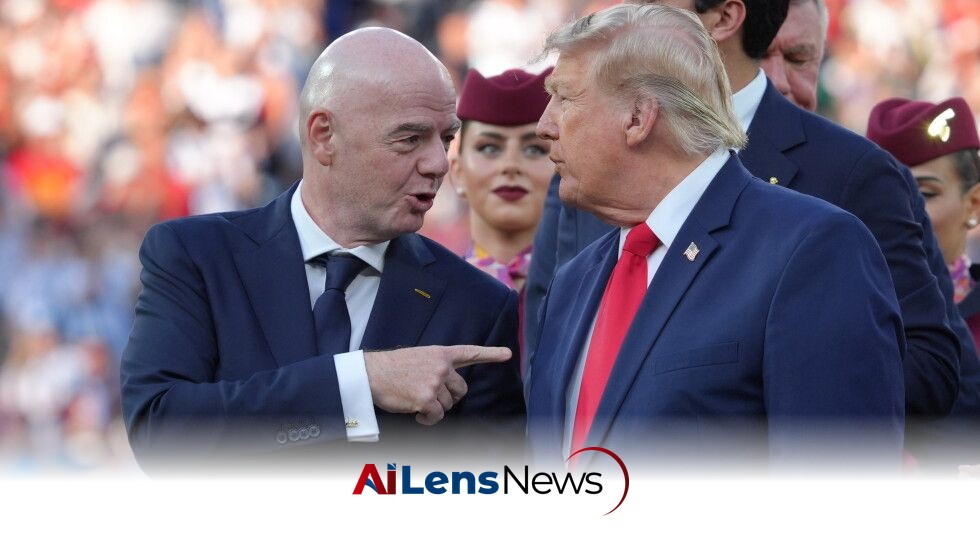


U.S. President Donald Trump's involvement in the decision to clear Folarin Balogun from a one-game ban at the World Cup has prompted Norway to consider a formal complaint to FIFA ethics investigators.
Washington DC, United States Jul 24, 2026 ALN: The recent decision regarding U.S. soccer player Folarin Balogun has ignited controversy, particularly due to the involvement of U.S. President Donald Trump. Balogun was cleared of a mandatory one-game ban following a red card incident during the World Cup, a ruling that has raised eyebrows across the soccer community. This incident not only highlights the challenges of maintaining integrity in sports but also underscores the potential for political influence to permeate athletic governance.
Norwegian officials are reportedly considering filing a formal complaint with FIFA ethics investigators, questioning the integrity of the decision-making process. The situation has drawn attention not only for its implications on the tournament but also for the potential influence of political figures in sports governance. As sports continue to grow in global prominence, the intersection of politics and athletics becomes increasingly scrutinized, with stakeholders demanding transparency and accountability.
During a critical match, Balogun received a red card, which typically results in a one-game suspension. The red card was issued in response to an incident deemed unsportsmanlike, a decision that is standard in soccer to maintain discipline and fairness on the field. However, the subsequent ruling that allowed him to continue playing has been met with skepticism. Critics argue that such decisions should remain free from political influence, emphasizing the need for transparency and fairness in sports. The red card incident and its aftermath have raised questions about how disciplinary measures are enforced and who may exert influence over these crucial decisions.
The red card incident itself occurred during a match that was pivotal for the U.S. team, as they sought to advance further in the tournament. Balogun, a young and talented player, has been viewed as a key asset for the team, which may have contributed to the scrutiny surrounding the decision to overturn the suspension. The incident has sparked a broader debate about the consistency of officiating in soccer, particularly in high-stakes matches where the pressure to perform is immense.
Reports indicate that Trump's discussions with FIFA President Gianni Infantino may have played a role in the decision to clear Balogun. This connection has led to concerns about the intersection of politics and sports, particularly in high-stakes international competitions like the World Cup. Trump's tenure as president has been marked by a propensity to engage in discussions that blur the lines between sports and politics, often leveraging his position to influence various sectors, including athletics. The implications of such discussions raise significant ethical concerns, particularly regarding how decisions are made and whose interests are prioritized.
Trump's influence in the realm of sports is not a new phenomenon; his administration often engaged with various sports organizations, and he has been known to express opinions on athletes and sporting events. This has created a perception that political figures can sway decisions in sports, which could undermine the principles of fair play and impartiality that are supposed to govern athletic competitions. The notion that a player’s fate could be influenced by political discussions raises alarms about the integrity of sports governance.
In light of these developments, Norway's football federation is contemplating a formal complaint to FIFA. They argue that the integrity of the game is at stake and that any perceived favoritism or political interference undermines the spirit of fair play. Norway has a history of advocating for ethical standards in sports, and this incident aligns with their broader commitment to maintaining integrity in international competitions. They are concerned that if political influence is allowed to dictate outcomes, it could set a dangerous precedent that undermines the credibility of FIFA and the sport itself.
The Norwegian football federation's actions reflect a growing concern among many nations about the integrity of international sports organizations. They emphasize the need for FIFA to adhere to strict ethical standards and to operate free from external pressures that could compromise the fairness of competitions. This situation has the potential to galvanize other nations to take similar stands, leading to a broader movement advocating for transparency and accountability in sports governance.
This incident could have far-reaching implications for FIFA, which has faced scrutiny in the past regarding its governance and decision-making processes. FIFA has been embroiled in various scandals over the years, including corruption allegations and questions about transparency in its operations. As the governing body of international soccer, FIFA is tasked with maintaining the integrity of the sport, and any allegations of misconduct could further damage its reputation. The organization has made efforts to reform its practices and ensure fair play, but incidents like this challenge those efforts and may lead to calls for more stringent oversight and accountability measures.
Moreover, FIFA's response to Norway's complaint will be closely watched by the global sports community. A failure to adequately address the concerns could lead to increased skepticism regarding FIFA's commitment to ethical governance. Conversely, a transparent and decisive response could help restore some confidence in the organization and its ability to manage the complexities of international sports amidst political pressures.
The unfolding situation surrounding Folarin Balogun's red card ruling highlights the complex relationship between politics and sports. As Norway prepares to take action, the world will be watching closely to see how FIFA responds to these allegations and whether it can uphold the principles of fairness and integrity in the beautiful game. The outcome of this situation could serve as a pivotal moment for FIFA, potentially influencing how the organization navigates the delicate balance between political pressures and the sanctity of sport. Furthermore, this incident may provoke broader discussions about the role of governance in sports and the necessity of safeguarding athletic integrity from external influences.
As the global sports community continues to grapple with these issues, it is essential for governing bodies like FIFA to demonstrate a commitment to ethical practices. The integrity of the game relies on the belief that all players are held to the same standards and that decisions are made based on fairness rather than political agendas. The scrutiny surrounding Balogun's case serves as a reminder of the ongoing challenges faced in preserving the spirit of sportsmanship and the need for vigilance against any form of corruption or bias.
In the coming weeks, it will be critical for FIFA to address the concerns raised by Norway and other stakeholders. The organization's response could set a precedent for how similar situations are handled in the future, potentially influencing the relationship between sports and politics on a global scale. As discussions unfold, the importance of maintaining a clear boundary between the two realms will be paramount to ensure that the integrity of sports is upheld for generations to come.
To learn more about the latest developments in Golf, stay updated with our exclusive reports and analyses on AiLensNews.

