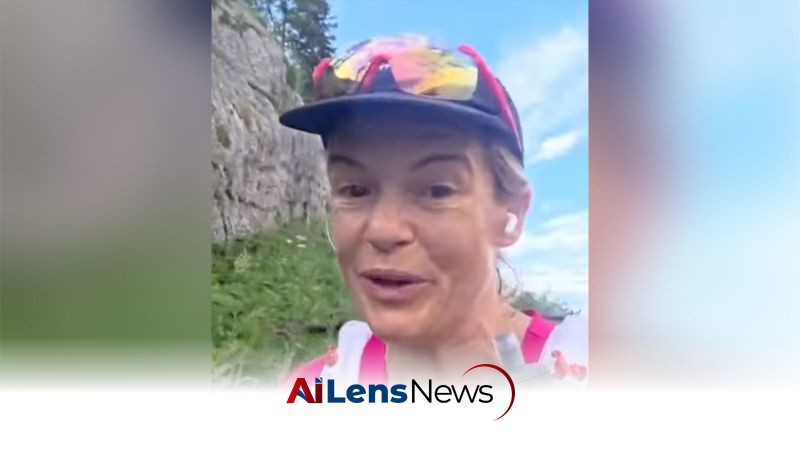


New Zealand ultrarunner Sophie Woods breaks records by completing a 1,240-mile run across eight European countries in just 29 days.
Washington DC, United States Aug 4, 2026 ALN: What did you do in the past 29 days? For Sophie Woods, a 42-year-old ultrarunner from New Zealand, the answer is extraordinary. She has achieved a remarkable feat by running 1,240 miles across eight countries, setting a new record in one of the world’s most challenging endurance events. Woods not only broke the existing time records for both men and women but also showcased the physical and mental resilience required to conquer such a grueling challenge.
The challenge Woods undertook is known as the Via Alpina, a renowned long-distance hiking trail that traverses a vast and picturesque alpine region in Europe. This trail stretches from the eastern side of Italy, through Slovenia, Austria, Germany, Liechtenstein, Switzerland, and culminates in France and Monaco. The Via Alpina is famous not only for its breathtaking views but also for its demanding terrain, which includes steep ascents, rocky paths, and technical sections that require a high level of skill and endurance.
Woods began her journey on July 4, starting in Trieste, a port city in northeastern Italy. After 29 grueling days, she crossed the finish line in Monaco, achieving her goal of completing the Via Alpina faster than anyone before her. Her time of 29 days surpassed the previous record set by British runner Jake Catterall in 2024 by an impressive six days. Furthermore, Woods also eclipsed the previous fastest woman's record, held by Dutch runner Tessa Caspers, who completed the run in 38 days.
In a post on her Instagram account, Woods expressed her overwhelming joy and disbelief at her accomplishment, stating, "I’m absolutely ecstatic. I still can’t believe that we did it." This sentiment reflects the emotional highs and lows that come with undertaking such an immense physical challenge. The journey was not just about speed; it was also about perseverance, stamina, and the mental fortitude required to push through the pain and exhaustion that accompany long-distance running.
Woods’s experience highlights the extensive preparation that goes into ultra-endurance events. In her reflections, she noted that her entire running career had been a preparation for this moment. She recalled the technical mountains and exposed ridges she had encountered in previous races, which helped her develop the skills necessary to navigate the diverse and challenging terrain of the Via Alpina. However, she acknowledged that the length and duration of this challenge set it apart from anything she had faced before.
"Whatever you do on Day 2 is going to reflect you on Day 22," Woods remarked, emphasizing the importance of pacing oneself over such a prolonged period. This insight speaks to the strategic planning and mental discipline required to succeed in ultra-endurance events, where every decision made early on can have significant consequences later in the race.
Woods’s journey was not without its difficulties. In an interview with British broadcaster BBC, she described the physical toll the run took on her body, particularly in the first week, when her muscles were swollen and sore. To break the record, she had to make sacrifices, including reducing her sleep towards the end of the run to fewer than two and a half hours per night. This level of sleep deprivation is common among ultra-runners, who often face the challenge of balancing rest with the need to maintain a fast pace.
The timing of Woods’s run coincided with a severe heatwave that swept across Europe, with temperatures soaring past 100 degrees Fahrenheit in some regions. This added another layer of difficulty to her challenge, as she had to navigate not only the demanding terrain but also the oppressive heat. In her social media posts, she described the relentless nature of the heat and shared that she resorted to drinking slushies made with crushed ice to cool down during her runs.
Moreover, Woods faced the added danger of running near wildfires, which posed a significant risk during her journey. The combination of extreme temperatures and wildfires created a precarious situation, testing her resolve and adaptability as she pushed through the adversity. This aspect of her journey brings to light the broader context of climate change and its effects on outdoor activities, as extreme weather events become increasingly common.
Support played a crucial role in Woods’s success. Her husband and dog accompanied her throughout the journey, providing not only emotional support but also essential supplies such as food and hydration. This highlights the often-overlooked aspect of endurance sports: the community and support systems that enable athletes to achieve their goals. The presence of loved ones can significantly impact an athlete's morale, especially during the toughest moments of a long-distance challenge.
As she reflected on her experience, Woods shared the physical toll the run took on her body. She described sleeping in a van, often in a pool of sweat, and feeling "completely pooped" after the grueling days of running. However, she also conveyed a sense of satisfaction and delight upon completing the challenge, stating, "Delightful once you finish one of these things." This duality of exhaustion and exhilaration is a hallmark of endurance sports, where the journey is often as rewarding as the destination.
Woods’s achievement is not just a personal victory; it serves as an inspiration for aspiring ultrarunners and outdoor enthusiasts around the world. Her record-breaking run across the Via Alpina showcases the extraordinary capabilities of the human body and spirit, as well as the dedication required to push beyond perceived limits. As she continues to share her story and experiences, Woods is likely to motivate others to pursue their own challenges, whether in running or other aspects of life.
In conclusion, Sophie Woods’s record-breaking run across eight countries is a testament to her remarkable endurance, resilience, and determination. It highlights the challenges faced by ultrarunners and the importance of preparation, support, and mental strength in overcoming obstacles. As the world continues to grapple with the implications of climate change and extreme weather, her story also serves as a reminder of the need for awareness and adaptability in outdoor pursuits. Woods’s journey is not just about setting records; it is about inspiring others to embrace their own challenges and strive for greatness.
To learn more about the latest developments in Global Tournaments & Olympics, stay updated with our exclusive reports and analyses on AiLensNews.

