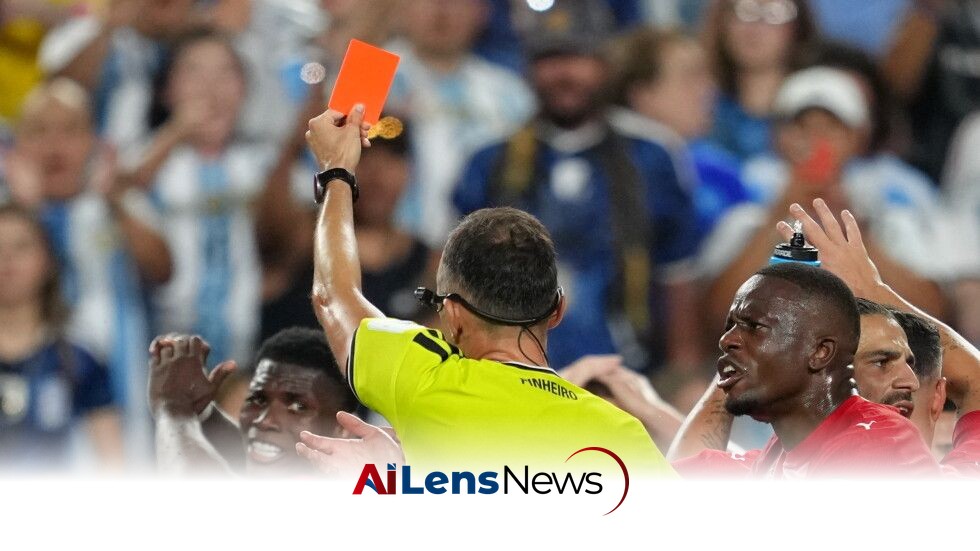


Soccer's law-making panel clarifies that Switzerland's Breel Embolo should not have received a red card during the World Cup quarterfinal match against Argentina.
Washington DC, United States Jul 29, 2026 ALN: In a significant ruling, soccer's law-making panel has clarified that the decision to send off Switzerland's forward Breel Embolo during the World Cup quarterfinals against Argentina was incorrect. This ruling comes after a review of the incident that occurred on July 11, 2026, in Kansas City, Missouri. The decision has sparked considerable discussion regarding the standards of officiating in high-stakes matches, raising questions about the implications for both players and referees in future competitions.
The match in question was a tense encounter between two highly competitive teams, both vying for a place in the semifinals of the prestigious tournament. Referee Joao Pinheiro issued a red card to Embolo after he received a second yellow card for a challenge on Argentina's Leandro Paredes. The incident unfolded in the second half of the match, and the decision to send off Embolo proved to be a pivotal moment, altering the dynamics of the game. The controversy surrounding the red card ignited debates among fans, commentators, and analysts, with many questioning the appropriateness of the referee's judgment in such a critical moment.
In soccer, the issuance of a second yellow card leading to a red card is a significant disciplinary action that can drastically affect a team's performance. In this instance, Embolo's dismissal left Switzerland with ten players, forcing them to adopt a more defensive strategy in an already challenging match. The subsequent shift in momentum raised concerns about the impact of officiating decisions on the integrity of the game and the fairness of competition. The emotional toll on players and fans alike was palpable, as the stakes of the World Cup are immensely high, with national pride and the dreams of millions on the line.
The law-making panel's announcement confirmed that Embolo's actions did not warrant a dismissal from the match. The panel's review process involved a careful examination of the footage and the context of the incident, taking into account the rules of the game as well as the spirit of fair play. This clarification aims to uphold the integrity of the game and ensure that referees are equipped with the correct guidelines when making crucial decisions on the field.
The ruling has been welcomed by many within the soccer community, who argue that accurate officiating is essential to maintaining the fairness and competitiveness of the sport. Critics of the initial decision have pointed out that the pressure on referees during high-stakes matches can lead to hasty judgments that may not accurately reflect the actions of the players involved. The panel's ruling reinforces the need for ongoing training and support for referees to ensure they are capable of making informed decisions under pressure.
This ruling not only affects the outcome of the match in question but also sets a precedent for how similar situations will be handled in the future. The panel emphasized the importance of accurate officiating in maintaining fair play and sportsmanship in soccer. The implications of this ruling extend beyond the immediate context of the World Cup quarterfinals, as they may influence how referees approach similar challenges in subsequent matches, both in the tournament and in other competitions.
Moreover, this incident has sparked a broader discussion about the need for improved technology and resources in officiating. The use of video assistant referees (VAR) has been a topic of heated debate since its introduction, with proponents arguing that it enhances the accuracy of officiating, while critics contend that it disrupts the flow of the game. The panel's ruling highlights the importance of having reliable systems in place to assist referees in making the right decisions, particularly in high-stakes situations where the outcome of a match can hinge on a single call.
Referees often face immense pressure during matches, especially in high-profile tournaments like the World Cup. The scrutiny from fans, media, and the teams can be overwhelming, and the potential for human error is always present. As such, the implementation of technology such as VAR aims to reduce the likelihood of critical mistakes. However, the technology must be used judiciously, and its integration into the game should not detract from the fluidity and excitement that soccer is known for. The balance between human judgment and technological assistance remains a delicate one.
The decision to rescind Embolo's red card highlights the ongoing efforts to refine the rules of soccer and improve the consistency of officiating at the highest levels of the sport. As the World Cup continues, all eyes will be on how these rulings influence the matches to come. The incident serves as a reminder of the human element involved in officiating and the challenges referees face in making split-second decisions that can have lasting repercussions.
Looking forward, it is crucial for soccer's governing bodies to take this opportunity to evaluate and enhance the training and support systems available to referees. Ensuring that officials are adequately prepared to handle the pressures of high-stakes matches is essential for the integrity of the game. Additionally, as technology continues to evolve, exploring new ways to integrate assistance for referees may help mitigate future controversies and enhance the overall quality of officiating.
As fans and players alike reflect on the implications of this ruling, it is clear that the conversation surrounding officiating standards will continue to be a focal point in the world of soccer. The desire for fairness and transparency in officiating is paramount, and this incident has underscored the importance of ongoing dialogue and reform within the sport. Ultimately, the goal remains to ensure that the beautiful game is played and officiated to the highest standards, allowing players to showcase their skills in a fair and competitive environment.
The broader implications of this ruling may also extend to how future tournaments are structured and how officiating is approached at all levels of the game. The World Cup serves not only as a platform for showcasing talent but also as a testing ground for regulatory changes and innovations in the sport. As such, the lessons learned from this incident could inform training programs for referees worldwide, ensuring that they are better equipped to handle the pressures and complexities of officiating in high-stakes environments.
In conclusion, the ruling on Breel Embolo's red card is a pivotal moment in the discourse surrounding soccer officiating. It emphasizes the need for continuous improvement in the standards of officiating, the integration of technology, and the importance of maintaining the integrity of the game. As the world of soccer continues to evolve, the lessons learned from this incident will undoubtedly shape the future of officiating and the overall experience for players and fans alike.
To learn more about the latest developments in Golf, stay updated with our exclusive reports and analyses on AiLensNews.

