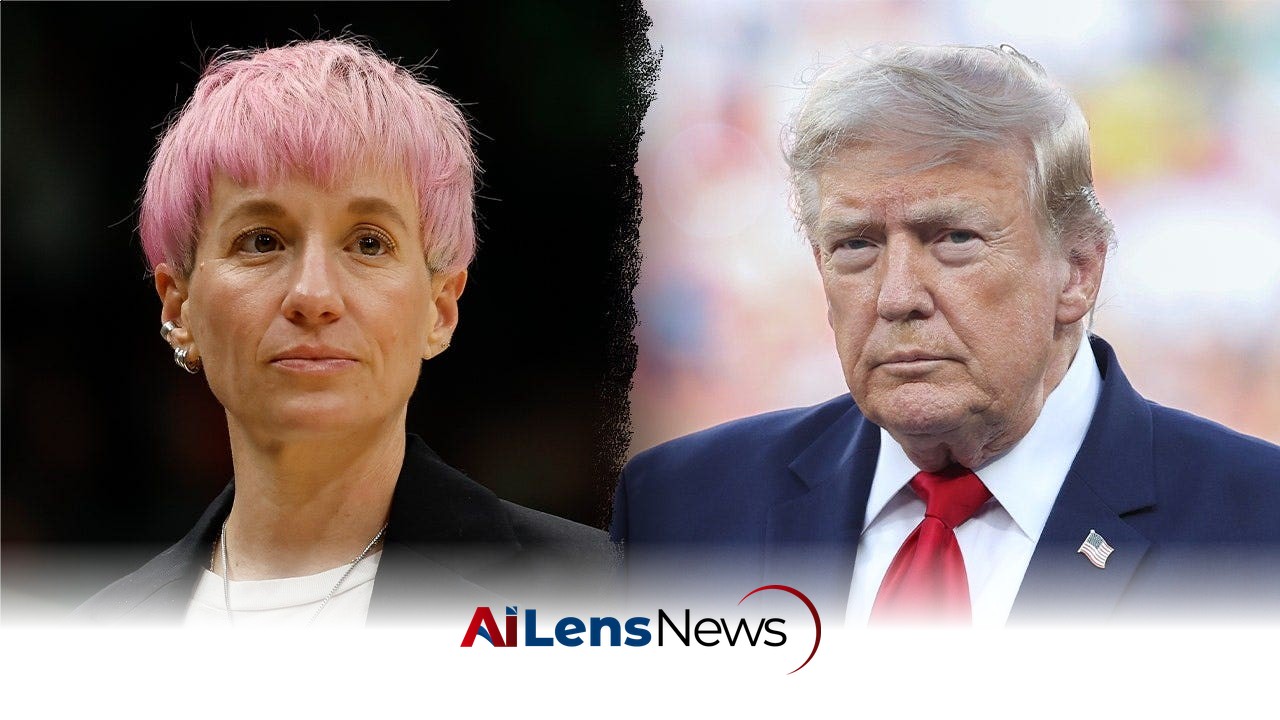


Megan Rapinoe attributes the US men's soccer team's loss in the World Cup to President Trump's interference, stating it disrupted their underdog spirit.
Washington DC, United States Jul 24, 2026 ALN: Megan Rapinoe, a prominent figure in women's soccer and a two-time FIFA Women's World Cup champion, recently shared her perspective on the U.S. men's soccer team's performance in the World Cup, attributing their loss to external factors, particularly the involvement of former President Donald Trump. This assertion has sparked discussions about the interplay of politics and sports, especially in high-stakes international competitions.
In an appearance on "The Daily Show," Rapinoe articulated her views on how Trump's actions may have inadvertently undermined the men's team's underdog appeal during the tournament. This claim is significant as it highlights the often-overlooked influence of political figures on sports, particularly in a country where soccer is still striving to gain a foothold among the more traditional sports like American football, basketball, and baseball.
During the interview, the host Desi Lydic raised a pertinent issue regarding the controversial red card issued to U.S. player Folarin Balogun during their Round of 32 match, which was ultimately suspended. The red card, a critical moment in the match, drew considerable attention, especially after Trump revealed that he had contacted FIFA President Gianni Infantino to request a review of the decision. This direct intervention by a sitting president in a sporting event is rare and raises questions about the boundaries between politics and athletics.
Rapinoe's response to the situation was candid. She stated, "Certainly not well, it didn't give them the boost, maybe, that they were thinking it would or that Trump was hoping that it would. It seemed like it kind of threw them off their game." Her comments reflect a broader sentiment that external pressures can affect athletes' performance, particularly when those pressures come from high-profile figures like the president. The notion that Trump's involvement disrupted the team's positive momentum is an interesting observation, as it suggests that the psychological aspect of sports is as crucial as physical skill and preparation.
In her analysis of the team's dynamics, Rapinoe noted, "They had such a good vibe. I feel like they had the underdog kind of vibe going. And then you-know-who got involved, and everyone was like, nope. No. We don't like it." This statement underscores the importance of team morale and public perception in sports. The U.S. men's national soccer team, often viewed as underdogs in the international arena, may have experienced a shift in public sentiment due to Trump's involvement, which could have affected their performance on the field.
Folarin Balogun, the player at the center of the red card controversy, echoed Rapinoe's sentiments, acknowledging that the situation created a lot of outside noise leading up to the match. The psychological toll of such distractions cannot be underestimated, as athletes often need to maintain focus and composure in the face of external pressures. Balogun's reflections post-match revealed the challenges of competing at such a high level while dealing with the ramifications of political interference, stating, "A lot of outside noise and that’s hard to avoid." This highlights how modern athletes are not just competing against their opponents but also against the backdrop of public opinion and political discourse.
Rapinoe further elaborated on the potential impact of Trump's actions, stating, "I think the distraction got to the team for sure in some type of way. Whether it was, you know, this red card situation, whether it was being in a public discourse with this president, all of the shenanigans and chaos that comes with the feelings on both sides of that." This observation points to the complex relationship between athletes and the political landscape, where even well-meaning interventions can have unintended consequences. The idea that Trump's involvement in the tournament could have created a distraction for the players raises questions about how athletes can best prepare for and navigate such challenges.
Despite her criticisms of the political interference, Rapinoe was quick to acknowledge her own limitations, stating, "I don't know the rules and wasn't a referee." This humility is important, as it illustrates that while she may have strong opinions on the matter, she recognizes the complexities involved in officiating and the challenges referees face in high-pressure situations. However, her overall assessment of the men's team lacking the experience to handle such distractions effectively is a poignant reminder of the pressures athletes face in the modern era.
In response to Rapinoe's comments, a White House spokesman defended Trump's actions, asserting that his leadership had a positive impact on the World Cup, generating billions in revenue and creating a significant economic boost for host cities. This statement reflects a common narrative among political figures that their involvement in sports can lead to broader economic benefits. However, the question remains whether these economic benefits justify the potential negative impact on the athletes themselves.
The U.S. men's national team ultimately faced a disappointing exit from the tournament, losing to Belgium in the Round of 16, a match that was overshadowed by the red card controversy. This loss serves as a stark reminder of the challenges faced by the team, which has historically struggled to achieve the same level of success as its female counterparts. The psychological impact of the surrounding noise, as noted by Balogun, adds another layer of complexity to the narrative of the U.S. men's soccer team, which continues to seek its identity and place in international soccer.
In conclusion, Rapinoe's comments reflect a broader conversation about the intersection of sports and politics, particularly in the context of international competitions like the World Cup. The impact of external factors, including political interference, on athletic performance is a topic that merits further exploration. As the U.S. men's soccer team looks to build on its experiences from this tournament, the lessons learned about maintaining focus amid distractions will be crucial for their future endeavors. The ongoing dialogue about the role of political figures in sports will likely continue as athletes, fans, and commentators navigate the evolving landscape of athletics in a politically charged environment.
To learn more about the latest developments in Football (Soccer), stay updated with our exclusive reports and analyses on AiLensNews.

