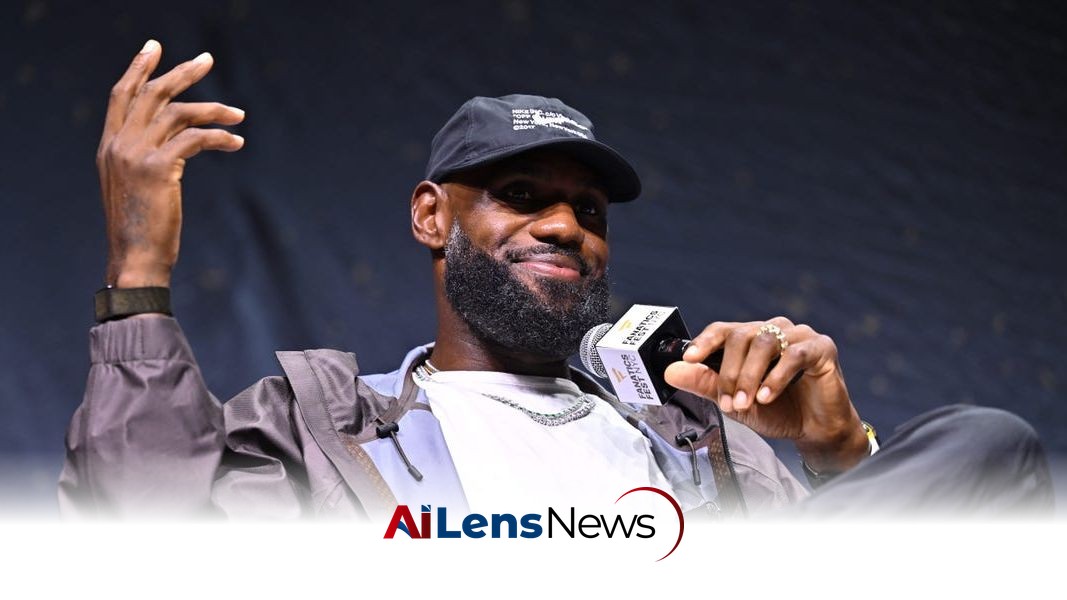


LeBron James, at 41, argues that athletes shouldn't retire solely due to age, drawing parallels with musicians like Bruce Springsteen.
Washington DC, United States Jul 22, 2026 ALN: LeBron James, the iconic NBA player, recently made headlines with his advocacy for athletes to continue competing beyond traditional retirement age. At 41 years old, James, who has spent over two decades in professional basketball, expressed his belief that age should not dictate when an athlete retires. This perspective aligns with a broader cultural trend that challenges age-related stereotypes in various professions and industries. The conversation surrounding age and retirement has gained momentum in recent years, as more individuals from different fields begin to question the norms that dictate when one should cease their professional activities.
In a video released from a live recording of "The Shop" podcast at Fanatics Fest, James articulated his thoughts on retirement and the pressures often faced by athletes. He stated, "I'm just trying to squeeze as much of the juice out of it as possible," emphasizing his desire to prolong his career as long as he remains effective on the court. This sentiment reflects not only his passion for the game but also a commitment to his fans, particularly younger generations who look up to him as a role model. James's dedication to his craft is evident in his rigorous training regimen and his focus on maintaining peak physical condition, which allows him to compete at a high level even as he ages. His approach serves as an inspiration to many aspiring athletes who dream of achieving similar longevity in their sports careers.
James highlighted that one of his motivations for continuing to play is the inspiration he provides to young fans and his own children. He noted that these connections drive him to maintain his performance level and remain active in the sport. The impact of athletes on their fans, especially youth, is significant, as many young individuals draw inspiration from players like James, who represent perseverance, dedication, and excellence. This relationship between athletes and their fans can often transcend the boundaries of sports, creating a cultural phenomenon that fosters community engagement and social interaction. The role of athletes as mentors and role models has never been more crucial, particularly in a world where young people face numerous challenges and uncertainties.
Moreover, James criticized the notion that athletes should retire simply due to age, arguing that this mindset needs to change. He pointed out that similar discussions occur in the music industry, where artists like Bruce Springsteen and the Rolling Stones continue to perform well into their later years. James remarked, "The Stones, they've been on tour for 50, 60 years, and no one's telling them, 'Hey, don't come to our city and go do a tour.'" This comparison serves to illustrate that the expectations placed on athletes can be unjust and should be reevaluated. The music industry often celebrates its older artists, showcasing their talents and contributions to culture, while athletes frequently face scrutiny and pressure to retire once they reach a certain age. This discrepancy raises important questions about societal values and the way we perceive aging in different fields.
James's comments come at a pivotal time in his career. Recently, he became an unrestricted free agent, concluding an eight-year tenure with the Los Angeles Lakers. His future in the NBA remains uncertain, but his statements suggest that he is not ready to step away from the game just yet. His agent, Rich Paul, echoed this sentiment, emphasizing that the decision regarding James's next steps will be made at his own pace, reinforcing the idea that athletes should have autonomy over their careers. The landscape of professional sports is evolving, with more athletes seeking control over their careers and making decisions that align with their personal goals and aspirations. This shift reflects a broader trend in which athletes are increasingly viewed as entrepreneurs and brand ambassadors, rather than just players on a team.
This ongoing conversation about age and retirement is not limited to James. Other prominent figures, including tennis legend Roger Federer, have also faced similar speculation about retirement. Federer, who retired in 2022 after battling persistent knee injuries, shared his frustrations with the media's focus on his age during press conferences. He noted that questions about retirement plagued him for nearly a decade, highlighting a broader issue within sports journalism regarding the treatment of aging athletes. The relentless focus on age can detract from the achievements and contributions of athletes, reducing their identities to mere numbers rather than celebrating their skills, experience, and passion for their respective sports.
In a similar vein, actress Halle Berry has expressed her discontent with societal expectations surrounding age and retirement. During a podcast appearance, she questioned the rationale behind the belief that individuals should stop working at 60, stating, "Why should I now sit down and give that all away — and then what?" Berry's perspective underscores a growing movement that advocates for continued engagement and productivity at all ages, challenging the traditional narrative that associates aging with decline. The notion that one should retire simply because they have reached a certain age can limit personal growth and fulfillment, both for individuals and the industries they inhabit. By promoting a culture that values experience and wisdom, society can benefit from the diverse perspectives that older individuals bring to the table.
James's viewpoint, along with those of Federer and Berry, reflects a cultural shift that encourages individuals to pursue their passions regardless of age. This shift is particularly relevant in a society that often equates aging with obsolescence, particularly in high-performance fields like sports and entertainment. The notion that one must retire simply because they have reached a certain age can be limiting, both for individuals and the industries they inhabit. As more athletes and artists challenge these norms, there is a growing recognition that age should not be a barrier to success or creativity.
Furthermore, the implications of this conversation extend beyond personal choice. Athletes like James contribute significantly to their respective sports, both in terms of performance and revenue generation. By continuing to play, they not only enhance their legacy but also provide entertainment and inspiration to fans worldwide. This perspective invites a reevaluation of retirement policies and practices within professional sports, suggesting that flexibility and individual circumstances should guide decisions about when an athlete should step away from the game. Organizations and leagues may need to adapt their policies to reflect the changing attitudes toward aging athletes, ensuring that they are supported in their decisions and can continue to thrive in their careers.
The dialogue surrounding age and retirement also raises questions about the support systems in place for aging athletes. As they navigate the complexities of their careers, including physical demands, mental health, and public scrutiny, it becomes essential to foster environments that empower athletes to make informed decisions about their futures. This could involve enhanced resources for training, rehabilitation, and career transition planning, allowing athletes to continue contributing to their sports in meaningful ways. By creating a supportive ecosystem, sports organizations can help ensure that aging athletes are not only able to extend their careers but also do so in a way that prioritizes their health and well-being.
In conclusion, LeBron James's advocacy for athletes to play beyond retirement age resonates with a growing movement that challenges age-related stereotypes across various fields. His perspective, coupled with those of other influential figures, highlights the importance of recognizing individual capabilities and passions, regardless of age. As society continues to evolve, it is crucial to foster environments that support and celebrate the contributions of individuals at all stages of their careers, ultimately enriching the cultural fabric of sports and entertainment. By embracing a more inclusive view of aging, we can pave the way for future generations of athletes and artists to thrive, regardless of the number of years they have spent in their respective fields.
To learn more about the latest developments in Basketball, stay updated with our exclusive reports and analyses on AiLensNews.

