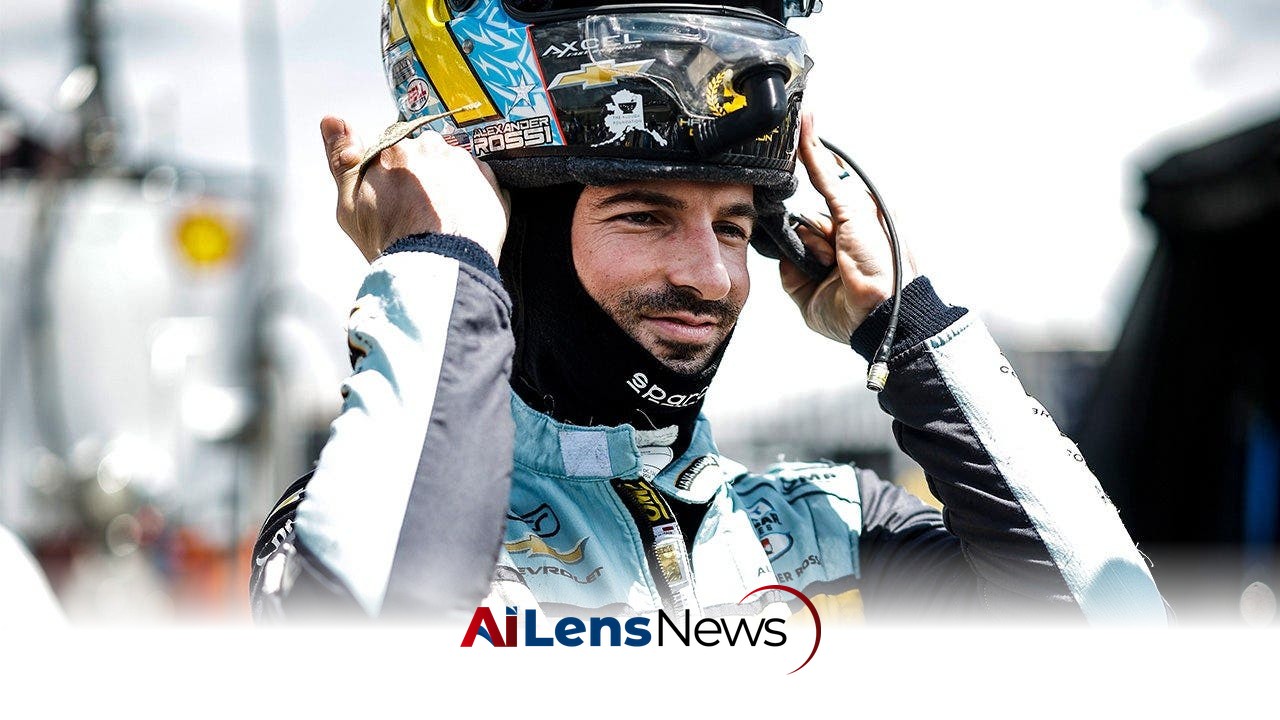


Alexander Rossi shares his excitement after testing the new IndyCar IR-28 chassis, highlighting its smooth launch and impressive performance.
Washington DC, United States Aug 2, 2026 ALN: This week, IndyCar officially unveiled its long-awaited new chassis, known as the IR-28, marking a significant milestone in the evolution of American open-wheel racing. The anticipation surrounding this new chassis has been palpable, with fans and teams alike eager to see the advancements in technology and design that will shape the future of the series. While the initial photos were received with enthusiasm, the real excitement came with the opportunity for drivers to experience the chassis firsthand during a two-day testing event at Indianapolis Motor Speedway’s 2.439-mile road course layout.
Among the first to get behind the wheel of the IR-28 was Ed Carpenter Racing's Alexander Rossi, a seasoned driver with a wealth of experience in the series. Rossi's participation in the test was highly anticipated, as he has been a prominent figure in IndyCar since winning the Indianapolis 500 in 2016. His insights and feedback are invaluable, especially as the series prepares for the introduction of this new vehicle in 2028.
Despite the excitement surrounding the test, the weather conditions proved to be less than ideal, which limited some of Rossi's track time. However, even with these challenges, Rossi expressed his enthusiasm about the new chassis. "I’ve been a part of some new car launches before, and I can’t say that any have gone as smooth as this one has," Rossi said, highlighting the extensive preparation that went into the IR-28’s development. His statement reflects a broader sentiment within the racing community, as the anticipation for this new chassis has been building for years.
Rossi elaborated on his experience, stating, "It’s like Christmas morning," a metaphor that captures the excitement felt by many in the IndyCar paddock. The IR-28 is not just a new car; it represents a new era for the series, incorporating advancements in aerodynamics, safety, and performance. The chassis is designed to be lighter, expected to weigh around 100 pounds less than the current DW12 chassis, which has been in use since its debut in 2012. This reduction in weight is anticipated to enhance the car's agility and speed on the track, making for even more competitive racing.
Rossi noted that while it was challenging to make a full comparison due to the weather conditions, he was impressed by the car's overall performance during the test. "The fact that the car is completely new and the only real issue we had was replacing one sensor is phenomenal. That’s a huge testament to Dallara, IndyCar, and everyone involved," he commented, emphasizing the collaborative effort that has gone into the development of the IR-28. Dallara, the Italian chassis manufacturer, has a long history with IndyCar and has been instrumental in pushing the boundaries of design and technology within the sport.
One of the most significant features of the IR-28 is its incorporation of the Aeroscreen, a safety innovation that was first introduced in 2020. The Aeroscreen provides enhanced protection for drivers by shielding them from debris and potential impacts, a critical factor in ensuring the safety of competitors in high-speed racing. Additionally, the new chassis has been designed with a hybrid power system in mind, aligning with the global shift towards more sustainable racing practices.
The implications of the IR-28 extend beyond just performance; they also signal a commitment from IndyCar to evolve and adapt to changing technologies and fan expectations. As the series looks to attract new fans and retain existing ones, the introduction of a modern chassis that emphasizes safety, performance, and innovation is crucial. The anticipation for the IR-28 is not just about the car itself, but what it represents for the future of IndyCar racing.
Looking ahead, the next driver to test the IR-28 is reigning series champion Alex Palou of Chip Ganassi Racing, who is scheduled to take the wheel on Sunday. Palou's feedback will be keenly observed, as he is one of the top talents in the series and his insights could further validate the early impressions of the IR-28. With each driver bringing their unique perspective and driving style, the testing phase will be crucial in refining the car ahead of its official debut.
The introduction of the IR-28 comes at a time when IndyCar is looking to enhance its appeal and competitiveness within the wider motorsport landscape. The series has been experiencing a resurgence in popularity, thanks in part to thrilling races and a diverse roster of talented drivers. The new chassis aims to capitalize on this momentum by providing teams with a cutting-edge platform that could lead to even more dramatic on-track action.
As the series approaches the 2028 season, the excitement surrounding the IR-28 is expected to grow. Teams will be eager to adapt their strategies and setups to optimize performance with the new chassis. The introduction of the IR-28 also raises questions about how it will affect the competitive landscape of IndyCar racing. Will teams that adapt quickly to the new technology gain a significant advantage? How will the performance characteristics of the IR-28 impact race strategies and driver dynamics?
Moreover, as the racing world increasingly focuses on sustainability, the hybrid power system integrated into the IR-28 is a significant step forward. This alignment with global trends not only enhances the sport's relevance but also addresses the environmental concerns that have become paramount in recent years. The move towards hybrid technology could attract a new audience that values sustainability, thus broadening the fan base.
In addition to the technical advancements, the aesthetic appeal of the IR-28 has also been a topic of discussion among fans and analysts alike. The design choices made by Dallara reflect a modern approach that combines functionality with visual impact. The chassis is expected to feature more aggressive styling, which could enhance its presence on the track and appeal to younger audiences who are drawn to visually striking vehicles.
In conclusion, the unveiling of the IR-28 chassis is a pivotal moment for IndyCar, representing both a technological advancement and a commitment to the future of the sport. With drivers like Alexander Rossi and Alex Palou leading the way in testing, the feedback from these athletes will be crucial in shaping the final iterations of the chassis. As fans and teams alike await the full rollout of the IR-28, the anticipation continues to build, promising an exciting new chapter in the history of IndyCar racing. The successful integration of the IR-28 into the series could redefine the standards of performance and safety in open-wheel racing, setting a benchmark for other racing series to follow.
To learn more about the latest developments in Golf, stay updated with our exclusive reports and analyses on AiLensNews.

