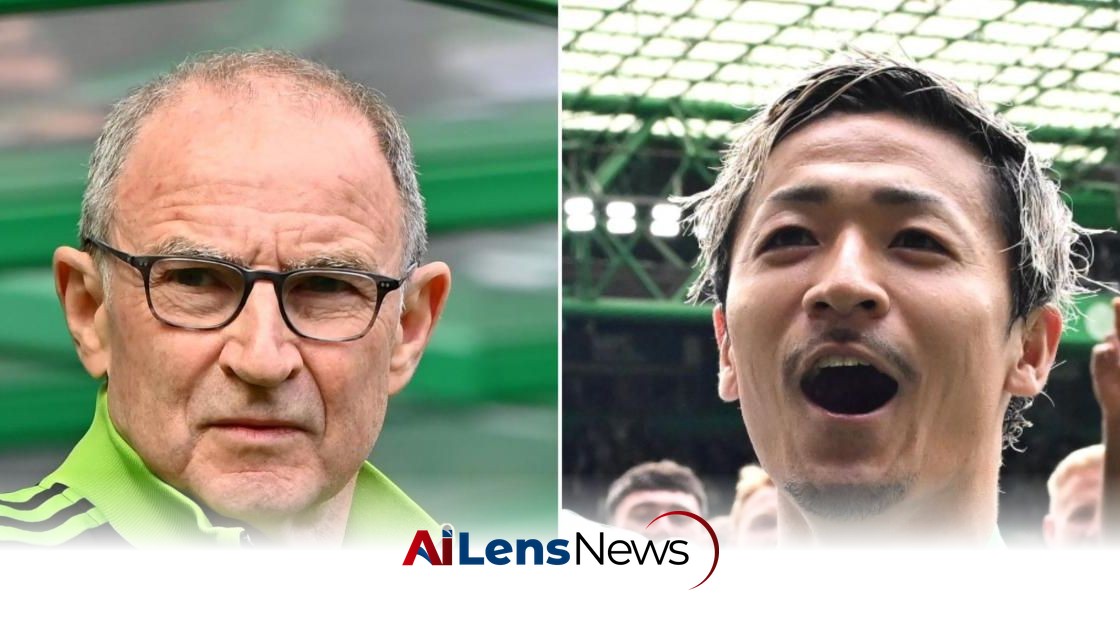


Celtic manager Martin O'Neill shares insights on the futures of Daizen Maeda, Reo Hatate, Arne Engels, and Benjamin Nygren amid transfer speculation.
London, United Kingdom Jul 13, 2026 ALN: Celtic manager Martin O'Neill has expressed a desire to retain Daizen Maeda at the club this summer, hoping he will run down the final year of his contract, similar to Henrik Larsson's situation over two decades ago.
Maeda played a pivotal role in Celtic's double success last season, netting nine goals in the last seven matches, showcasing his importance to the team during crucial moments. His performance has drawn attention not only from fans but also from clubs across Europe, highlighting the competitive nature of player transfers in the modern football landscape.
Initially set to join Bundesliga club Wolfsburg in August of last year, Maeda opted to stay for the 2025/26 season, with expectations of a summer departure looming. This decision was significant, as it indicated his commitment to the club at a time when many players seek opportunities in more lucrative leagues. The choice to remain at Celtic, a club with a rich history and passionate fanbase, speaks volumes about his dedication to the team's ambitions.
While O'Neill is open to any potential exit, he would prefer Maeda to remain. The manager's remarks reflect a broader sentiment within the club, emphasizing the importance of stability and continuity in building a successful squad. "I think there's some resignation in that aspect. It isn't one of those where he's got a year left to run and we want to try and make something of it in the sense of getting money," O'Neill stated. This perspective illustrates the club's focus on performance over profit, prioritizing player contributions over financial gain.
"It's not that at all. Personally speaking, I would love it if he just let his contract run through and played for the last year. Honestly, it would be super. I don't know whether that's in his mind or in his agent's mind," he added. O'Neill's comments underline the emotional connection between players and clubs, particularly in a league where loyalty can often be overshadowed by financial incentives.
O'Neill drew a parallel to Larsson, who informed the club a year prior that he would be leaving, yet delivered an outstanding final season. Larsson's legacy at Celtic is one of the most celebrated in the club's history, and O'Neill's reference to him serves as a reminder of the potential for a player to leave a lasting impact even in their final year. "Now, the only difference between that is that he's got a year left to run. That's all. But it's not one of us trying to make as much out of it in terms of finance. It's me, personally. I'd love him to stay. I'm not sure that that's going to happen," he added, highlighting the uncertainty that surrounds player contracts in professional football.
The situation surrounding Maeda's compatriot, Reo Hatate, is equally intriguing this summer. Hatate returned late for pre-season due to a sickness bug and did not travel with the squad to Ireland or Portugal, raising questions about his fitness and readiness for the upcoming season. His absence from these crucial early training sessions could impact his form and integration into the squad, particularly as O'Neill seeks to establish his tactics and team dynamics ahead of the new campaign.
Having not featured consistently under O'Neill in the latter half of last season, reports emerged in May indicating Hatate's desire to leave Celtic. This situation illustrates the challenges faced by clubs in retaining players who may feel undervalued or underutilized. O'Neill remarked, "I think that Reo has done exceptionally well at the football club since he arrived. People have said he might even have been the best player in Scotland two or three years ago. I think myself that he's probably looking to maybe see if there's new pastures for him." This statement reflects a recognition of Hatate's talent and contributions while also acknowledging the player's potential desire for new challenges.
"I'll see how it goes with him here when he's there. So, like everything else, during this particular time, it's a bit unsettling for players, a wee bit like Maeda. So, you just don't know. I'd love to keep him [Maeda] at the football club. He's done brilliantly, and he's got a year left to run. But I said to him, if he left the football club, I would be obviously disappointed, but he couldn't have done any more for us. He really couldn't have done any more. And Reo himself, let's see what options might be around. But if nothing develops, I'd be very happy to keep him," O'Neill concluded. This sentiment captures the duality of player management—balancing the need to retain talent while respecting individual player aspirations.
There is also expected to be renewed interest in Hatate's midfield colleague, Arne Engels, this summer. Engels has emerged as a key player for Celtic, and his performances have not gone unnoticed. Celtic had previously rejected multiple bids from Nottingham Forest for the Belgian midfielder during the latter stages of the January transfer window. The club's decision to hold onto Engels reflects their ambition to maintain a strong squad capable of competing at the highest levels.
O'Neill is prepared for further offers this time around, stating, "If, for instance, all those bids that Nottingham Forest made come in on the 11th hour – that was just a non-goer for us at that particular stage. So if some things can happen a bit earlier, then maybe there's some resignation on my part. That's part and parcel. And while we consider ourselves a big club, in terms of finance now, people can earn much, much more money elsewhere." This acknowledgment of financial realities highlights the competitive nature of the transfer market, where clubs must navigate the delicate balance between financial sustainability and sporting ambition.
:
Lastly, O'Neill acknowledged that Benjamin Nygren, who contributed 30 goals last season after joining Celtic from Nordsjaelland for approximately £1.7 million, could also leave. "His stats are very, very high, absolutely," he admitted. "So there's every possibility that something could happen there." Nygren's impressive goal tally has made him a valuable asset, and clubs will likely be monitoring his situation closely as the transfer window progresses.
Colombian forward Camilo Duran has already joined Celtic for £5.5 million this summer, adding depth to the squad and potentially offsetting any losses that may occur if key players depart. However, if the club loses several key players in the remaining window, O'Neill's recruitment team will need to act swiftly to ensure that the team remains competitive. The ongoing transfer negotiations and potential departures underscore the fluid nature of football management, where decisions made today can have lasting impacts on a club's future.
As the summer transfer window continues, the decisions made by Celtic's management will be closely watched by fans and analysts alike. The balance between retaining talent, nurturing player development, and pursuing new signings will be critical in shaping the team's prospects for the upcoming season. O'Neill's experience and strategic vision will be tested as he navigates these challenges, aiming to build a squad capable of competing for titles both domestically and in European competitions.
To learn more about the latest developments in Basketball, stay updated with our exclusive reports and analyses on AiLensNews.

