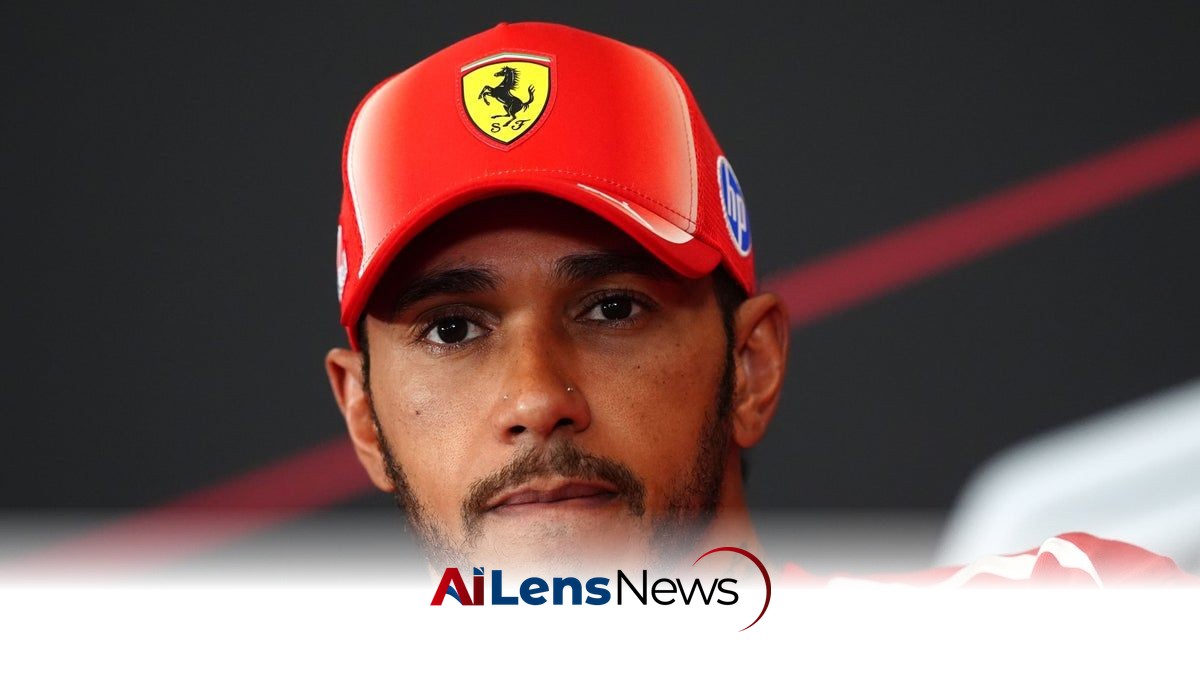


Lewis Hamilton and Kimi Antonelli both received three-place grid penalties for blocking during qualifying, impacting their starting positions for the race.
London, United Kingdom Jul 25, 2026 ALN: Lewis Hamilton's recent misfortunes in the lead-up to the Hungarian Grand Prix have added another layer of complexity to his ongoing quest for an unprecedented eighth world championship title. The seven-time champion, who has long been a dominant force in Formula 1, found himself demoted to fifth on the grid following a series of events during qualifying that have raised questions about team communication and race strategy.
Hamilton, who had been in strong form leading into the weekend, initially appeared poised to capture his first pole position in over three years. He had set a competitive pace throughout the qualifying sessions, even leading into the final laps. However, his hopes were dashed when Lando Norris, driving for McLaren, edged him out by a mere 0.012 seconds in a dramatic finish to qualifying. This narrow defeat was particularly frustrating for Hamilton, who has not secured a pole position since his last triumph at this very circuit three years ago, a fact that highlights the competitive nature of the sport and the challenges faced by even the most seasoned drivers.
The situation worsened for Hamilton after the conclusion of qualifying when he was handed a three-place grid penalty due to an incident involving Oscar Piastri. The stewards determined that Hamilton had blocked Piastri at the opening corner while the McLaren driver was attempting to set a quick lap. The penalty, issued over 90 minutes after qualifying had ended, has significant implications for Hamilton’s race strategy and his championship aspirations. Hamilton expressed his frustration, stating that he was unaware of Piastri's presence and believed that all drivers had completed their laps, emphasizing that the incident was unintentional. This incident highlights the critical importance of communication and awareness among drivers, especially in high-stakes qualifying sessions.
In a statement released by Ferrari, Hamilton elaborated on his feelings regarding the penalty, indicating that it stemmed from a communication breakdown within the team. He described the situation as unfortunate, noting that a three-place penalty resulting from this miscommunication put him in a less than ideal starting position for the race. Nevertheless, Hamilton remained optimistic about his car's performance, expressing hope that he could recover lost ground during the race. His ability to maintain a positive outlook despite setbacks is a testament to his experience and competitive spirit, which have characterized his illustrious career.
Adding to the drama of the qualifying session, championship leader Kimi Antonelli also received a three-place grid penalty. The young driver, who currently holds a 45-point lead over Hamilton in the championship standings, was penalized for failing to slow down sufficiently under yellow flags that were waved following a spin by Max Verstappen. This penalty means Antonelli will start from seventh position, two places behind Hamilton, which could have significant ramifications for both drivers' championship campaigns. Antonelli's situation illustrates the unpredictable nature of racing, where a single moment can alter the trajectory of a season.
Hamilton's comments regarding the qualifying strategy further highlight the challenges faced by his team. He expressed confusion over their decision to send him and teammate Charles Leclerc out early in the final qualifying session, suggesting that it may not have been the optimal strategy given the conditions and the competitive nature of the field. Hamilton's disappointment was palpable as he reflected on the missed opportunity for pole position, which he believed was within reach had the team executed a different strategy. This points to the intricate balance between driver input and team strategy, a dynamic that can often lead to tension if results do not align with expectations.
Despite the setbacks, Hamilton’s performance in qualifying was still commendable, as he managed to secure a starting position that allows for potential recovery during the race. His teammate, George Russell, faced his own challenges during qualifying, ultimately finishing seventh. Russell, who is trailing Antonelli by a significant margin in the championship standings, has struggled with reliability issues throughout the season. His latest setback involved a water leak that caused him to stop on track shortly after completing his final lap, further complicating his title bid. Russell's difficulties serve as a reminder of the technical challenges that can impact performance in Formula 1, where even the smallest malfunction can have race-altering consequences.
As the race approaches, both Hamilton and Russell will need to navigate not only the challenges presented by their grid positions but also the competitive landscape of the race itself. With Norris securing pole, he will be looking to convert this opportunity into a race victory, which would mark a significant milestone in his career. Norris has been on an upward trajectory since the start of the season, and his confidence is likely buoyed by his pole position, a rare achievement for McLaren in recent years. This momentum could play a crucial role in his performance during the race, as drivers often draw on their confidence and form to push their limits.
Meanwhile, the implications of the grid penalties extend beyond the immediate race. For Hamilton, this situation underscores the razor-thin margins that can dictate the outcome of a championship campaign. As he aims to close the gap to Antonelli, every point counts, and the penalties could prove to be a pivotal moment in the title race. Hamilton's ability to recover and score points will be crucial, especially as the season progresses and the pressure mounts. The psychological aspect of racing cannot be understated; how drivers cope with setbacks can significantly influence their performance in subsequent races.
The Hungarian Grand Prix is known for its challenging layout, which features tight corners and limited overtaking opportunities. This characteristic makes qualifying positions even more critical, as drivers often find it difficult to overtake during the race. Hamilton’s experience and skill will be put to the test as he attempts to navigate through the field from fifth position, while Antonelli will also need to be strategic in his approach from seventh. The track's nature means that drivers must be adept at both defending their positions and seizing opportunities as they arise, highlighting the importance of racecraft.
As the race unfolds, fans and analysts alike will be closely watching how these grid penalties impact the dynamics of the race and the championship standings. With the season still in its early stages, both Hamilton and Antonelli have plenty of races ahead to recover from this setback, but the stakes are undeniably high as they vie for supremacy in the fiercely competitive world of Formula 1. The interplay of strategy, driver skill, and team dynamics will be on full display, showcasing the multifaceted nature of the sport that continues to captivate audiences around the globe.
To learn more about the latest developments in Golf, stay updated with our exclusive reports and analyses on AiLensNews.

