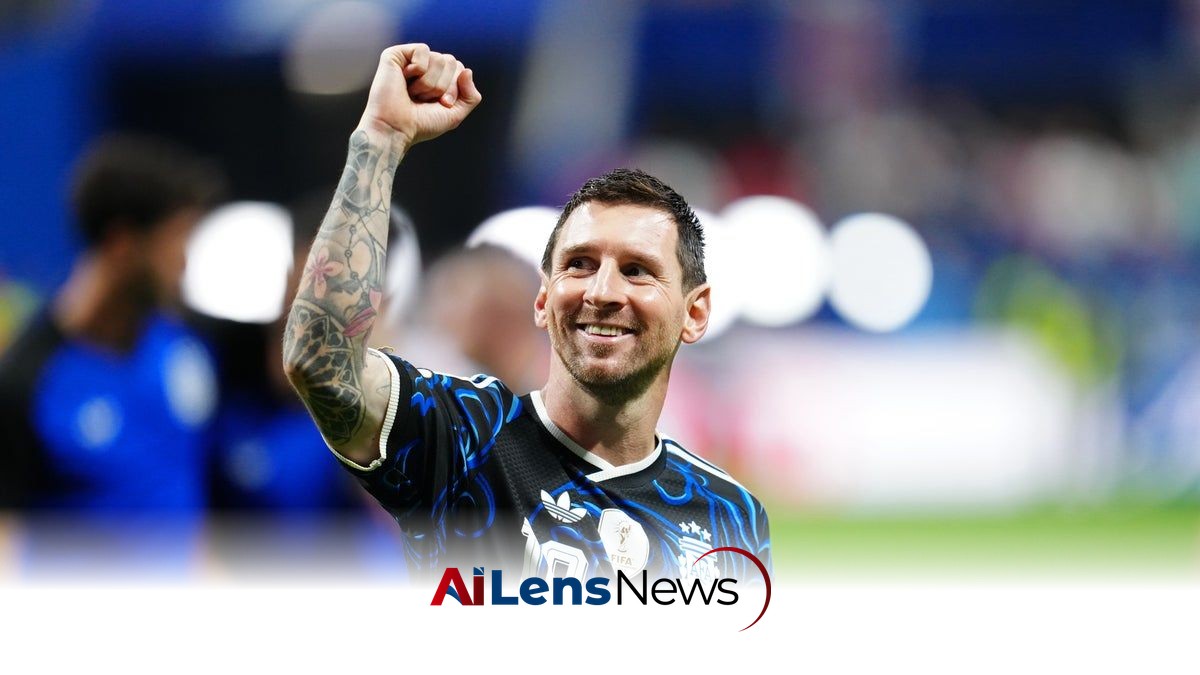


As Argentina's golden era concludes, Spain's youthful squad aims to etch their names in history during the World Cup final in New York.
London, United Kingdom Jul 19, 2026 ALN: The World Cup final hardly needs to be hyped up to attract interest, but even for a match of this magnitude, there are a surprising number of storylines. As the pinnacle of international football, the World Cup final not only showcases the best teams but also serves as a stage for individual brilliance, tactical mastery, and the unfolding of narratives that resonate with fans around the globe. This year, the final features Argentina, led by their legendary captain Lionel Messi, and Spain, a team brimming with youthful talent and potential. The clash promises to be more than just a game; it is a convergence of eras, styles, and footballing philosophies.
From the race for the Ballon d’Or to the battle between the managers, the spectacle of the differing styles of play or the scarcely believable backstory between Lionel Messi and Lamine Yamal, Sunday’s final is one that promises to live long in the memory. The Ballon d’Or, awarded to the best football player in the world, adds an extra layer of intrigue. Messi, a seven-time winner, is in contention once again, but he faces stiff competition from a new generation of players, including the 19-year-old Yamal, who has quickly made a name for himself on the global stage.
And as with any final on the world’s biggest stage, it will also define legacies and careers. For 39-year-old Lionel Messi, despite everything he’s achieved, this is a match that will be looked back on in every debate, every summary of his great career. Messi’s journey has been nothing short of extraordinary; he has transcended the sport, becoming a symbol of excellence and perseverance. This final could be the capstone of his illustrious career or a poignant reminder of the passage of time and the inevitability of change in football.
It is the same for 19-year-old Lamine Yamal, no matter what he might go on to achieve. Yamal represents the new wave of talent emerging from Spain, a country that has historically been a powerhouse in international football. His presence in the final signifies the potential for Spain to establish a new golden generation, reminiscent of their dominant period from 2008 to 2012 when they won two European Championships and the 2010 World Cup.
Indeed, it is the same for every player involved, from the Argentina stalwarts or Ballon d’Or winner Rodri to the various youngsters and the lesser-hailed members of both squads. Each player carries the weight of their nation's hopes and dreams, and the outcome of the final will ripple through their careers, affecting their legacy and how they are remembered in the annals of football history.
Both Messi and Yamal are particularly pertinent though, and for reasons beyond their roles as their team’s most important player. Put simply, each player mirrors the very nature of his national team – as Argentina’s golden era comes to an end, another Spain golden generation might just be getting started. Argentina, with its rich footballing heritage, has long been a force in the sport, but the current squad signifies the twilight of an era that has produced some of the game’s greatest talents.
For Lionel Messi and co., Sunday’s match, whether win or lose, brings an end to a near-unprecedented period of success for the Albiceleste. Under Lionel Scaloni, they have won both the 2021 and 2024 editions of the Copa America, while the victory in the 2022 World Cup was originally thought to be the crowning glory of Messi’s career, and indeed many of the others on the pitch on that December evening in Lusail. This recent success has solidified Argentina's status as one of the leading footballing nations, but it also raises questions about the future of the team as they transition away from their most iconic players.
That they could yet have a second World Cup to add to this recently bulging trophy cabinet speaks to the various qualities throughout the team, from Messi’s obvious brilliance to the tactical acumen of Scaloni and the blend of grit and desire throughout the squad. As shown throughout the competition – most recently in the dramatic 2-1 comeback over England – this is a team that does not know when it’s beaten, and has all the tools needed to beat any team in world football. Their resilience and ability to perform under pressure have been hallmarks of their campaign, yet they face a formidable opponent in Spain.
However, they are not infallible, as they’ve proven in the games against Cape Verde, Egypt, and Switzerland. Argentina will head into the game as slight underdogs, perhaps needing a final moment of genius from Messi or something else special from Julian Alvarez or Enzo Fernandez to earn them a fourth star. Their previous struggles indicate vulnerabilities that Spain may exploit, particularly if they can maintain the high level of performance they have shown throughout the tournament.
These previous struggles have shown that, despite making another final, this is a team on its last legs. It feels strange to say a team is on a downward trajectory they are about to contest a World Cup final, but it has happened before. Contrast France’s 2006 team to the debacle of 2010, for example. History has shown that success can be fleeting, and the pressure of maintaining excellence can lead to a swift decline. In Argentina’s case, the fall-off could be one of the most pronounced of any international side ever, such is the impossibility of replacing Messi. His unique combination of skill, vision, and leadership is irreplaceable, and the transition to a post-Messi era will be a significant challenge for the Argentine footballing landscape.
Other stalwarts, including Rodrigo De Paul, Emi Martinez, Leandro Paredes, and Nicolas Tagliafico, will likely have retired from international football by the next World Cup, while even the likes of Lautaro Martínez, Alexis Mac Allister, and Cristian Romero will be into their 30s. It’s a squad that will look markedly different when they host an opening game in Buenos Aires in June 2030. The question looms: how will Argentina rebuild and rejuvenate its squad to remain competitive on the international stage? This final could serve as a pivotal moment in that transition.
Of course, most squads could look very different in four years’ time, though the difference with Spain is that plenty of the core squad members are still in their teens or early 20s. Yamal, Pedri, Pau Cubarsi, Álex Baena, Nico Williams, Gavi, and Joan Garcia are all 25 or under, as is the injured Fermin Lopez. Elsewhere, Pedro Porro, Ferran Torres, and Martin Zubimendi are others who could expect to be included in 2030. This youthful core provides Spain with a solid foundation for the future, allowing them to build upon their current successes and maintain a competitive edge in international football.
Naturally, there will be worries about how to replace players such as Rodri and Dani Olmo if they are not present in four years, though these concerns are not for the immediate future with a European Championships next up after Sunday. The focus for Spain is on the present, and their current squad is brimming with confidence and talent. Their ability to adapt and evolve has been evident in their performances throughout the tournament, showcasing their tactical flexibility and depth.
Instead, there is much more hope for the future in Spain, and a desire to enjoy the present as a talented La Roja squad stands on the brink of history. After winning Euro 2024, a triumphant World Cup campaign would almost put this side on par with the legendary era of 2008-2012, and there could be a lot more to come yet. The prospect of achieving back-to-back major tournament victories is a tantalizing one, and the players are keenly aware of the significance of this moment.
Spain have grown into this tournament in a similar – though perhaps less explosive – manner to how they grew into Euro 2024, and as was the case two years ago, the win over France showed them to be the best footballing team in the competition. Their ability to dominate possession, create scoring opportunities, and nullify the threats of their opponents has been key to their success. The tactical nous of manager Luis de la Fuente has played a significant role in this development, allowing the team to flourish and express themselves on the pitch.
That latest match showed both the managerial talents of Luis de la Fuente and the squad’s ability to put his ideas into practice with devastating effect. The manner of the semi-final victory, from the way they nullified France to the bravery and expansiveness of their own play, means that La Roja head to New York as favorites, though it remains a tough game to call. The balance of power in football can shift rapidly, and while Spain may be favored, Argentina’s experience and determination should not be underestimated.
Nevertheless, on paper this feels very much like one team on the up and another coming down. One at the beginning of its journey, another making its last stand. It could end in crushing defeat or the most inspiring of victories for either side. The stakes are high, and the implications of this final extend beyond the trophy itself. For Argentina, it is a chance to solidify their legacy and provide a fitting farewell to their golden generation. For Spain, it is an opportunity to announce their arrival as a new force in world football.
With that in mind, the question is surprisingly simple. Can the ageing beast of Argentina land one more blow, one more famous night to launch themselves into the pantheon of greats? Or will a young, bright Spain team overcome yet another footballing giant, writing themselves into history while consigning their opponents to a lifetime of ‘what ifs’? The narrative of this final encapsulates the essence of football: the clash of past and future, the struggle for glory, and the unyielding pursuit of greatness.
To learn more about the latest developments in Basketball, stay updated with our exclusive reports and analyses on AiLensNews.

