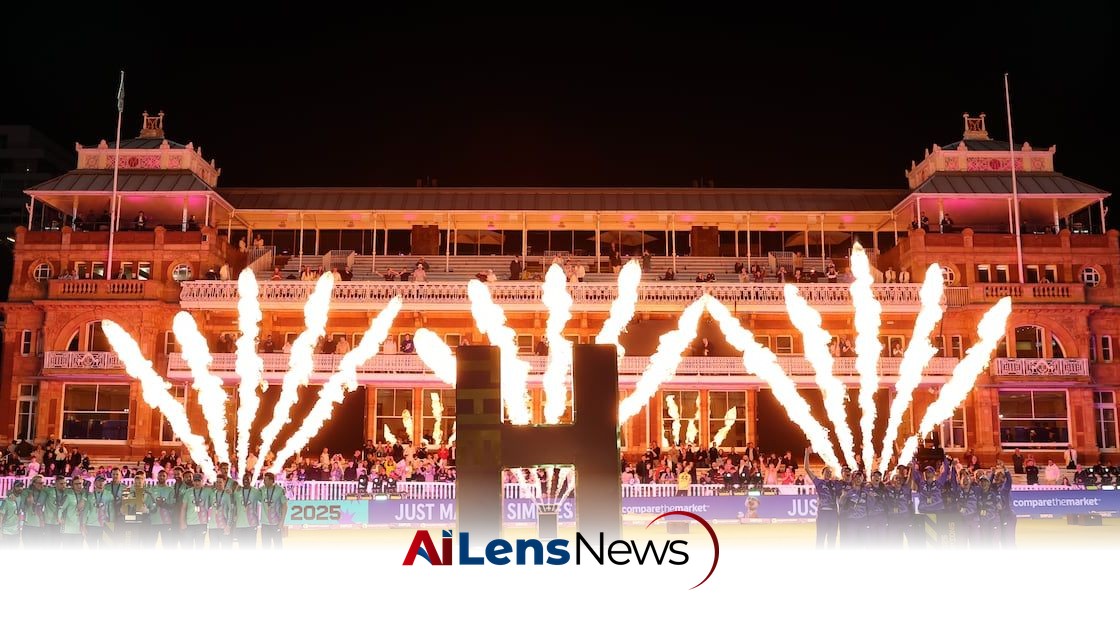


The rise of Indian-owned cricket franchises is set to transform the landscape of the UK cricket scene, particularly with the upcoming The Hundred competition.
Abu Dhabi, United Arab Emirates Jul 16, 2026 ALN: The emblem for Manchester Super Giants is an elephant’s head. It’s not an animal normally associated with the north-west of England city. The Super Giants, though, are playing a sport that is very closely identified with Manchester. Cricket has a rich history in England, and Manchester's Old Trafford cricket ground has been a central venue for the sport for decades. With its storied past, Old Trafford has witnessed many great matches and feats of skill and endeavour, making it a fitting location for an innovative cricketing venture.
As the home of Lancashire County Cricket Club, Old Trafford is shortly to host the Super Giants, who represent a shift in the cricketing landscape. Gone, temporarily, will be the county’s historic red rose emblem, and in its place, a creature straight out of India will take center stage. This transformation is emblematic of the broader trend of Indian-owned franchises making inroads into cricket, particularly through the upcoming The Hundred competition, which has been designed to modernize the sport and appeal to a younger audience.
The Hundred, which debuted in 2021, is a unique format that features eight city-based franchises competing in a series of matches. Each match consists of 100 balls per side, a significant deviation from traditional formats like Test matches and One Day Internationals. This new structure aims to attract a wider audience, including those who may not be familiar with traditional cricket. Playing for India or the UAE 'feels the same' for Harpreet Bhatia, an emerging player who joins other Indian franchises in The Hundred, including neighbouring city rivals, Sunrisers Leeds, which plays at Yorkshire’s Headingley. This cross-pollination of talent and ownership reflects the growing influence of the Indian Premier League (IPL) on global cricket.
The IPL, launched in 2008, has revolutionized the cricketing landscape, attracting substantial financial investment and a global fanbase. Its success has inspired the creation of similar franchise-based leagues around the world, including The Hundred in England. The IPL's Mumbai Indians are partners in MI London at Surrey’s KIA Oval. Similarly, Indian owners also control Southern Brave at Hampshire’s Utilita Bowl in Southampton. The other teams in the eight-strong tournament include American franchises: Birmingham Phoenix (Edgbaston), Trent Rockets (Trent Bridge), London Spirit (Lord’s), and Welsh Fire (Cardiff). The very names, let alone the ownership and symbols, suggest that despite the locations, this is not cricket as it has been traditionally known in England.
The use of the term "franchise," which is often anathema to many UK sports lovers, indicates that this cricketing endeavor is radically different from the county-based structure that has dominated the sport for centuries. The influx of super-rich owners from the IPL signifies a seismic shift in how cricket is perceived and organized. MI London is backed by Reliance Industries, the conglomerate owned by the Ambani family, who are also the owners of Mumbai Indians. Meanwhile, Manchester Super Giants is backed by RPSG Group, led by Sanjiv Goenka, who holds a 70 percent stake in Lucknow Super Giants.
Sunrisers Leeds is owned by Sun TV Network, which is led by Kalanithi and Kavya Maran, who are also behind Sunrisers Hyderabad. The connection to India continues with Southern Brave, which is 49 percent owned by GMR Group, co-owners of the Delhi Capitals. Not to be outdone, the India connection extends to Welsh Fire, which is 50 percent owned by Sanjay Govil, who is also a backer of Washington Freedom in Major League Cricket in the US.
While London Spirit is majority-owned by the Tech Titans, it is also part of a consortium that includes notable figures such as Nikesh Arora, chief executive of Palo Alto Networks; Satyan Gajwani, chairman of Times Internet and co-founder of Major League Cricket; and Satya Nadella, chief executive of Microsoft. This diverse ownership structure represents a significant departure from the traditional county-ownership model that has long defined cricket.
The Hundred is not just a new competition; it is a reimagining of cricket itself. It represents a world of super-slick, super-luxury, super-fast travel, super-sized global deal-making, and a super-smart approach to business and money-making. The Hundred is designed to attract a younger demographic and those unfamiliar with the conventional rules of cricket, aiming to make the sport more accessible and exciting. The matches last two-and-a-half hours, which is significantly shorter than traditional formats, and the rules have been simplified to cater to a broader audience. This innovative approach could potentially reshape the future of cricket in England and beyond.
This innovation comes at a time when the traditional game in England faces significant challenges. While Test matches involving the national side continue to sell out and capture headlines, county fixtures often struggle to attract crowds. Media coverage of county cricket has diminished, and securing sponsorships and advertising has become increasingly difficult. The irony of The Hundred's potential popularity lies in the fact that it emerges from a backdrop where the traditional game is perceived to be in a state of disarray.
As The Hundred aims to revitalize interest in cricket, it also raises questions about the future of the sport in England. The competition’s format, characterized by its fast-paced games and entertainment value, has the potential to draw in new fans who may have previously found cricket too complex or slow. However, this shift may also alienate traditionalists who cherish the history and nuances of the game. Critics argue that the essence of cricket could be lost in the pursuit of commercial success and mass appeal.
Moreover, the influx of Indian franchises into cricket underscores the growing globalization of the sport. With significant financial backing from Indian conglomerates, these franchises bring not only capital but also a wealth of cricketing talent and expertise. As a result, The Hundred could serve as a platform for players from various backgrounds to showcase their skills and compete at a high level. This could lead to an enriching exchange of ideas and techniques, benefiting players and fans alike.
In conclusion, the emergence of Indian franchise cricket in the UK through The Hundred represents a transformative moment for the sport. It is a blend of tradition and innovation, as the historical roots of cricket in England intersect with the dynamic and lucrative world of franchise cricket. As The Hundred unfolds, it will be essential to monitor its impact on both the game and its audience, as well as its implications for the future of cricket in England and beyond. The success or failure of this venture could redefine not only how cricket is played and consumed in the UK but also how it is perceived globally, as cricket continues to evolve in an increasingly interconnected world.
To learn more about the latest developments in Cricket, stay updated with our exclusive reports and analyses on AiLensNews.

