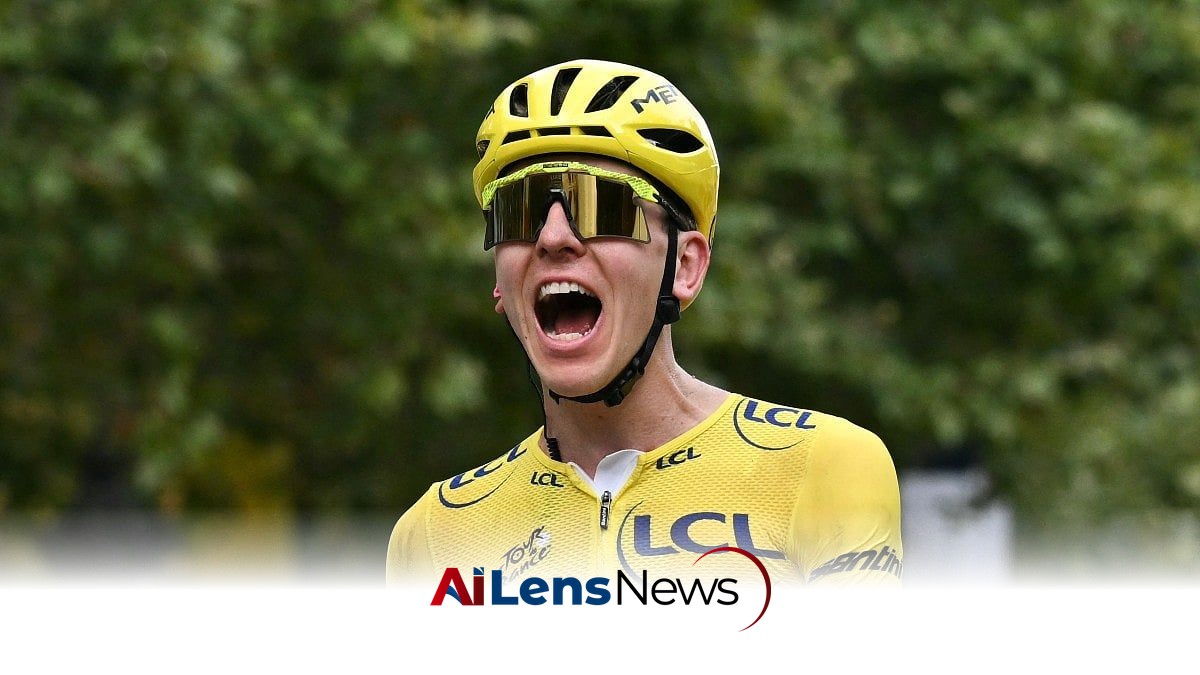


Tadej Pogacar secures his fifth Tour de France title, equalling the record held by cycling legends, while Mathieu van der Poel wins the final stage.
Riyadh, Saudi Arabia Jul 26, 2026 ALN: Paris: Tadej Pogacar claimed his record-equalling fifth Tour de France title as Mathieu van der Poel won a sensational 21st and final stage around Paris on Sunday.
Two-time world champion Pogacar joined the ranks of cycling legends Jacques Anquetil, Eddy Merckx, Bernard Hinault, and Miguel Indurain, marking him as one of the most successful riders in Tour history. This achievement not only highlights his exceptional talent but also places him in the elite circle of athletes who have dominated one of the most grueling and prestigious events in professional cycling. The Tour de France, first held in 1903, has become a benchmark of endurance and strategy, attracting the best cyclists from around the globe. The race covers approximately 3,500 kilometers over three weeks, featuring a variety of terrains that test the limits of physical and mental strength.
Pogacar had all but secured his historic title during the previous two mountain stages that culminated on the iconic Alpe d'Huez climb, a legendary ascent known for its steep gradients and challenging switchbacks. Winning on such a revered climb is a testament to Pogacar's climbing prowess and strategic racing, as it has historically been a decisive factor in the Tour de France standings. The Alpe d'Huez is not just a mountain; it is a symbol of triumph in cycling, often regarded as one of the most iconic climbs in the sport. Riders who conquer it often find themselves etched in the annals of cycling history.
The 27-year-old Slovenian rider won five stages during this year's Tour, showcasing his versatility and strength across various terrains. He has been in the yellow jersey since his victory in the Pyrenean sixth stage, a position of honor that signifies the race leader. His consistent performance throughout the three-week race has solidified his status as a dominant force in the sport. Each stage of the Tour presents unique challenges, from time trials that test speed and precision to grueling mountain stages that require endurance and tactical acumen. Pogacar's ability to excel across these diverse conditions underscores his multifaceted skill set.
Pogacar now boasts a total of 26 stage victories, placing him fourth on the all-time list behind only Mark Cavendish (35), Merckx (34), and Hinault (28). This remarkable tally underscores not only his ability to win stages but also his tactical acumen in navigating the complexities of each stage, including time trials, mountain climbs, and flat sprints. Winning multiple stages in a single Tour is a feat that requires not just raw talent but also a deep understanding of race dynamics and the ability to outsmart rivals on the road.
Moreover, Pogacar has surpassed both Indurain and Chris Froome for total days spent in the yellow jersey, now holding the record with 70 days. He trails only Hinault (75) and Merckx (96) in this prestigious category. The significance of these statistics cannot be overstated; they reflect not just a series of successful races but also a level of consistency and endurance that is rare in the sport. The yellow jersey is more than just a piece of clothing; it represents the pinnacle of achievement in the Tour de France, and wearing it for so many days is a testament to a rider's dominance and resilience.
In achieving this milestone, Pogacar has become the youngest rider to have won five Tours, surpassing Merckx by over a year in age at the time of his fifth victory. This fact adds an additional layer to his legacy, as it suggests that Pogacar may have many more years of competitive racing ahead of him, potentially allowing him to extend his record even further. The implications of his youth are significant; as he continues to develop as an athlete, he may refine his skills and strategies, making him an even more formidable opponent in future competitions.
Furthermore, he is the first person in history to finish on the podium for seven consecutive years, illustrating not only his talent but also his resilience and ability to maintain peak performance over an extended period. This feat is particularly impressive in a sport where injuries and fatigue can derail even the most promising careers. The physical demands of cycling, combined with the mental pressure of competing at the highest level, make sustained success a rare achievement.
In addition to these accolades, Pogacar is also the only rider to have been on the podium in nine consecutive Grand Tours, a testament to his dominance in the sport on both the national and international stages. His ability to consistently perform at such a high level across different Grand Tours showcases his versatility as a cyclist and his exceptional conditioning. Grand Tours, which include the Giro d'Italia and Vuelta a España, present unique challenges that require riders to adapt their strategies and training regimens, making Pogacar's consistency even more impressive.
The Slovenian played an integral role in a stunning final stage, which was shortened to 88.7 kilometers due to wildfires raging in the southwest of France. These wildfires have been a significant concern in recent years, exacerbated by climate change, and have impacted various sporting events across the region. The decision to shorten the stage was made to ensure the safety of the riders and the spectators, highlighting the ongoing challenges that natural disasters pose to sporting events. Climate change has increasingly influenced the scheduling and safety of outdoor sports, prompting organizers to consider environmental factors when planning events.
During the final stage, Pogacar and Van der Poel escaped together on the final climb up Montmartre with just 10 kilometers remaining. Their collaboration was a strategic move, as both riders sought to position themselves favorably for the sprint finish. The dramatic conclusion saw Van der Poel and Pogacar battling fiercely against a chasing group of sprinters closing in behind them. The final stage of the Tour de France often serves as a culmination of the entire race, where tactics, alliances, and endurance converge to create a thrilling spectacle for fans.
As Pogacar's strength began to wane inside the last 700 meters, with the chasers just seconds behind, Van der Poel made a decisive move, striking out alone to secure victory. His background as a cobbled classics specialist played a crucial role in his ability to execute a successful sprint finish, showcasing the diversity of skills required to excel in professional cycling. The ability to transition from climbing to sprinting is a hallmark of elite cyclists, and Van der Poel's victory underscored the importance of versatility in the sport.
Van der Poel ultimately held on to win by a narrow margin, finishing just half a wheel length ahead of his Alpecin Premier Tech teammate Jasper Philipsen, with Mads Pedersen rounding out the podium in third place. This thrilling finish not only capped off the Tour de France but also highlighted the unpredictable and exhilarating nature of the sport, where every second counts and fortunes can change in an instant. Cycling fans around the world revel in these moments, where the outcome is uncertain until the final meters, making the sport both compelling and dramatic.
The implications of Pogacar's fifth Tour victory extend beyond personal accolades; they signify a potential shift in the landscape of professional cycling. As younger riders like Pogacar continue to emerge and dominate, the competition may become increasingly fierce, with established veterans facing new challenges from the next generation of cyclists. This evolution in the sport raises questions about the future of cycling and what it will take for riders to compete at the highest level. The emergence of new talent often leads to a re-evaluation of training methods, race strategies, and team dynamics, as the sport adapts to the changing landscape.
As Pogacar reflects on his historic achievement, the cycling community eagerly anticipates his next moves. Will he continue to dominate in future Tours, or will new challengers rise to the occasion? Only time will tell, but for now, Tadej Pogacar has firmly established himself as a cycling icon, and his legacy will undoubtedly inspire future generations of cyclists to strive for greatness. The narrative of cycling is continually being rewritten, and Pogacar's journey is a significant chapter that will be studied and admired for years to come. His achievements serve as a reminder of the dedication, perseverance, and passion required to excel in one of the most challenging sports in the world.
To learn more about the latest developments in Cycling, stay updated with our exclusive reports and analyses on AiLensNews.

