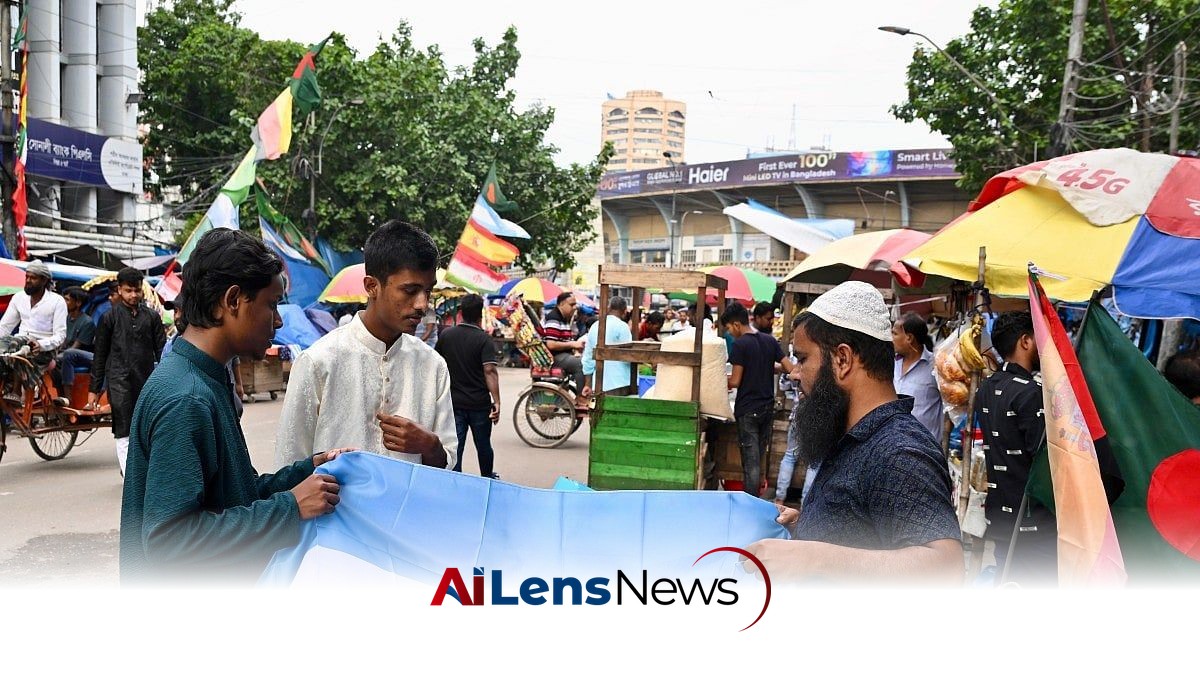


As the World Cup final approaches, Bangladesh's deep-rooted love for Argentina shines through, with fans celebrating their unique bond with the football giants.
Riyadh, Saudi Arabia Jul 18, 2026 ALN: Dhaka: There are rooftops draped in blue and white and murals of Lionel Messi everywhere -- but this is not Argentina, it is Bangladesh where football-crazy fans are again celebrating their unique bond with the South American giants.
The craze for Argentina has endured for decades in a country of 170 million people who have never qualified for the World Cup, but embrace the global showpiece with unmatched passion. This contradiction highlights the deep emotional connection that the people of Bangladesh have with the sport, particularly with the Argentine national team. Football is not merely a game here; it is a cultural phenomenon that transcends social and economic barriers.
The connection is once again on display ahead of Sunday's final in New Jersey, where the defending champions will face Spain. As the world watches, the fervor in Bangladesh serves as a reminder of how football can unite people from different corners of the globe.
Get updated faster and for FREE: Download the Gulf News app now - simply.
While fans in Buenos Aires prepare for what they hope will be another night of celebration, the mood more than 10,000 miles away in Dhaka is also reaching fever pitch. The anticipation and excitement are palpable, as streets filled with colorful decorations and enthusiastic supporters create an atmosphere that rivals that of the host nation.
"I was tense during the Argentina-Egypt match. I was sweating and almost cried," motor mechanic Nurul Islam told AFP. His emotional investment in the team reflects the sentiments of countless others who have followed Argentina through thick and thin. "But now I can confidently say that Argentina will win," he added, showcasing the optimism that permeates the fan base.
Football fans in Bangladesh have traditionally split their loyalties between Argentina and Brazil, South America's football powerhouses. This rivalry has shaped the football culture in Bangladesh, with fans often engaging in spirited debates over which team is superior. However, once Brazil was eliminated in the last 16 by Norway, many of their fans also threw their weight behind Argentina, solidifying the Albiceleste's position as the most popular team in the country.
By some accounts, Bangladesh is home to the largest number of fans of the Albiceleste outside Argentina. This phenomenon can be traced back to the 1986 World Cup, when Diego Maradona's extraordinary performances captured the hearts of millions, including those in Bangladesh. Maradona's legendary status has been passed down through generations, creating a lasting legacy that continues to fuel passion for the team.
Nurul Islam said his love for Argentina was inherited from his father, who supported Maradona. This familial connection to the team exemplifies how deeply ingrained football is in Bangladeshi culture. "My two children are also Argentina fans. They are quite serious about it and insisted on getting new jerseys," he said, highlighting the generational aspect of fandom that is prevalent in many households.
The enthusiasm among fans is translating into booming replica shirt sales. Shamim Patwary, chief adviser of the Bangladesh Sports Accessories Merchant Manufacturers and Importers Association, said demand had surged. "There isn't any study on how many Argentina fans there are, but we have sold a huge number of jerseys," Patwary told AFP. This surge in demand underscores the financial implications of football fandom in a country where the economy is heavily reliant on the garment industry.
Bangladesh, one of the world's largest garment exporters, manufactures football jerseys for fans around the globe. The local industry has been quick to capitalize on the fervor surrounding the World Cup, producing jerseys that are both affordable and appealing to the masses. In this context, the World Cup serves as an opportunity for local businesses to thrive, as the demand for merchandise skyrockets.
At Galaxy Sports, one of Bangladesh's largest sportswear retailers, Argentina jerseys account for roughly 30 percent of total sales. This statistic highlights not only the popularity of the team but also the significant economic impact that football can have on local businesses. "Some parents have even bought Argentina jerseys for newborns," said Raihan Hossian, illustrating the lengths to which fans will go to express their support for the team. "We have sold almost all the Argentina jerseys we stocked, especially the player editions," he added, reflecting the high demand for authentic merchandise.
For many supporters, price is secondary to passion. "Emotion is involved," Hossian said. "The other day, an autorickshaw driver came to our shop and bought a player-edition Argentina jersey worth US$10. I don't know whether he even earns that much in a day." This anecdote serves as a poignant reminder of how deeply football resonates with people, often motivating them to prioritize their love for the game over financial considerations.
In Dhaka's lower-income neighborhoods, pavement vendors have swapped their usual merchandise for football shirts, selling affordable versions to fans. This shift in commerce reflects the pervasive nature of football in Bangladeshi society, where even street vendors recognize the importance of catering to football fans. "I watched Maradona play and have remained a loyal Argentina supporter ever since," vendor Al Mamun, 55, said while selling the cheaper shirts. His story echoes the sentiments of many older fans who have witnessed the evolution of football over the decades.
Bangladesh sits 183rd in the FIFA rankings, yet football fever sweeps across the country every four years. The tournament's emotional pull can be intense, often leading to euphoric celebrations or devastating disappointments. The highs and lows of the World Cup create a rollercoaster of emotions for fans, who invest not just their time but also their hearts into the outcome of the matches.
Local media have reported at least 12 deaths linked to football-related incidents during this World Cup, although AFP was unable to verify the figure. This alarming statistic highlights the intense emotions that football can evoke, sometimes leading to tragic consequences. It underscores the need for a greater understanding of the impact that sporting events can have on mental health and community dynamics.
With the World Cup taking place in the United States, Canada, and Mexico, many matches have kicked off late at night in Bangladesh, but that has not deterred fans. The late-night broadcasts have become a communal experience, with friends and families gathering to watch the games together, further strengthening the bonds of community and shared passion.
Zakia Musanna said she has been staying up through the night to watch Argentina play while wearing the blue-and-white. "I put on the jersey because it gives us the feeling that we belong to the team, a sense of oneness," said the 37-year-old. Her experience is reflective of the collective identity that football fosters among fans, creating a sense of community that transcends geographical boundaries.
Musanna recalls watching Argentina's 2022 World Cup triumph alongside her father and plans to return to the same venue for Sunday's final. "We are planning to go to the same venue, reminisce about the previous victory and celebrate another win," she said, highlighting the personal connections that football creates, often intertwining with family traditions and memories. This emotional investment in the sport is what makes football more than just a game for many; it is a cherished part of life that brings joy, sorrow, and a sense of belonging.
To learn more about the latest developments in Basketball, stay updated with our exclusive reports and analyses on AiLensNews.

