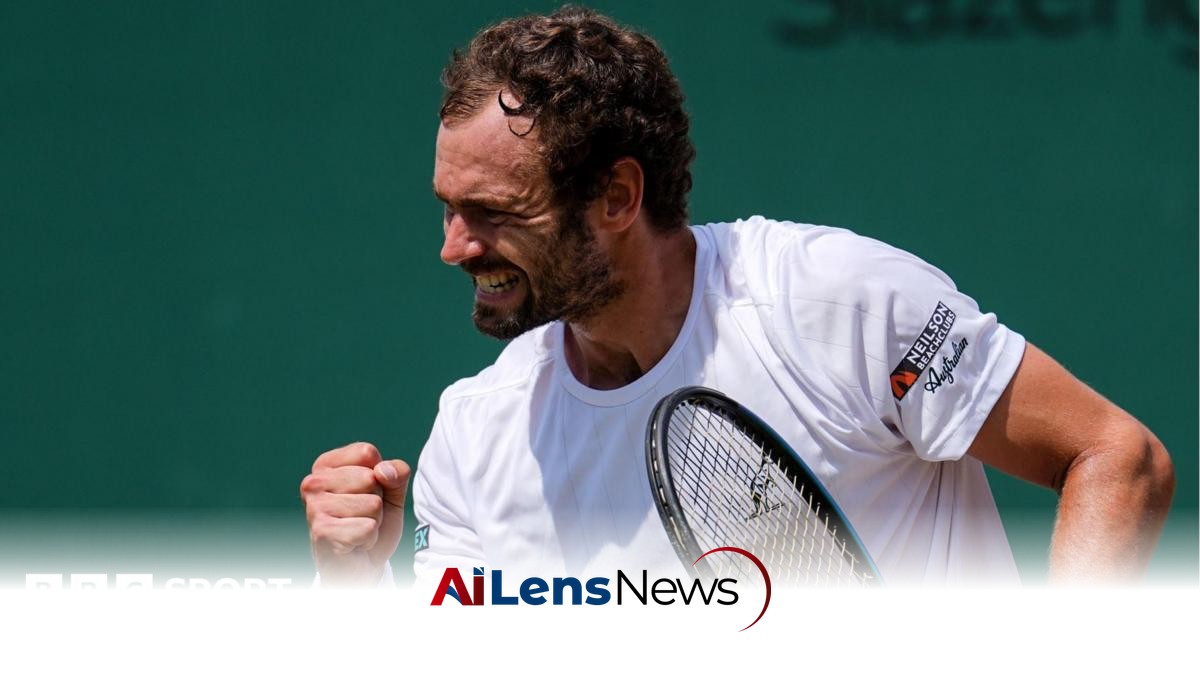


Qualifiers Roman Safiullin and Shintaro Mochizuki aim to continue their surprising runs at Wimbledon by challenging top players Novak Djokovic and Jannik Sinner.
New Delhi, India Jul 4, 2026 ALN: One feared he might never return to top-level competition. The other will now share the court with a player who, in his mind, is a celebrity.
After causing two of the biggest shocks of the first week at Wimbledon, qualifiers Roman Safiullin and Shintaro Mochizuki will now set their sights on toppling two of the favorites for the Wimbledon title.
Novak Djokovic and Jannik Sinner are the superstars standing in their way of going any deeper in the tournament, with the quarter-finals just a step away. The significance of this moment extends beyond just the matches themselves; it highlights the unpredictable nature of , especially in the high-stakes environment of a Grand Slam tournament.
Russian Safiullin was in tears after a stunning 6-3, 6-3, 6-3 victory over talented Brazilian 24th seed Joao Fonseca, having struggled with an injury he feared he would never fully recover from six months ago. This victory not only marked a significant personal achievement for Safiullin but also served as a reminder of the resilience athletes often need to exhibit in the face of adversity.
The 28-year-old is a former Wimbledon quarter-finalist but is now ranked 132 in the world and had not won an ATP Tour-level match this year before entering qualifying. His journey back to competitive has been fraught with challenges, including the need to take a break from the to focus on his recovery. He ended his 2025 season after the US Open in August and did not return to action until February, illustrating the long road athletes must navigate when dealing with injuries.
Safiullin is now on a six-match winning streak at SW19, including three qualifying matches, as he goes into a fourth-round meeting with seven-time champion Djokovic on Sunday. This remarkable turnaround showcases not only his physical recovery but also his mental fortitude. The standing ovation he received from the crowd on Court Two following his victory over 19-year-old Fonseca was a testament to the emotional weight of his journey back to the he loves.
"After the US Open, I had to stop to treat my injury. That time was super tough. Even half a year ago, I didn't know whether I would be able to come back," Safiullin said, reflecting on his struggles. The emotional release he experienced after his victory speaks volumes about the psychological challenges athletes face, particularly when they are forced to confront the possibility of never competing again.
Safiullin again became emotional as he tried to explain the significance of his victory, telling the BBC: "It [the emotion] came from the hard times, I would say. It was not an easy period." His words resonate with many athletes who have faced similar hurdles, emphasizing the mental and emotional aspects of s that are often overlooked in favor of physical performance.
Looking ahead to facing Djokovic, he added: "I played against him three times and only one time I was really close to getting a set against him. The other two times he destroyed me. Hopefully this time I will give him problems and make him suffer on the court." This statement encapsulates the spirit of competition in , where every match offers a new opportunity for redemption and growth.
'I don't know how I've been winning here'
Japan's Mochizuki was watched by compatriot Naomi Osaka as he pulled off a stunning fightback against fast-rising Spanish 19-year-old Rafael Jodar. The world number 151 won just one of the first eight games against 23rd seed Jodar but ultimately triumphed 1-6, 7-6 (7-5), 6-4, 6-4. This victory not only marked a significant milestone for Mochizuki but also highlighted the unpredictable nature of , where momentum can shift dramatically within a single match.
Like Safiullin, Mochizuki had failed to claim a single tour-level win this season, losing all six matches, but the 23-year-old will head into his fourth-round meeting with reigning champion Sinner seeking an unlikely seventh straight victory. This unexpected success at Wimbledon serves as a reminder of the potential for underdogs to shine on the biggest stages, capturing the hearts of fans and inspiring others in the process.
"It's a strange feeling to play Jannik at Wimbledon, especially now this year. I think he's just a celebrity for me," said Mochizuki, who is through to the fourth round at a Grand Slam for the first time. His words reflect the awe that many younger players feel when facing established stars, underscoring the generational divide in professional s.
"I was not winning much before coming here, and I don't know how I have been winning matches here. I'm excited but, at the same time, I feel a little bit strange to be here. I just want to keep enjoying it." This sentiment resonates deeply with many athletes who find themselves in unexpected circumstances, emphasizing the importance of enjoying the journey rather than solely focusing on outcomes.
After winning her own third-round match earlier on Friday, Osaka was seen supporting Mochizuki on Court 18 after the pair became friends when they teamed up at the United Cup earlier this year. The camaraderie between players, especially from the same country, can foster a supportive environment that enhances performance and morale.
"I knew she had already won her match, so I was very happy she was there. She's been playing the best on this surface this year, I think it's a great year for us," Mochizuki said. The mutual support between Osaka and Mochizuki illustrates the positive relationships that can develop within the competitive world of , providing a source of encouragement during challenging times.
"She's been really nice to me. She messages me when I win, and I follow her matches too. I'm very happy we're both here. She's one of the nicest personalities." This statement highlights the importance of mentorship and friendship in s, where established players can provide guidance and support to those who are just beginning their careers.
Osaka said it was "really cool" to have another Japanese player making a run at Wimbledon to "encourage us and motivate me to keep going." This sentiment reflects the broader narrative of representation in s, where athletes from similar backgrounds can inspire each other and create a sense of community.
"We've kind of kept having this little brother-older sister friendship for a while," the four-time major champion said. "He was so funny [at the United Cup]. He'd be the only person that would talk to me. I think maybe I was scary to everyone else. He was this little kid that would come up and keep talking to me. I thought it was so cute." This playful dynamic underscores the personal relationships that can develop in the world of s, reminding fans that athletes are not just competitors but also individuals with unique personalities and connections.
As the tournament progresses, the journeys of both Safiullin and Mochizuki serve as powerful reminders of the unpredictability of s, the resilience required to overcome obstacles, and the importance of community and support among athletes. Their stories are not just about the matches they play but also about the personal battles they have fought to reach this point, inspiring fans and fellow competitors alike.
To learn more about the latest developments in Tennis, stay updated with our exclusive reports and analyses on AiLensNews.

