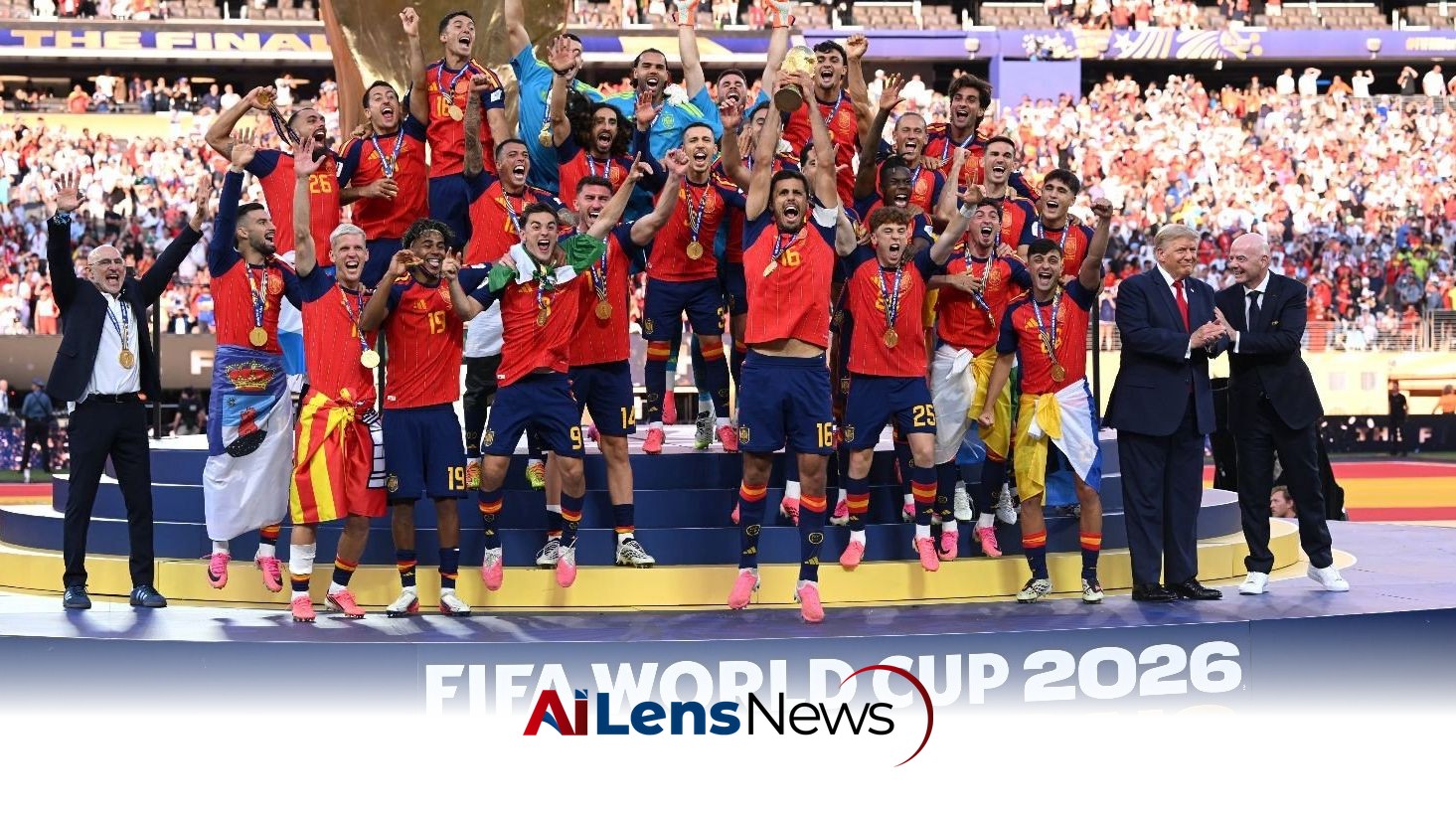


Spain secures its second FIFA World Cup title with a 1-0 victory over Argentina, thanks to Ferran Torres' extra-time goal.
Doha, Qatar Jul 20, 2026 ALN: Spain were crowned FIFA World Cup 2026 champions after defeating defending champions Argentina 1-0 after extra time in a gripping final at the New York/New Jersey Stadium on Sunday, July 19, with Ferran Torres scoring the decisive goal to seal La Roja’s second world title. This victory not only marks a significant achievement for Spanish football but also places them in a select group of nations that have successfully lifted the World Cup trophy multiple times. Spain's previous triumph came in 2010, and this latest victory is a testament to the nation’s enduring footballing prowess and resilience.
The match was characterized by a tense tactical battle from the outset, showcasing the strengths and weaknesses of both teams. Spain, known for their possession-based style of play, controlled the ball effectively, utilizing midfielders Rodri and Fabián Ruiz to dictate the tempo of the game. Their ability to maintain possession and create chances was a hallmark of their approach throughout the tournament. Spain's focus on ball retention and intricate passing patterns paid dividends, allowing them to dictate the flow of play. Meanwhile, Argentina, the reigning champions, relied on a robust defensive strategy led by Cristian Romero and Lisandro Martínez. The duo's ability to thwart Spain's attacking plays was crucial in keeping the match scoreless for a significant portion of the game, demonstrating Argentina's tactical discipline and defensive organization.
Argentina's defense was further bolstered by the outstanding performance of goalkeeper Emiliano Martínez, who made a series of crucial saves that kept the match level. His reflexes and shot-stopping abilities were on full display as he faced multiple attempts from Spanish forwards, demonstrating why he was considered one of the best goalkeepers in the tournament. Martínez's contributions were essential for Argentina, especially given the high-stakes nature of a World Cup final, where each save can shift the momentum and impact the outcome of the match.
As the match progressed, the intensity heightened, and both teams had their moments of opportunity. Spain’s forwards, including Álvaro Morata and Dani Olmo, tested the Argentine defense with their pace and creativity, while Argentina looked to counter-attack with the speed of players like Lautaro Martínez and Ángel Di María. However, both defenses held firm, leading to a tense stalemate at halftime and into the second half.
After a goalless 90 minutes, the match entered extra time, where the tension escalated. The deadlock was finally broken in the second period of extra time. Nico Williams, who had been a lively presence throughout the match, rose to meet Pedro Porro’s delivery and nodded the ball into the path of substitute Ferran Torres. In a moment that would define the match, Torres displayed remarkable composure, firing past Martínez in the 106th minute. This goal not only sparked jubilant celebrations among the Spanish supporters but also shifted the momentum firmly in Spain's favor, creating a sense of urgency for Argentina as they sought to equalize.
As the match progressed, Argentina faced a significant setback when Enzo Fernández was sent off deep into stoppage time after receiving a second yellow card. This red card reduced Lionel Scaloni’s side to ten men, severely hampering their ability to mount a late response against a well-organized Spanish defense. The numerical disadvantage forced Argentina to adopt a more desperate approach, which Spain expertly managed, showcasing their tactical discipline and resilience in the closing stages of the match. Spain's ability to maintain their composure under pressure was a key factor in their success.
Spain's victory capped a superb tournament for Luis de la Fuente’s side, who had previously eliminated formidable opponents such as Portugal, Belgium, and France on their path to the final. This impressive run not only highlighted Spain's resurgence as a footballing powerhouse but also underscored the depth of talent within their squad. The combination of experienced players and emerging stars contributed to a well-rounded team capable of competing at the highest level. The success of players like Rodri and Torres, alongside veterans such as Sergio Busquets, showcased the blend of youth and experience that defined this Spanish team.
For Argentina, the defeat marked a disappointing end to their bid to retain the title won in Qatar in 2022. The loss denied Lionel Messi, one of the sport's greatest players, another opportunity to add a World Cup crown to his illustrious career. Messi's legacy in football is already secured, but the desire to win a second World Cup title remained a driving force for him and his teammates. The emotional toll of the match was palpable as the Argentine players reflected on their journey, which had included a mix of highs and lows. The defeat raised questions about the future of the Argentine squad, particularly regarding the aging stars and the potential for a generational shift in the coming years.
The implications of Spain's victory extend beyond the trophy itself. Winning the World Cup is a monumental achievement that can have lasting effects on a nation's footballing culture, inspiring future generations of players and fans. It also solidifies Spain's position as a dominant force in international football, following their previous triumph in 2010. The success can lead to increased investment in youth programs, infrastructure, and coaching, further enhancing the country's footballing capabilities. The victory may also reignite interest in football among young Spaniards, encouraging participation at grassroots levels and fostering a new generation of talent.
Furthermore, the victory could have ramifications for the coaching staff and players involved. Luis de la Fuente, having led the team to World Cup glory, may find himself in high demand for future coaching roles, while players like Ferran Torres could see their market value rise significantly as clubs look to capitalize on their success on the international stage. The transfer market could experience a ripple effect as clubs assess the talent showcased during the tournament, potentially leading to significant moves in the coming transfer windows.
In summary, Spain's triumph over Argentina in the FIFA World Cup 2026 final not only highlights their return to prominence in world football but also serves as a reminder of the unpredictable nature of the sport. The match itself encapsulated the drama, tension, and passion that define football at the highest level, leaving fans from both nations with memories that will last a lifetime. As Spain celebrates their second World Cup title, the footballing world will undoubtedly be watching closely to see how both teams evolve in the coming years, particularly with the next World Cup on the horizon. The journey of both nations will be watched with great interest as they prepare for future competitions and seek to build on their respective legacies.
To learn more about the latest developments in Basketball, stay updated with our exclusive reports and analyses on AiLensNews.

