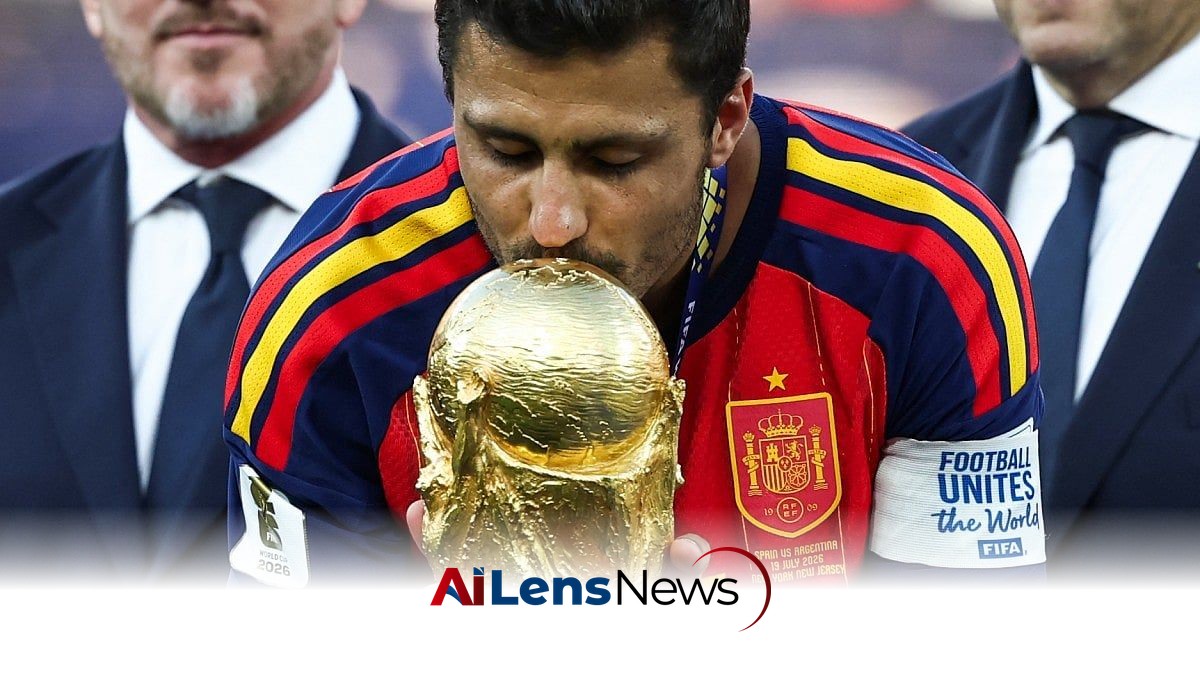


Rodri surpasses Messi to win the Golden Ball, while Spain sweeps major awards at the FIFA World Cup 2026, with notable performances from Pau Cubarsi and Unai Simón.
Doha, Qatar Jul 20, 2026 ALN: Spain's remarkable triumph at the FIFA World Cup 2026 marks a significant milestone in the nation's footballing history, culminating in a series of prestigious individual awards for its players. Among these accolades, the Golden Ball award, which recognizes the tournament's best player, was clinched by midfield maestro Rodri. His outstanding performance throughout the tournament was instrumental in Spain's success, allowing the team to secure their second World Cup title, a feat that has solidified their status as a powerhouse in international football.
Rodri, who plays for Manchester City in the Premier League, has been widely regarded as one of the finest midfielders of his generation. His ability to control the tempo of the game, coupled with his exceptional passing range and defensive acumen, has made him a pivotal figure in both his club and national team setups. During the World Cup, Rodri's contributions were not just limited to his defensive duties; he consistently demonstrated his capacity to initiate attacks and link play, which was essential for Spain as they navigated through a challenging tournament.
His journey to this accolade has been remarkable. Rodri has now achieved a rare feat in modern football, winning the World Cup, European Championship, UEFA Champions League, and the Ballon d'Or, alongside multiple Premier League titles with Manchester City. This comprehensive trophy cabinet places him in a select group of players who have enjoyed success at both club and international levels, further enhancing his legacy as one of the greats of the game.
In addition to Rodri's recognition, Spain's young talent Pau Cubarsí was awarded the Best Young Player of the tournament. At just 19 years old, the Barcelona defender showcased remarkable maturity and composure throughout the competition. His performances were particularly impressive given the high stakes of the World Cup, where the pressure can often overwhelm even the most seasoned players.
Cubarsí's defensive prowess played a crucial role in Spain's campaign, as he helped the team maintain a solid defensive record. His ability to read the game and make crucial interventions against some of the world's most potent attacking players highlighted his potential to become a mainstay in both the national team and his club in the years to come. The recognition of his talent at such a young age suggests that he could be a significant figure in the future of Spanish football.
Furthermore, Spain's defensive unit as a whole was celebrated for its excellence, with goalkeeper Unai Simón receiving the Golden Glove award for his outstanding performances throughout the tournament. Simón's contributions were vital, as he recorded seven clean sheets, including a stellar performance in the final against Argentina, where he did not concede a single shot on target during regular time. This statistic underscores the dominance of Spain's defense, which conceded only ten shots on target across the entire tournament, illustrating their tactical discipline and cohesion as a unit.
While Spain dominated the individual honors, the tournament also saw remarkable performances from players outside the Spanish squad. Kylian Mbappé, the captain of the French national team, finished as the tournament's leading scorer, earning the Golden Boot after netting ten goals. Despite his impressive tally, which showcased his exceptional skill and goal-scoring ability, Mbappé's efforts were not enough to secure World Cup glory for France, who fell short in the final against Spain.
The FIFA Fair Play Award was presented to the Netherlands, acknowledging their discipline and sportsmanship throughout the competition. This recognition highlights the importance of fair play in football, emphasizing that while winning is a priority, maintaining integrity and respect for the game is equally vital.
As the dust settles on the FIFA World Cup 2026, the individual awards serve as a testament to the talent and hard work displayed by players throughout the tournament. The winners are as follows:
The implications of Spain's victory extend beyond the trophy itself. This World Cup win is a reflection of the deep-rooted footballing culture in Spain, which has produced world-class talent over the decades. The success of the national team at this level can inspire a new generation of players in Spain, encouraging youth participation in football and fostering a competitive spirit within the sport. The achievements of players like Rodri and Cubarsí serve as role models for aspiring footballers, emphasizing the importance of hard work, dedication, and skill development.
Moreover, this victory can have significant ramifications for Spanish football on a broader scale, including the domestic leagues and clubs. The triumph may lead to increased investment in youth academies and grassroots programs, aiming to replicate the success seen at the international level. Clubs may also see a rise in interest from fans and sponsors, which can translate into financial benefits, further enhancing the growth of football in Spain.
On an international level, Spain's success at the World Cup reinforces the competitive landscape of global football. It serves as a reminder of the cyclical nature of footballing dominance, where nations rise and fall in their fortunes. Spain's victory, following their previous successes, showcases their ability to adapt and evolve, which is critical in a sport that is constantly changing. This adaptability is crucial for maintaining relevance and competitiveness in future international tournaments.
In conclusion, the FIFA World Cup 2026 not only celebrated Spain's triumph but also highlighted the individual brilliance of players like Rodri and Cubarsí, who have etched their names into the annals of football history. As Spain continues to build on this success, the future looks bright for Spanish football, with a foundation laid for continued excellence on the global stage. The legacy of this World Cup will undoubtedly influence the trajectory of football in Spain for years to come, as the nation strives to maintain its position among the elite in world football.
To learn more about the latest developments in Basketball, stay updated with our exclusive reports and analyses on AiLensNews.

