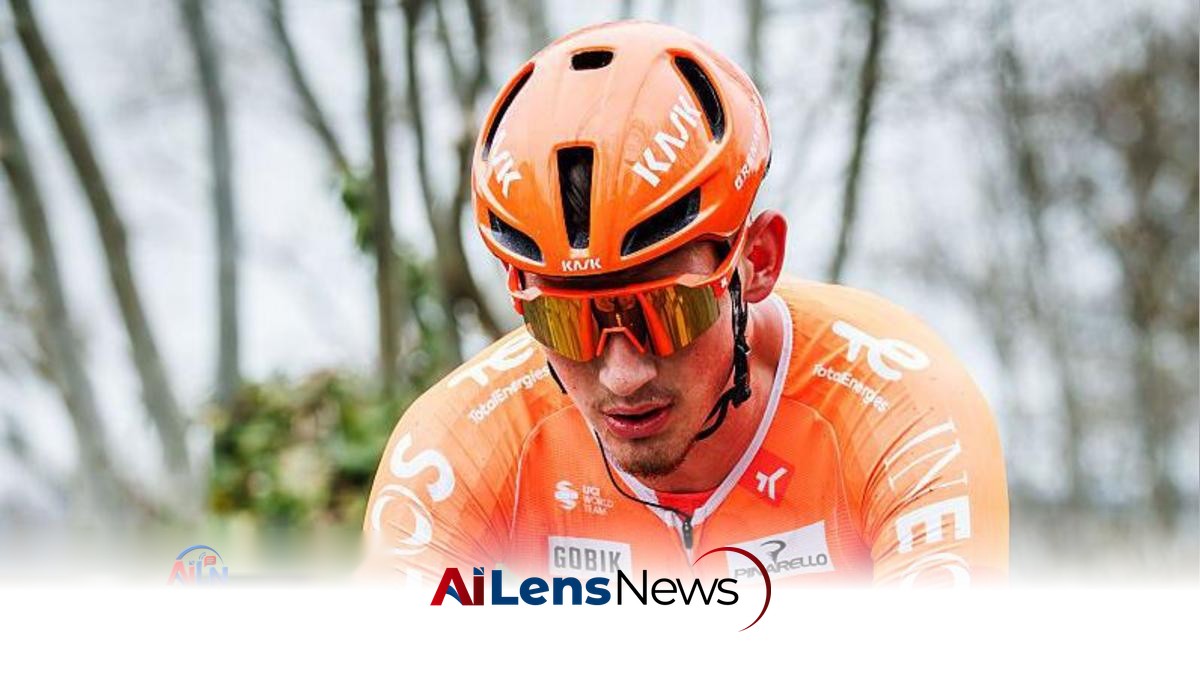



Josh Tarling defies the odds to make his Tour de France debut just three weeks after collarbone surgery, showcasing resilience and determination.
New Delhi, India Jul 1, 2026 ALN: Three weeks ago, Josh Tarling's Tour de France hopes appeared over.
A high-speed crash at the Tour Auvergne-Rhône-Alpes left the Netcompany Ineos rider with a broken collarbone, requiring surgery less than a month before 's biggest race. This unfortunate incident raised significant concerns about his participation in the prestigious event, given the physical demands of professional , where injuries can often sideline athletes for extended periods.
Now, just three weeks later, the 22-year-old Welshman will roll down the start ramp in Barcelona for his Tour de France debut. This swift recovery is remarkable, particularly considering the rigorous nature of the , which places immense strain on the body. The fact that Tarling is able to compete so soon after such an injury speaks volumes about his dedication, physical resilience, and the advancements in s medicine that allow athletes to recover more quickly than ever before.
This should sound extraordinary. Perhaps the only reason it doesn't is because professional has recently stretched the boundaries of what seems possible. Last year, Norway's Jonas Abrahamsen returned to the Tour just nine days after breaking his collarbone, underlining that recovery by winning a stage. Tarling's comeback may not seem quite as astonishing, but it remains remarkable nonetheless. The evolution of medical practices and rehabilitation techniques in s has led to a better understanding of how athletes can recover from injuries, enabling them to return to competition sooner than in previous decades.
Reports indicated that the Aberaeron rider was back on his bike just two days after surgery, initiating a race against time to prove his fitness. This kind of rapid recovery is not just a testament to Tarling's physical resilience but also to the advancements in s medicine and rehabilitation techniques. Athletes today benefit from a better understanding of injury recovery, access to high-quality medical care, and tailored rehabilitation programs that can facilitate quicker returns to competition. Such advancements are critical, as they allow athletes to maintain their competitive edge while minimizing the time spent away from the .
His selection, confirmed by Ineos on Wednesday alongside Thymen Arensman, 2019 winner Egan Bernal, Tobias Foss, Filippo Ganna, Dorian Godon, Michal Kwiatkowski, and Kévin Vauquelin, also arrives at an important moment for British . For much of the past decade, British fans barely had to search for a storyline at the Tour de France. Chris Froome won four yellow jerseys, Geraint Thomas became the first Welshman to win the race, and Mark Cavendish rewrote the record books as the Tour's greatest-ever stage winner. These athletes not only achieved personal success but also inspired a generation of cyclists in the UK and beyond, creating a legacy that has transformed the landscape of competitive .
This golden generation is now beginning to give way to the next. Thomas and Cavendish have retired, and Froome has yet to make it official, but with a new role in the tech industry and now into his fifth decade, British has inevitably started looking towards the future. The departure of these legendary figures marks a significant transition in the , as younger riders like Tarling emerge to take on the mantle of representing British on the world stage. This shift is essential for the continued growth and development of the in the UK, as it creates opportunities for emerging talents to shine and inspire the next generation.
There are still world-class British riders in the peloton. Adam Yates remains among the elite stage racers, albeit now largely in support of Tadej Pogačar. Oscar Onley, another of Britain's brightest young talents, will miss the Tour altogether through injury. This leaves Tarling as arguably the most intriguing British storyline of this year's race, having already established himself among the world's elite time trialists. His journey to the Tour is not just about personal achievement; it symbolizes a broader narrative of renewal in British , showcasing the potential and determination of the next generation of cyclists.
"I'm just super happy and really looking forward to it," he told the Ineos website. "We've got a power team, so I'm really excited with the team that we have for the TT (time trial) and stages, so we're going to have a good Tour together." His enthusiasm reflects the spirit of a young athlete eager to make his mark, and his confidence in the team suggests a strong camaraderie that is often crucial for success in such a grueling event. The importance of team dynamics in professional cannot be overstated, as success often hinges on the ability of riders to work together effectively during the race.
His Giro d'Italia stage victory last year confirmed the immense potential many have long predicted. World Championship titles, Olympic medals, and Grand Tour stage victories all appear realistic ambitions for Tarling, who has demonstrated his capabilities on the international stage. Standing at 6ft 4in with a powerful build, Tarling is a very different rider from the lightweight climbers who traditionally fight for the Tour de France's yellow jersey. His greatest strengths lie against the clock and on the sort of powerful terrain where his immense engine can make the difference, making him a formidable competitor in time trials and flat stages.
However, expectations for Tarling's first Tour should remain realistic. For casual fans, the Tour de France is defined by yellow jerseys and stage victories. That is what grabs headlines and captures imaginations. Tarling's debut is unlikely to do so, as the opening stage is a team time trial, but the sharp climb into Barcelona means his role will almost certainly be one of sacrifice. Expect him to use his immense power to drive across the flatter roads before peeling off as the gradients steepen, leaving the team's climbers and general classification riders to contest the finish. This selfless approach is essential in professional , as the success of the team often relies on the contributions of each member, even if it means sacrificing individual ambitions for the greater good.
Nor does the race's only individual time trial present an obvious opportunity for Tarling. Its rolling, climbing profile is likely to favour more complete riders such as Tadej Pogačar and Remco Evenepoel rather than pure specialists against the clock. This means Tarling could complete all three weeks without ever seriously challenging for a stage victory. Nonetheless, this should not be mistaken for disappointment. This Tour is not about results; it is about proving he belongs, learning the rhythms of 's biggest race, and gaining the experience that could shape the next decade of his career. The lessons learned during this inaugural Tour de France will be invaluable as he navigates the challenges of elite competition in the years to come.
Next summer, the Tour de France returns to Great Britain for the Grand Départ before crossing into Wales on stage three from Welshpool to Cardiff. If all goes to plan, Tarling will arrive there not as a Tour debutant, but as a rider with three weeks of 's biggest race already behind him. This potential homecoming adds a layer of excitement not only for Tarling but for fans who have witnessed the evolution of British over the past few years. The anticipation surrounding this event highlights the growing popularity of in the UK, as more fans become engaged with the and support their homegrown talents.
Three weeks ago, making the Tour de France looked impossible. Now, after a remarkable recovery, Josh Tarling begins what British hopes will be the first of many appearances in 's biggest race. His journey is emblematic of resilience, determination, and the relentless pursuit of excellence that defines the spirit of . As he embarks on this new chapter, the world will undoubtedly be watching closely, eager to see how his story unfolds in the coming years. The implications of his participation extend beyond personal achievement; they represent a new era for British , one that embraces the potential of young athletes and the promise of future success on the international stage.
To learn more about the latest developments in Global Tournaments & Olympics, stay updated with our exclusive reports and analyses on AILensNews.

