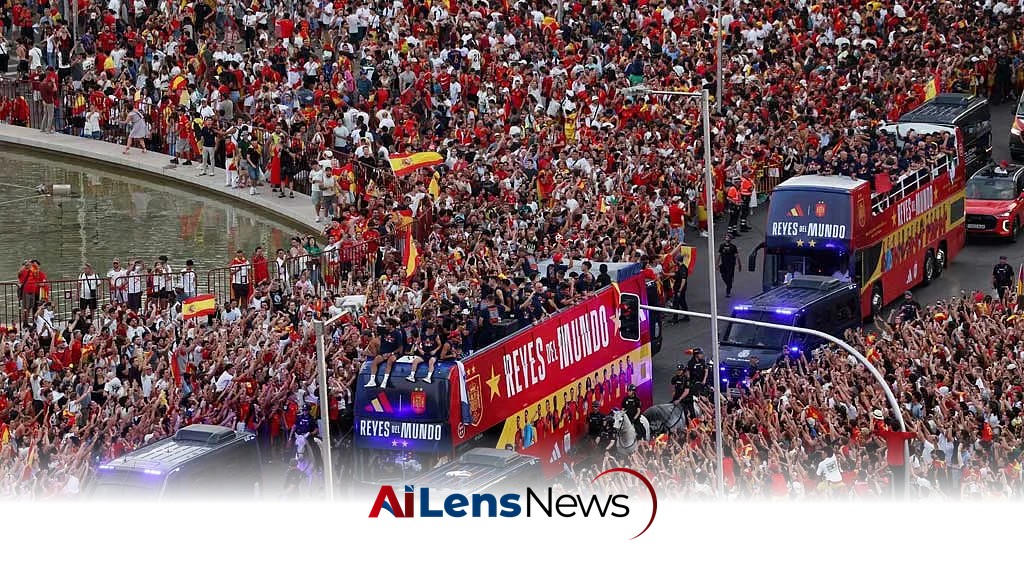


Spain's World Cup-winning soccer team returned to a hero's welcome in Madrid, greeted by nearly 2 million fans and a royal reception following their victory over Argentina.
New Delhi, India Jul 22, 2026 ALN: MADRID, JUL 21: Spain’s World Cup-winning soccer team returned home on Monday, and an estimated crowd of almost 2 million was on hand to greet the squad through the streets of Madrid. The victory is particularly significant, as it marks Spain's second World Cup title, the first being in 2010 in South Africa. This triumph has not only uplifted the spirits of fans across the nation but has also highlighted the evolution of Spanish football on the world stage.
The 26 players and their coaching staff met with the country’s royals, and then with Prime Minister Pedro Sánchez, after arriving in the Spanish capital a day after beating Argentina 1-0 in the final in New Jersey. “Thank you to the coaches and players for the style of play, the effort and the victory,” Sánchez said. “We have truly enjoyed watching you play.” This acknowledgment from the Prime Minister emphasizes the broader impact of sports on national pride and unity.
The squad then boarded an open-top bus for a raucous parade through central Madrid. “Stars shine together” was written on the bus, which also carried photos of the footballers. The choice of this phrase reflects the collective effort and unity of the team, which has been a hallmark of Spain's recent successes in football.
Players — carrying the World Cup trophy and wearing shirts with the words Somos Campeones (We Are Champions) — danced and interacted with the fans along the route. The atmosphere was electric, showcasing the strong connection between the players and their supporters. The players' exuberance and willingness to engage with fans underscore the importance of football in Spanish culture and its role in fostering community spirit.
“It’s been an emotional and proud experience to represent a wonderful country with such passionate and devoted fans,” Spain coach Luis de la Fuente said before the parade started. “We are filled with joy.” His comments reflect the deep sense of pride and responsibility that comes with representing a nation on such a significant platform. The joy expressed by the coach is indicative of the hard work and dedication that the team has put into their training and preparation for the tournament.
The squad traveled down Madrid’s historic avenues from near Moncloa Palace, the prime minister’s official residence, to Cibeles Square, where authorities told local media that some 120,000 people were on hand for a ceremony. The route taken by the team is symbolic, as it passes through some of the most iconic landmarks in the city, allowing fans from all walks of life to participate in the celebration.
Players were introduced one by one before entering the stage set up at the square. Each picked the song to be played when they came in. Álex Baena, celebrating his 25th birthday, entered with the World Cup trophy. Coach De la Fuente was thrust into the air by his players after being introduced. The coach was among those who sang along to the song being played for them. Striker Borja Iglesias featured as a DJ at one point, with his teammates dancing on the stage. Singers Aitana, Ana Mena, and Lola Índigo were among those entertaining the crowd and the players. This blend of sports and entertainment illustrates how football transcends mere competition, becoming a cultural phenomenon that unites people through shared experiences.
The ceremony ended with the whole Spain squad lifting the trophy again, just like at the awards ceremony on Sunday, but now in front of the local crowd. This moment was not just a celebration of victory but a reaffirmation of national identity and pride, particularly in a time when the country has experienced various challenges.
Groups of fans had begun securing their spots near Cibeles late Monday morning ahead of the team’s arrival, bringing umbrellas to protect against the sun and temperatures of up to 35 Celsius (95 Fahrenheit). This level of enthusiasm among fans demonstrates the significance of the event, as many were willing to endure the heat to show their support for the team. The square is where previous Spain teams and their supporters have typically gathered to celebrate. It’s also the traditional celebration spot for Real Madrid when it wins titles, further solidifying Cibeles Square as a central location for sporting triumphs in Spain.
Officials estimated a total of 1.8 million people welcomed the team in Madrid. Such a turnout is indicative of the deep-rooted passion for football in Spain, where the sport is often seen as a unifying force that brings together individuals from diverse backgrounds. The sheer number of supporters present reflects the collective joy and pride felt across the nation following the team’s success.
Spain walked off with the trophy Sunday after Ferran Torres scored the winner in extra time to secure its second World Cup title — and first since 2010 in South Africa. The team was congratulated by the leaders of the three countries that co-hosted the tournament — U.S. President Donald Trump, Mexican President Claudia Sheinbaum, and Canadian Prime Minister Mark Carney. This international recognition underscores the importance of the victory not just for Spain, but also within the global context of football, where such achievements resonate across borders.
After the final whistle, Madrid erupted into celebrations, with thousands of supporters pouring into the streets from bars and restaurants, many draped in Spanish flags or wearing the team’s colors. The spontaneous celebrations that erupted across the city highlight the emotional connection that fans have with their national team. Crowds packed the capital’s Puerta de Sol and other major squares — singing, dancing, and setting off flares while car horns blared. Many celebrated Sunday’s victory long into the wee hours of Monday morning. “I’m very happy. I’ve slept three or four hours, but for the team, I’ll do whatever it takes,” 19-year-old Victor Álvarez said. This sentiment is reflective of the dedication and loyalty that fans have toward their national team, often prioritizing these moments of joy over their personal comfort.
The men’s victory, combined with the Women’s World Cup won by Spain in 2023, makes the European nation the first to hold both titles simultaneously. This dual achievement is particularly historic and signifies a remarkable era for Spanish football, showcasing the depth of talent and success across both men's and women's teams. The implications of this success extend beyond the pitch, as it may inspire future generations of players and promote greater investment in women's football.
“Honestly, it was very exciting. We preferred not to go to any bar or anything, to experience it at home, focused and very happy, very joyful,” 59-year-old civil servant Gema Rodero said. This statement encapsulates the personal significance of the victory for many, as it allowed fans to connect with the moment in their own unique ways, whether through communal celebrations or intimate gatherings.
Celebrations were dampened, however, after local authorities reported that a 13-year-old in Salamanca, northwest of Madrid, had died after a fountain he had climbed onto with friends to mark the victory had collapsed. This tragic incident serves as a reminder of the potential dangers associated with large public celebrations, highlighting the need for safety measures during such events. The loss of a young life casts a shadow over the festivities and underscores the importance of community awareness and responsibility during celebrations.
For many young supporters, the triumph is their first time witnessing the men’s team lift the trophy — and the national delirium that has followed. This moment is likely to leave a lasting impression on the youth of Spain, potentially fostering a new generation of football fans who will carry the spirit of this victory forward.
Spain now is markedly different from 2010, when the Iberian nation was beset by a debt crisis, 20% unemployment, and nationalist regions fighting to win more autonomy. The economy is expanding, the unemployment rate has halved, and the country is forecast to again be among the Eurozone’s fastest-growing major economies. Nationalist and separatist tensions have considerably cooled. The current socio-economic landscape provides a stark contrast to the environment during Spain's first World Cup victory, illustrating how sports can serve as a catalyst for national unity and pride, especially during times of hardship.
To learn more about the latest developments in Golf, stay updated with our exclusive reports and analyses on AiLensNews.

