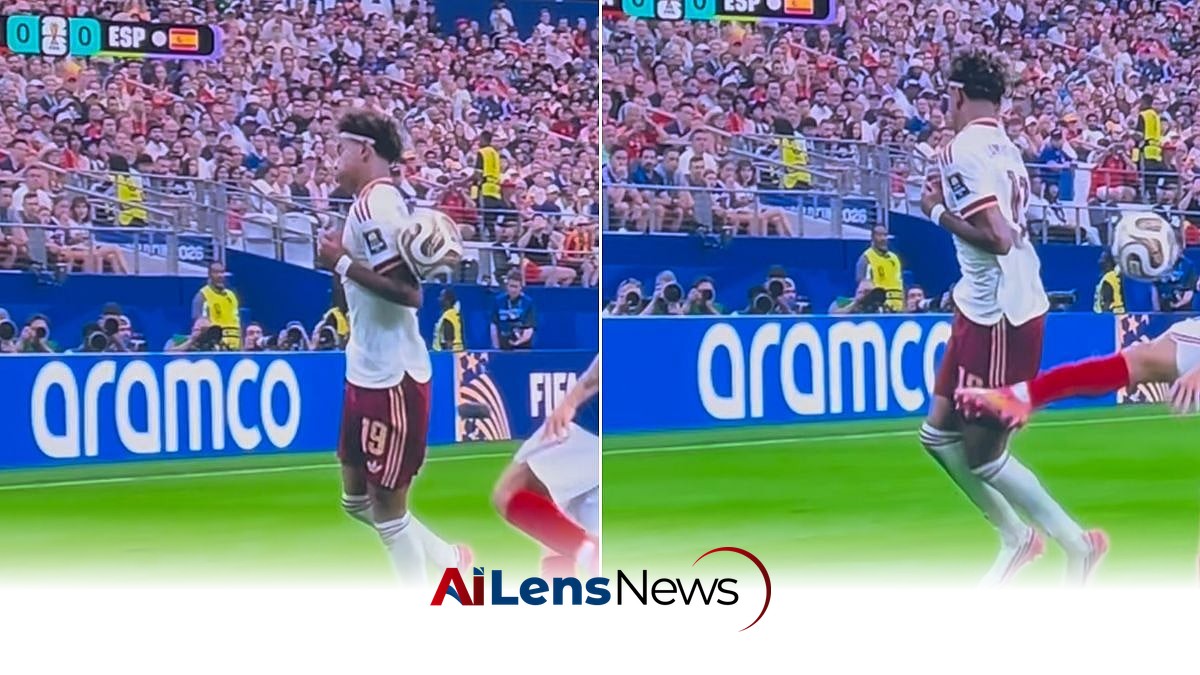


Spain's penalty against France in the World Cup 2026 semi-final has sparked debate over VAR's role in handball decisions, particularly regarding Lamine Yamal's arm contact.
New Delhi, India Jul 15, 2026 ALN: The FIFA World Cup is one of the most prestigious tournaments in international football, drawing millions of viewers from around the globe. The 2026 edition, co-hosted by the United States, Canada, and Mexico, has already generated significant excitement and anticipation among fans. However, as with any major sporting event, it has also brought its share of controversy. One such incident occurred during the semi-final match between Spain and France, where a penalty decision has sparked heated debates among fans, analysts, and football enthusiasts alike.
In the semi-final clash, Spain was awarded a penalty after a sequence of events involving their young forward Lamine Yamal and France's defender Lucas Digne. The incident occurred when the ball appeared to make contact with Yamal's arm just moments before Digne fouled him inside the penalty area. This particular moment has been the center of contention, as replays indicated that the ball had indeed struck Yamal's arm, leading to questions about whether the penalty should have been awarded at all.
To understand the implications of this decision, it is essential to delve into the rules governing handball in football. According to the International Football Association Board (IFAB) Laws of the Game, not all instances of the ball making contact with a player's arm are classified as handball offences. The officials must assess several factors, including whether the contact was deliberate, whether the arm was positioned unnaturally, and whether the player benefited from the contact. This nuanced interpretation of the rules often leads to varying opinions, particularly in high-stakes matches like a World Cup semi-final.
The situation became even more complex when considering the role of the Video Assistant Referee (VAR). VAR technology was introduced in football to assist referees in making critical decisions, particularly those involving goals, penalties, and red cards. In this instance, had VAR determined that Yamal's contact with the ball constituted a punishable handball, the play would have been stopped immediately, and France would have been awarded a free kick instead of Spain receiving the penalty. However, since the referee allowed the game to continue after the arm contact, it implied that the officials believed Yamal's touch did not violate the handball law.
The decision to award the penalty ultimately fell to the referee on the field, who had to make a split-second judgment call amid the intensity of the match. Spain's Mikel Oyarzabal, stepping up to take the penalty, faced immense pressure, not only from the French players but also from the weight of expectations resting on his shoulders. The stakes were high; a successful penalty would give Spain a crucial lead in a match that could determine their progression to the final.
When Oyarzabal confidently slotted the ball past the French goalkeeper, he not only scored the opening goal of the match but also set the tone for Spain's performance. The goal rewarded Spain's bright start and instilled a sense of control and confidence in Luis de la Fuente's side. In contrast, the early setback left France with a daunting challenge, as they now had to regroup and find a way to respond to the deficit.
This incident has highlighted the ongoing debate surrounding the use of VAR in football. Proponents argue that VAR enhances the fairness of the game by providing referees with additional tools to make informed decisions. Critics, however, contend that the technology can disrupt the flow of the game and lead to confusion among players and fans alike. The subjective nature of interpreting handball rules adds another layer of complexity, as different referees may arrive at different conclusions based on the same set of circumstances.
As the match progressed, the implications of the penalty decision loomed large. Spain, buoyed by their early lead, sought to maintain their momentum and push for further goals, while France was forced to adapt their strategy in an attempt to equalize. The psychological impact of the penalty decision also played a role, as Spain's players gained confidence while France's players had to contend with frustration and the pressure of needing to score.
The broader context of this controversy extends beyond just the match itself; it raises questions about the consistency of officiating in football at large. Fans and pundits alike have long called for clearer guidelines and greater transparency in how VAR decisions are made. The inconsistency in officiating can lead to feelings of injustice among teams and their supporters, particularly in high-stakes matches where every decision can have far-reaching consequences.
In conclusion, the controversy surrounding Spain's penalty decision in the FIFA World Cup 2026 semi-final against France serves as a microcosm of the ongoing discussions about the role of technology in football, the interpretation of the rules, and the impact of officiating on the game. As the tournament progresses, it will be interesting to see how such incidents influence public perception of VAR and the overall integrity of officiating in football. The outcome of this match could very well shape the narrative of the tournament, as both teams aim for glory on the world stage, and the lessons learned from this incident may resonate in future competitions.
Looking back at the history of the World Cup, controversial officiating decisions have often played a pivotal role in shaping the outcomes of matches. From the infamous 'Hand of God' goal by Diego Maradona in 1986 to the contentious no-call on a potential penalty for the Netherlands in the 2014 final, the topic of officiating has always been a hot-button issue. The introduction of VAR was hailed as a potential solution to these controversies, promising a more accurate adjudication of critical moments in matches. However, as this incident demonstrates, the technology has not eliminated debate or dissatisfaction among fans and players alike.
Moreover, the cultural significance of football in countries like Spain and France adds another layer to the discussion. Football is more than just a game; it is a source of national pride and identity. The stakes are incredibly high, and every decision made by officials can feel like a matter of national interest. The emotional investment of fans can lead to heightened reactions to contentious decisions, as seen in the aftermath of the penalty awarded to Spain. Social media platforms are rife with opinions, analyses, and heated discussions, illustrating the passionate nature of football fandom and the desire for justice in the beautiful game.
As the tournament moves forward, the focus will inevitably shift towards how FIFA and the footballing community address these concerns. There are calls for more comprehensive training for referees, particularly in the use of VAR technology, to ensure that decisions are made with the utmost accuracy and consistency. Additionally, there is a growing demand for clearer communication from officials regarding the rationale behind their decisions, especially in high-stakes situations where the outcome of a match can hinge on a single call.
In the aftermath of the semi-final, both Spain and France will reflect on the match and the decisions that shaped it. Spain will celebrate their progress to the final, buoyed by their performance and the controversial penalty that helped pave their way. France, on the other hand, will have to grapple with the disappointment of their exit from the tournament, compounded by the contentious nature of the officiating. This incident serves as a reminder of the complexities of football, where human error, technology, and the passion of the game intersect in unpredictable ways.
Ultimately, the discussions surrounding the penalty decision in the Spain vs. France semi-final will likely continue long after the match has concluded. As fans and analysts dissect every angle, the implications of this moment will resonate throughout the tournament, influencing how teams approach their games, how referees officiate, and how fans engage with the sport. The evolution of football is a continuous process, and each controversial moment contributes to the larger narrative of the game, shaping its future for generations to come.
To learn more about the latest developments in Football (Soccer), stay updated with our exclusive reports and analyses on AiLensNews.

