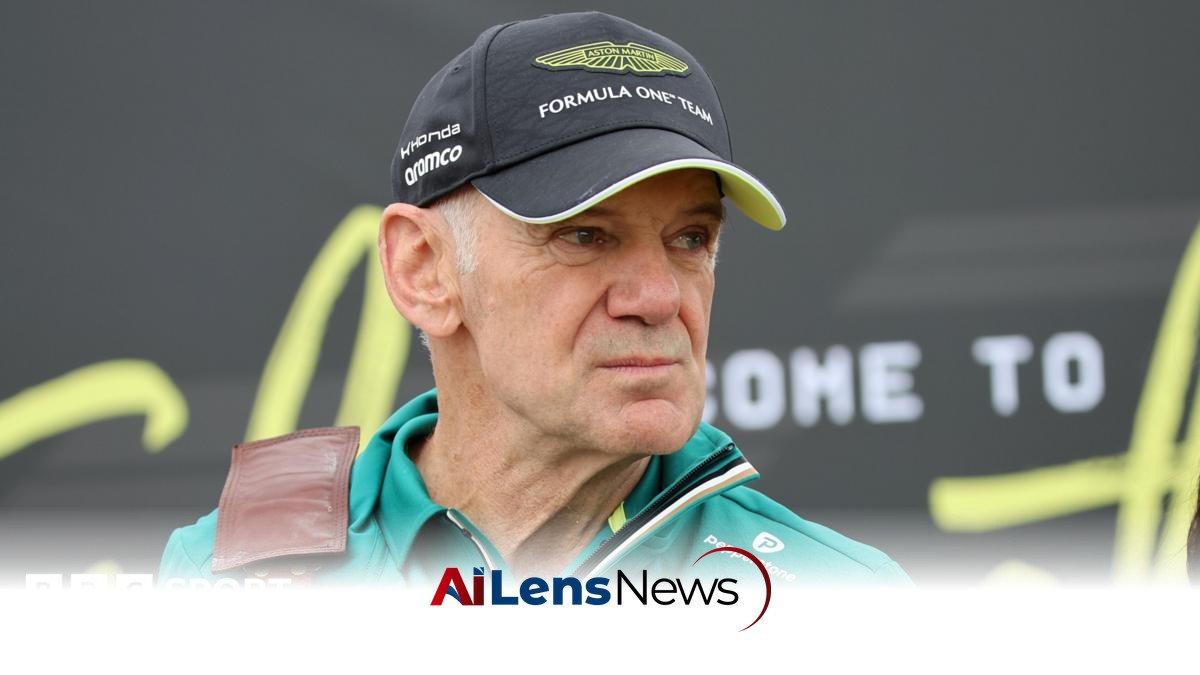


BBC F1 correspondent Andrew Benson addresses questions about the Aston Martin-Honda package and the anticipated 'Newey effect' in 1.
New Delhi, India Aug 4, 2026 ALN: 1 is currently on its summer break, with the season set to resume at the Dutch Grand Prix from August 21-23.
In the meantime, BBC F1 correspondent Andrew Benson is here to tackle your pressing questions.
Despite the promising new Aston Martin package, it has yet to meet expectations. Should we have already seen the 'Newey effect,' and why has the acclaimed designer not made the anticipated impact? - Benjamin
The recent performance struggles of Aston Martin in the 1 arena have raised eyebrows, particularly given the high expectations surrounding the team's partnership with Adrian Newey, a designer renowned for his transformative impact on the . Newey's arrival at Aston Martin as managing technical partner has been highly anticipated, especially considering his illustrious history with teams like Red Bull Racing, where he played a crucial role in securing multiple Constructors' Championships. However, the immediate results have been disappointing, leading many to question the timeline and effectiveness of his influence on the team's performance.
There are several logical reasons why the Aston Martin-Honda package, which appeared strong on paper, has not yet delivered results. The new aerodynamic regulations for 2026 were published on January 2, 2025, setting the stage for a competitive season. However, Adrian Newey officially joined Aston Martin as managing technical partner on March 2, 2025, which meant that the team was already behind the curve in adapting to these regulations.
Upon his arrival, he instructed the team to halt their existing work and pivot to his design outline, resulting in an immediate two-month delay. This decision, while potentially beneficial in the long run, created a significant gap between Aston Martin and its competitors, who were already deep into their development cycles. Additionally, the wind tunnel, a critical tool for aerodynamic testing and validation, was not ready for modeling until mid-April. This further pushed the timeline nearly four months behind competitors, compounding the challenges faced by the team.
In November of the previous year, the team discovered that Honda was significantly behind in its engine design. This revelation raised concerns about the overall competitiveness of the Aston Martin package, as the synergy between the chassis and the engine is vital for achieving optimal performance on the track. The cumulative effects of these delays became evident at the start of the season, revealing a car and engine that were both uncompetitive and unreliable. The initial races of the season highlighted these issues, with Aston Martin struggling to keep pace with rivals.
During this time, Aston Martin, as Newey noted, "overhauled how we work," improving organization and rethinking the car's design. The restructuring aimed to enhance efficiency and innovation within the team, fostering a culture that could better respond to the challenges posed by the new regulations. The result was a significantly lighter car with improved downforce that debuted in Hungary, reportedly cutting lap times by about two seconds. This marked a positive step forward, showcasing the potential of Newey's design philosophy, even if it came later than expected.
The first upgrade of the Honda engine is expected at the upcoming Dutch Grand Prix, which should help close the gap to leading engines, though not entirely. The anticipation surrounding this upgrade reflects the ongoing efforts to improve the overall performance of the Aston Martin package. However, as it stands, it may take until 2027 for the first fully developed Newey-led design to materialize, with its competitiveness hinging on Honda's progress with its 2027 engine. This timeline underscores the challenges of developing a competitive 1 car, where the integration of chassis and power unit is crucial for success.
With the sudden addition of Malaysia to the calendar, how do drivers, especially those unfamiliar with the track, prepare? - Jacob
The Malaysian Grand Prix has a reputation for being one of the toughest due to the tropical conditions. The combination of high humidity and heat can significantly impact driver performance and car setup. However, Singapore, which is already on the calendar and follows Malaysia, presents similar challenges. Drivers typically prepare for Singapore, which means their training is already geared toward coping with the humidity and heat. This preparation can help mitigate the physical demands posed by the Malaysian race.
A challenge posed by the introduction of Malaysia is the time zone adjustment. For Singapore, drivers and teams often operate on European time due to the night-race schedule, waking around lunchtime and sleeping around 3-5 AM. In contrast, Malaysia will host a daytime race, requiring a switch to local time, complicating the transition from Azerbaijan the previous weekend. This adjustment can affect both driver performance and team operations, as the rhythm of the race weekend is altered.
Nevertheless, these world-class athletes are accustomed to such adjustments and will manage accordingly. The ability to adapt quickly is a hallmark of successful drivers, and they often have strategies in place to cope with the varying demands of different race venues.
If the F1 season concludes in Europe, could low temperatures lead to a processional race? Why not consider warmer locations like South Africa or Portugal? - Alan
The end-of-season races in Qatar and Abu Dhabi are uncertain due to ongoing geopolitical tensions. If conditions do not improve by mid-September, when F1 must decide, those races may be canceled. Currently, Imola in Italy is the most likely alternative for early December. While the weather in Italy can be chilly, it may not be as cold as Las Vegas in late November, where the track surface is particularly non-abrasive. The potential for a processional race due to low temperatures is a valid concern, as colder conditions can impact tire performance and grip levels, leading to fewer overtaking opportunities.
F1 does not simply schedule races for the sake of it; financial and logistical considerations must also be taken into account. While South Africa has Kyalami, F1 has struggled to stage a race there for various reasons, including financial viability and infrastructure. Portugal's Portimao will return to the calendar in 2027, but it cannot host a race in December due to ongoing construction. The complexities of international travel and local regulations also complicate matters, especially in light of Brexit, which has introduced additional layers of bureaucracy for teams traveling across borders.
As F1 president Stefano Domenicali stated, the focus will likely remain on finishing the season in Europe, hoping for favorable weather conditions to ensure competitive racing. The decision-making process regarding race locations and scheduling is multifaceted, balancing the interests of teams, sponsors, and fans.
Will the top teams continue to introduce significant upgrades in the second half of the season? - Richard
Heading into 2026, all F1 teams anticipated that development would define the season. With a new rule set, initial progress tends to be rapid, leading to fluctuations in team performance. As teams introduce upgrades, their competitiveness can shift, necessitating a continuous cycle of development. McLaren, for instance, made significant gains with their Miami upgrade but faced challenges as Mercedes and Ferrari rolled out their own developments. This dynamic nature of competition means that teams must stay agile and responsive to the evolving landscape of the championship.
McLaren's recent upgrade in Hungary further propelled them forward, with more upgrades expected in Zandvoort and beyond. The ongoing development race highlights the importance of innovation and adaptability in 1, where even small changes can have significant impacts on lap times and overall performance. Ferrari, Mercedes, and Red Bull are also set to unveil upgrades after the summer break, indicating that the battle for supremacy is far from over.
McLaren team principal Andrea Stella emphasized the need for ongoing upgrades to remain competitive, underscoring the relentless pursuit of performance that characterizes the . The cost cap limits teams to spending $215 million on racing and development this season, requiring strategic deployment of new parts. This financial constraint adds another layer of complexity to the development process, as teams must balance performance improvements with budgetary considerations.
Mercedes team boss Toto Wolff noted the importance of monitoring their upgrade strategy within the constraints of the cost cap. The interplay between financial limitations and performance aspirations is a critical aspect of modern 1, shaping the strategies and decisions made by teams throughout the season.
Why doesn’t McLaren produce its own engines? - Jack
Manufacturing an F1 engine is a highly specialized and costly endeavor. While manufacturers supplying engines to F1 have invested hundreds of millions in development, McLaren outsources its engines to a UK company called Ricardo. This partnership allows McLaren to focus on chassis development while leveraging Ricardo's expertise in engine design and production. Plans for the next F1 engine, expected in 2030 or 2031, are still being finalized, with discussions around reducing costs to make engine supply a viable business proposition.
McLaren has proven capable of winning titles as a customer team, but frustrations with their Mercedes relationship have highlighted the challenges of being a customer team in maximizing performance. The complexities of engine supply agreements and the competitive nature of 1 mean that teams must continually evaluate their partnerships and strategies to ensure they remain competitive in the ever-evolving landscape of the .
To learn more about the latest developments in Formula 1 & Motorsports, stay updated with our exclusive reports and analyses on AiLensNews.

