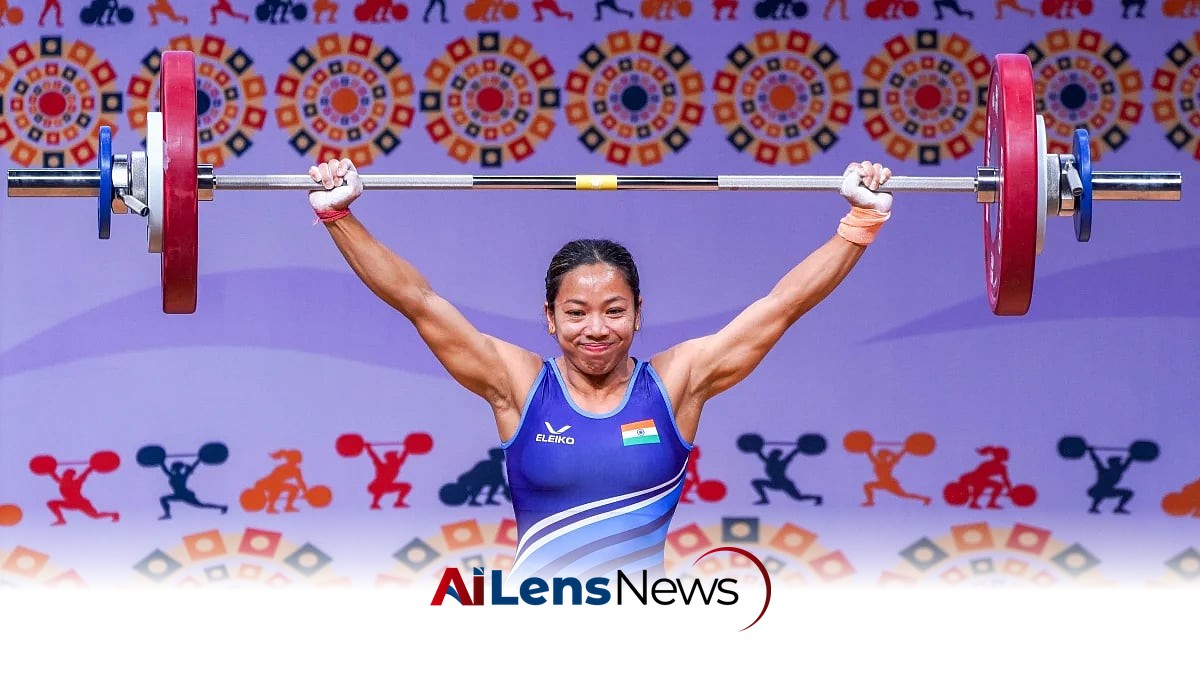


Olympic silver medallist Mirabai Chanu backs NEET protestors, stating they are 'doing a good job' while addressing the ongoing paper leak issue.
Kohima, India Jul 24, 2026 ALN: Glasgow: Olympic silver medallist and Indian weightlifting star Saikhom Mirabai Chanu has expressed support for the ongoing student protests over the NEET paper leak issue, saying the protesters are ‘doing a good job’, adding that she will try to visit Delhi’s Jantar Mantar after completing her commitments at the Commonwealth Games.
Mirabai Chanu, who has gained recognition for her exceptional achievements in weightlifting, particularly during the Tokyo 2020 Olympics, where she secured a silver medal, has now turned her attention to a pressing issue affecting students in India. The National Eligibility cum Entrance Test (NEET) is a crucial examination for aspiring medical students in the country, and recent allegations regarding paper leaks and examination irregularities have sparked significant unrest among students and their families. Chanu’s support for the protesters highlights the growing concern among various sectors of society about the integrity of the education system in India.
Speaking on the sidelines of the Commonwealth Games 2026, Mirabai noted that while athletes are often immersed in their training and competitions, they remain cognizant of the broader developments within the country. "I do keep myself informed about what is happening in India—what is going on in sports and in other areas as well. But we cannot follow everything because we also have limited time and demanding training sessions. Taking on too much mental load is not good for athletes. There are many good things happening in the country, and there are also some unfortunate developments. When we see or hear about such incidents, we do not feel good and naturally wonder why they are happening," Chanu told IANS.
Her comments reflect a growing sentiment among athletes who are increasingly using their platforms to address social issues. The NEET protests are not just a localized issue; they resonate with a larger narrative surrounding educational reforms in India. Students have been protesting in Delhi over the NEET-UG 2026 paper leak issue and examination irregularities, demanding accountability and reforms to restore confidence in the examination system. The demonstrations at Jantar Mantar have drawn participation from students, parents, and supporters from across the country, indicating a widespread frustration with the current state of affairs in the educational sector.
Chanu’s potential visit to Jantar Mantar signifies a bridge between sports and activism, where athletes leverage their fame and influence to advocate for important societal issues. When asked if she would visit Jantar Mantar to support the students, Mirabai replied, ‘I will see. Right now I will focus more on the game. After that I will think.’ This statement underscores the balance athletes must strike between their professional commitments and their social responsibilities.
The NEET examination, administered by the National Testing Agency (NTA), is pivotal for students seeking admission to medical colleges in India. The recent controversies surrounding the exam have raised serious questions about its credibility and fairness. Students have voiced concerns that such irregularities undermine the meritocratic principles that the examination is supposed to uphold. The protests have highlighted the urgent need for systemic reforms to ensure transparency and fairness in the examination process.
Earlier, Olympic champion Abhinav Bindra also voiced support for strengthening India’s education system. In a post on social media, Bindra wrote: "I have never considered myself a political person. But I do believe that some issues belong to all of us, regardless of where we stand. Education is one of them. The measure of a nation is found not only in its economy or its achievements, but in the opportunities it creates for its young people. An education system that inspires confidence, rewards merit, and nurtures curiosity is one of a nation’s greatest strengths."
Bindra’s remarks echo a sentiment shared by many in the country who believe that a robust education system is essential for the nation’s progress. He further stated, "I hope we can all unite and work together to continually strengthen our education system, so that it remains a source of opportunity, innovation, and hope for generations to come.” This call for unity emphasizes the collective responsibility of society to ensure that the education system serves its intended purpose of empowering youth.
The implications of the NEET protests extend beyond the immediate concerns of the students involved. They raise critical questions about the governance of educational institutions, the role of regulatory bodies, and the need for comprehensive reforms that prioritize the interests of students. As public figures like Chanu and Bindra lend their voices to these issues, it may encourage more athletes and celebrities to engage in social advocacy, potentially leading to a more informed and active citizenry.
In conclusion, the support from prominent athletes like Mirabai Chanu and Abhinav Bindra for the NEET protesters underscores a growing awareness and involvement of the sports community in social issues. Their statements not only bring attention to the challenges facing the education system in India but also inspire a dialogue about the importance of integrity, transparency, and accountability in examinations. As the protests continue, the hope is that they will lead to meaningful reforms that restore faith in the educational processes and ensure that all students have a fair chance at success.
The NEET examination, which has been a cornerstone for medical admissions in India, was introduced to standardize the admission process across various medical colleges in the country. However, the increasing number of allegations regarding paper leaks has raised alarm bells among students and their families. The integrity of such a high-stakes examination is paramount, as it determines the future of countless aspiring medical professionals. The recent protests have underscored the frustrations of students who feel that their hard work and dedication have been undermined by systemic failures.
In the broader context, the NEET protests also reflect a growing trend of youth activism in India. With social media amplifying voices and concerns, students are more empowered than ever to demand accountability and change. This shift in the landscape of student activism is significant, as it indicates a generation that is not only aware of their rights but is also willing to stand up for them. The involvement of athletes like Mirabai Chanu and Abhinav Bindra adds a layer of visibility to these issues, potentially influencing public perception and policy.
Furthermore, the implications of the NEET protests extend beyond the immediate educational concerns. They touch upon the larger issues of governance, transparency, and the need for reform in various sectors of Indian society. As more individuals from diverse backgrounds—be it athletes, celebrities, or common citizens—come forward to support such movements, it could lead to a more engaged and proactive society that prioritizes the welfare of its youth and future generations.
In summary, the support from Mirabai Chanu and Abhinav Bindra for the NEET protesters is not just a momentary act of solidarity; it represents a larger movement towards accountability and reform in the education system of India. Their voices, alongside those of the protesting students, are crucial in shaping the future of education in the country and ensuring that it remains a fair and just process for all aspiring medical students.
To learn more about the latest developments in Athletics, stay updated with our exclusive reports and analyses on AiLensNews.

