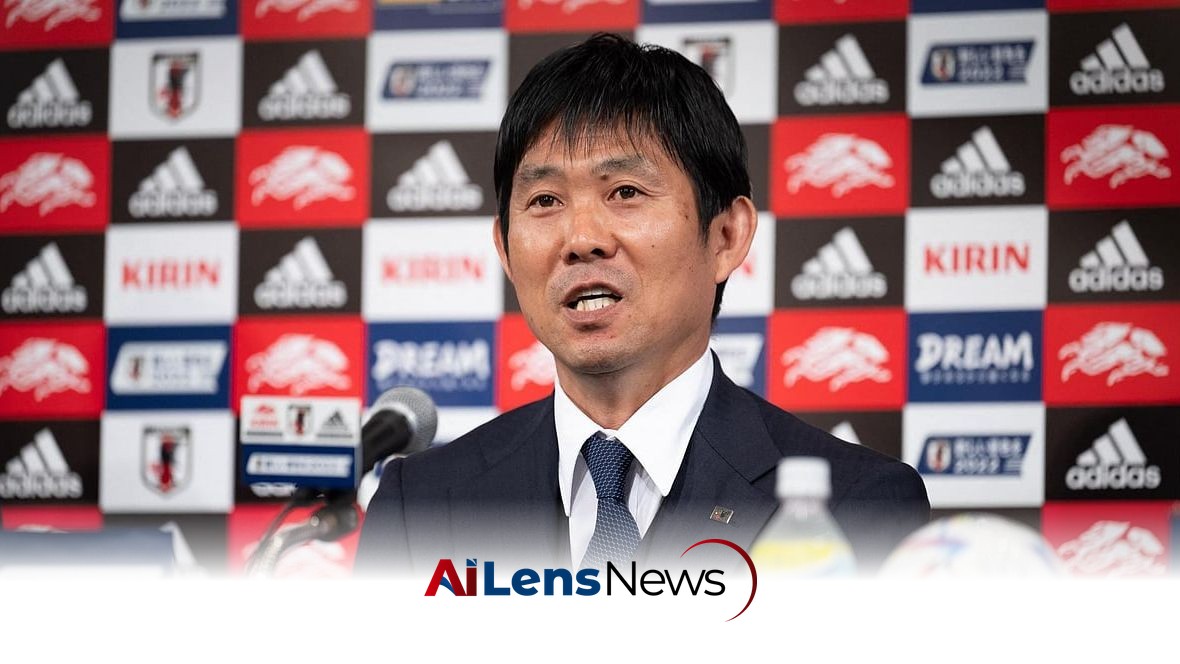


Japan's head coach Hajime Moriyasu will resign after the 2027 Asian Cup, with Under-21 manager Go Oiwa set to take over.
Shillong, India Jul 24, 2026 ALN: Hajime Moriyasu will continue as Japan’s head coach until next year’s Asian Cup before Under-21 manager Go Oiwa takes charge, the Japan Football Association (JFA) said on Thursday. Moriyasu, who has been the country’s head coach since 2018, led Japan to the round of 32 at the FIFA World Cup 2026 last month, when it was eliminated after a 2-1 stoppage-time loss to Brazil. Oiwa will take over from Moriyasu as the senior team coach after the continental championship ends in February, the JFA said in a statement.
The announcement regarding Moriyasu's departure comes at a pivotal time for Japanese football, as the nation has been striving to establish itself as a dominant force in Asian and global football. Under Moriyasu's leadership, Japan has seen a blend of experienced players and young talent, which has been crucial in maintaining the team's competitive edge on the international stage. Moriyasu's tenure has included significant achievements, including leading the team to the knockout stages of various tournaments and fostering a style of play that emphasizes both technical skill and tactical discipline.
Moriyasu's coaching philosophy has often been characterized by a focus on teamwork and adaptability, qualities that have served the national team well in high-pressure situations. His ability to integrate younger players into the squad has been particularly notable, as it aligns with Japan's long-term strategy of developing homegrown talent capable of competing at the highest levels. This approach not only strengthens the senior team but also provides a pathway for younger players to gain valuable experience in international competitions.
Despite the disappointment of the recent World Cup exit, Moriyasu's record as head coach has been generally positive. He has led Japan through various high-stakes matches, including successful campaigns in the AFC Asian Cup and World Cup qualifiers. The team's performance in these tournaments has bolstered Japan's reputation in international football, and Moriyasu's leadership has been a significant factor in that success.
Looking ahead, Go Oiwa's appointment as the new head coach marks a new chapter for the Japanese national team. Oiwa has been with the JFA for several years and has earned respect for his work with the Under-21 team, where he has successfully nurtured young talents who are expected to play pivotal roles in the senior squad in the coming years. His promotion reflects the JFA's commitment to continuity and the importance of developing a cohesive footballing philosophy across all levels of the national teams.
Oiwa's experience with the Under-21 team has provided him with insights into the strengths and weaknesses of the younger generation of players. This knowledge will be invaluable as he transitions to the senior team, where he will need to implement strategies that leverage the skills of both seasoned veterans and emerging talents. The upcoming Asian Cup will serve as a critical test for Oiwa, as he will be tasked with not only maintaining Japan's competitive standing in Asia but also furthering the team's development on the global stage.
The Asian Cup, scheduled to take place in early 2024, will be a significant event for Japan as they aim to reclaim the title they last won in 2011. The tournament will feature some of the best teams in Asia, and Japan will need to be at its best to navigate through the competition successfully. Moriyasu's experience will be crucial in preparing the team for this challenge, and his guidance during the tournament will likely play a role in setting the tone for Oiwa's future as head coach.
In addition to the immediate challenges posed by the Asian Cup, the JFA is also looking ahead to the next World Cup cycle. With the 2026 FIFA World Cup already on the horizon, strategic planning will be essential as Japan aims to build on its recent performances and further establish itself as a contender on the world stage. This includes not only developing talent but also refining the tactical approaches that have brought success in the past.
The transition from Moriyasu to Oiwa is emblematic of the broader evolution within Japanese football, where there is a strong emphasis on developing a sustainable model for success. The JFA has recognized the importance of investing in youth development, coaching education, and infrastructure to ensure that Japan remains competitive in an increasingly challenging football landscape.
Furthermore, the impact of Moriyasu's tenure and Oiwa's upcoming leadership will resonate beyond just the national team. Success at the Asian Cup and future tournaments could inspire a new generation of players and fans, fostering a deeper connection to the sport within the country. Football has become a significant part of Japan's cultural identity, and continued success on the international stage can further enhance its popularity and growth.
In summary, Hajime Moriyasu's decision to step down after the 2027 Asian Cup marks an important transition for Japanese football. His leadership has laid a strong foundation, and the appointment of Go Oiwa as the new head coach signals a commitment to continuity and development within the national team structure. As Japan prepares for the challenges ahead, both Moriyasu and Oiwa will play critical roles in shaping the future of football in the nation, with the upcoming Asian Cup serving as a crucial milestone in this ongoing journey.
To understand the implications of this coaching change, it is essential to consider the historical context of Japanese football. Japan has a rich footballing tradition, having produced numerous talented players who have made their mark in both domestic and international leagues. The J-League, established in 1993, has been instrumental in the development of the sport in Japan, providing a platform for local talent to flourish.
Moreover, Japan's national team has consistently been a strong competitor in Asian football, with multiple AFC Asian Cup titles to its name. However, the nation has faced challenges in translating domestic success into international glory, particularly in the FIFA World Cup, where they have struggled to progress beyond the knockout stages. Moriyasu's tenure represented a significant effort to bridge this gap, focusing on tactical development and player integration.
As Moriyasu steps down, the JFA's decision to promote Oiwa from within the ranks serves as a testament to the association's belief in continuity and the importance of nurturing talent at all levels. Oiwa's familiarity with the players and the existing system will facilitate a smoother transition, allowing the team to maintain its competitive edge while adapting to new strategies and philosophies.
In the lead-up to the Asian Cup, both Moriyasu and Oiwa will need to navigate various challenges, including player selection, tactical adjustments, and the psychological aspects of competition. The pressure to perform on the continental stage will be immense, especially as Japan aims to reclaim its status as a top footballing nation in Asia. The success of the national team can have far-reaching implications, including increased investment in grassroots programs and further development of football infrastructure across the country.
Ultimately, the upcoming Asian Cup will not only be a test of Japan's current capabilities but also a reflection of the long-term vision set forth by Moriyasu and the JFA. The results of this tournament could influence the trajectory of Japanese football for years to come, shaping the development of future players and coaches and determining Japan's standing in the global football hierarchy.
In conclusion, the transition from Hajime Moriyasu to Go Oiwa marks a significant moment in Japanese football history. With a focus on continuity, youth development, and strategic planning, the JFA aims to ensure that Japan remains competitive on both the Asian and world stages. The upcoming Asian Cup will serve as a critical juncture for the national team, as they seek to build on their legacy and inspire future generations of footballers in Japan.
To learn more about the latest developments in Golf, stay updated with our exclusive reports and analyses on AiLensNews.

