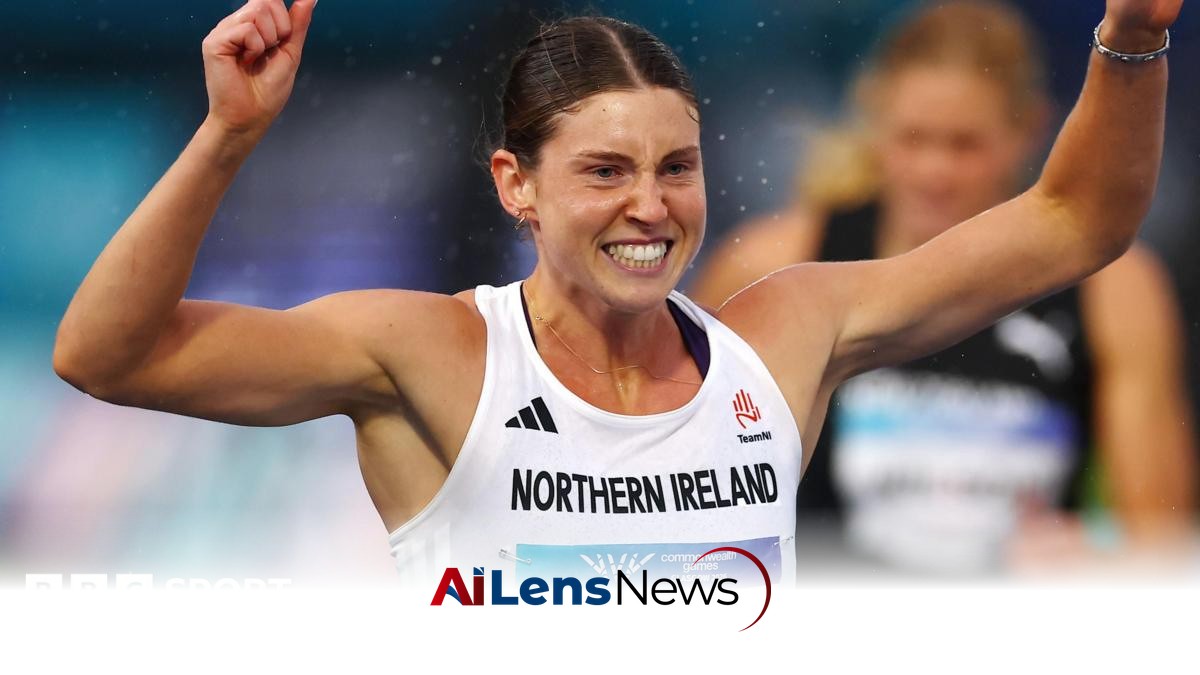


Northern Ireland's Kate O'Connor is poised for gold in the heptathlon, leading after four events at the Commonwealth Games in Glasgow.
New Delhi, India Jul 29, 2026 ALN: Northern Ireland's Kate O'Connor is three events away from a first Commonwealth Games gold medal as she leads the heptathlon after the opening four events in Glasgow.
In the absence of Katarina Johnson-Thompson, England's Jade O'Dowda is in second place - 49 points down on O'Connor.
After an evening session which took place as rain hammered Scotstoun Stadium, Australia's Mia Scerri is a distant third while England's Niamh Emerson is in medal contention in fourth place.
The heptathlon concludes on Wednesday with the long jump, javelin, and 800m.
O'Connor finished second in Birmingham in 2022 behind Johnson-Thompson - who pulled out on the eve of this edition - but is in a strong position heading into the second day of competition.
The withdrawal of the 33-year-old has opened the door for a first new Commonwealth heptathlon champion in eight years, and O'Connor and O'Dowda are the two leading contenders to top the podium.
O'Connor was third in the 100m hurdles behind Canada's Sienna Macdonald and O'Dowda, but took the overall lead with a 1.82m leap in the high jump ahead of the English athlete.
O'Dowda took the lead off O'Connor after the shot put as the Northern Ireland athlete could only land the fifth-best effort in torrential conditions.
But the 25-year-old rallied to dominate her 200m heat with a time of 24.14 seconds - while O'Dowda ran the second-slowest time - to hold a 49-point margin heading into the final three events.
O'Connor said she had never competed in rain as heavy as the downpour that hit Glasgow on Tuesday evening, and admitted she struggled with the elements in the shot put.
"It just kept slipping out of my hands and when your chalk gets wet, you might as well have dish soap on your hands," world silver medallist O'Connor told BBC.
"I'm gutted with it to be honest and when I talk about it, I feel a bit emotional because I've made it a lot easier for the rest of them to beat me, so I've got to work really hard now."
But O'Connor's performance in the 200m was scintillating, and she mastered the conditions on track to take an overnight lead.
"I went out and I ran really quick in that, I threw the gauntlet down and ran as fast as I could to make it difficult for the rest of the girls," she added.
"If the sun was shining and it was a nice warm day, I would have been gutted with that time because I've been running quick in training.
But considering it's lashing rain and freezing cold out there and I had 10 minutes to warm up, I am delighted with that performance."
Northern Ireland's Anna McCauley holds sixth place after she won the second heat of the 200m, and is within 39 points of a bronze medal.
Prior to that, McCauley had finished sixth in the hurdles and high jump, and posted the seventh-best distance in the shot put with 12.13m.
The heptathlon is a grueling two-day event that tests athletes across seven different disciplines: the 100m hurdles, high jump, shot put, 200m, long jump, javelin, and 800m. Each event is designed to challenge the athletes' speed, strength, and endurance, making it one of the most demanding competitions in track and field.
O'Connor’s performance thus far has showcased her versatility and resilience, particularly in adverse weather conditions. The heavy rain during the event created a challenging environment for all competitors, impacting their grip and performance. Athletes often rely on chalk to help them grip the shot put, but wet conditions can render this ineffective, leading to subpar performances. O'Connor's candid acknowledgment of her struggles with the shot put highlights the unpredictability inherent in multi-event competitions.
The absence of established stars like Johnson-Thompson, a former world champion and Olympic medalist, has shifted the dynamics of the competition. Johnson-Thompson's withdrawal not only opens the door for new talent but also raises questions about the future of the heptathlon landscape in the Commonwealth Games. As the reigning champion, her absence is felt, and it allows athletes like O'Connor and O'Dowda to step into the spotlight.
Jade O'Dowda, currently in second place, has been a fierce competitor in her own right. Her ability to respond to O'Connor's performances will be critical as the heptathlon progresses. With only three events remaining, every point will be crucial, and O'Dowda will need to find ways to capitalize on any potential weaknesses shown by O'Connor in the upcoming events.
The conclusion of the heptathlon will see the athletes compete in the long jump, javelin, and 800m, each of which offers its own set of challenges. The long jump requires explosive power and technique, while the javelin tests athletes' strength and precision. Finally, the 800m is a middle-distance race that demands not only speed but also tactical acumen, as athletes must manage their energy across two laps of the track. The combination of these events means that the overall standings can shift dramatically based on performances in the final moments of the competition.
As the competition unfolds, the implications for O'Connor and her fellow competitors extend beyond just the Commonwealth Games. Success at this level can serve as a springboard for future international competitions, including World Championships and the Olympic Games. For O'Connor, a gold medal would not only represent a personal achievement but also elevate her profile on the global stage.
In summary, Kate O'Connor's lead in the heptathlon amid challenging weather conditions sets the stage for an exciting conclusion to the event. The performances of O'Dowda and McCauley, along with the unpredictable nature of multi-event competitions, will keep spectators on the edge of their seats as they await the final results. The Commonwealth Games continue to celebrate the spirit of athletic competition, showcasing emerging talents and the enduring appeal of track and field events.
Heptathlon, as a multi-discipline event, requires athletes to display a wide range of athletic abilities, which is what makes it particularly captivating. Each event not only tests different physical attributes but also mental fortitude, as athletes must quickly transition from one discipline to another. The mental preparation and adaptability required are just as crucial as physical prowess in achieving success.
Furthermore, the heptathlon's format fosters a unique sense of camaraderie and rivalry among competitors. Despite the individual nature of the event, athletes often share a mutual respect for one another, recognizing the challenges each faces. This shared experience can create bonds that transcend national boundaries, highlighting the unifying power of .
As the heptathlon progresses, fans and analysts will closely watch how O'Connor, O'Dowda, and McCauley perform in the remaining events. Each athlete’s ability to handle pressure and adapt to the ever-changing dynamics of the competition will be pivotal in determining the final standings. The atmosphere at Scotstoun Stadium, with its enthusiastic crowd and the backdrop of the Commonwealth Games, adds to the excitement, making every moment of the competition a memorable one.
To learn more about the latest developments in Athletics, stay updated with our exclusive reports and analyses on AiLensNews.

