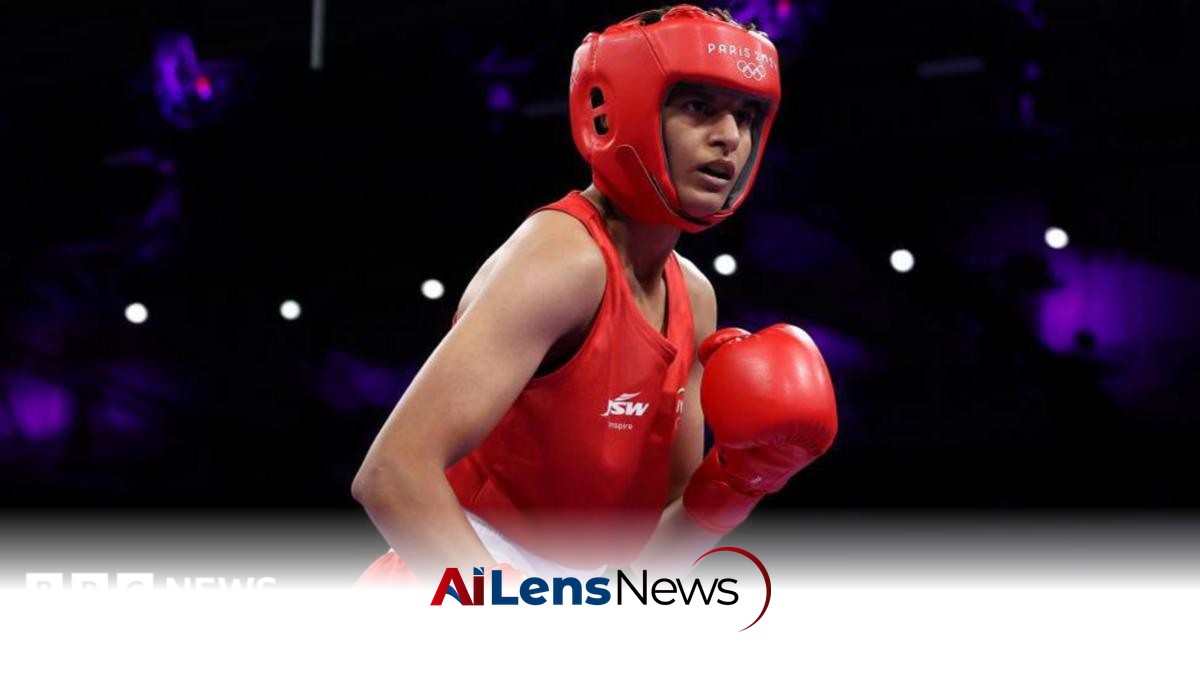


World champion boxer Jaismine Lamboria targets gold in the upcoming Commonwealth Games in Glasgow, inspired by cricket legend MS Dhoni.
New Delhi, India Jul 27, 2026 ALN: The reigning 57kg world champion boxer Jaismine Lamboria from India throws punches for a living, but when it comes to handling pressure, she looks to one of her country's most celebrated cricketing legends for inspiration.
"I really admire MS Dhoni's mindset," says the soft-spoken Lamboria of the former Indian captain. "He is known as 'Captain Cool' for a reason, and I want to be calm like him." This admiration for Dhoni reflects not only her respect for his cricketing prowess but also the mental fortitude that he embodies, which is crucial for athletes facing high-stakes competitions.
That composure will be particularly valuable for Lamboria over the coming days. The 24-year-old is one of India's strongest gold-medal prospects at the Glasgow Commonwealth Games, looking to improve on the bronze she won at Birmingham 2022. The Commonwealth Games, held every four years, serve as a significant platform for athletes from Commonwealth nations to showcase their talents and compete at a high level, and Lamboria’s aspirations are emblematic of the growing prominence of in India.
Coming off a breakout 2025 during which she won World Cup golds in Astana and Delhi before becoming world champion in Liverpool, Lamboria is in Glasgow with an uncomplicated ambition. "I aim to change the colour of that medal to gold," she says. "That's what I've been training and preparing towards." This determination is indicative of her commitment to excellence and her desire to elevate her performance on an international stage.
At 5ft 8½in, Lamboria is tall by Indian standards. Her Olympic debut in Paris ended in a first-round defeat to Tokyo silver medallist Nesthy Petecio of the Philippines. However, this setback came in a weight class she had only recently returned to. After spending nearly three years at 60kg, Lamboria dropped back to 57kg during the Paris qualification campaign—a strategic move that ultimately paid off when she won the world title by defeating Paris Olympic silver medallist Julia Atena Szeremeta of Poland. This transition highlights the dynamic nature of competitive , where weight classes can significantly affect an athlete's performance and strategy.
"That Paris 2024 Olympics exit was disappointing but it was an eye-opener," says Lamboria. "It prompted several changes in me—physically and mentally. And a significant part of it has come about at the Army's Institute (ASI) in Pune, which is where I train." The ASI has played a crucial role in her development as an athlete, providing her with the resources and support necessary to refine her skills.
Lamboria credits her ASI coaches for improving her physical strength, while a motivational coach and psychologist have helped sharpen her mental game. The mental aspect of s is often overlooked, yet it can be the deciding factor in high-pressure situations. This holistic approach to training reflects a growing understanding in s science regarding the importance of mental health and resilience.
The Indian Army, however, has provided the wider institutional framework around much of her development. After winning bronze at the 2022 Commonwealth Games, Lamboria became the first female boxer inducted into the army, joining the Corps of Military Police. She now trains under its Mission Olympics Wing, a program designed to support athletes in their pursuit of excellence while also fostering a sense of discipline and commitment that the military embodies.
"It's a great honour they wanted to begin with me, but I also see it as an opportunity to become a role model for female athletes," says Lamboria of joining a system that has produced Olympians and Paralympians, including Olympic javelin champion Neeraj Chopra. Her position as a role model is particularly significant in a country where women in s have historically faced numerous challenges, including societal expectations and limited opportunities.
In early 2024, the Indian Army launched the Girls' Company to train girls aged 12 to 16 in four Olympic s, creating a pathway to elite competition and army recruitment. This initiative reflects a broader trend in India to encourage female participation in s, aiming to dismantle barriers and promote inclusivity. "These girl athletes are doing very well too," says Lamboria. "One boxer has already won Asian Championships gold, which makes me really happy. I may have been the first female boxer in the Indian Army, but I won't be the last." Such statements underscore her commitment to paving the way for future generations of female athletes in India.
Lamboria's relationship with , however, began long before the army entered her story. Born in the northern state of Haryana, she grew up in Bhiwani, a city synonymous with and widely nicknamed the country's 'Mini Cuba.' This nickname is a testament to the city's rich culture and its reputation for producing numerous successful boxers. Her great-grandfather Hawa Singh was one of India's early giants in the . A heavyweight, he won successive Asian Games gold medals in 1966 and 1970 and was among those who established the famed Bhiwani Club, which would later produce boxers including Olympic medallist Vijender Singh.
Even so, it is not Hawa's medals that feature most prominently in the stories Lamboria remembers hearing about him at home. "He was powerful, but there was also so much humility in him," she says, illustrating the values that have shaped her character and approach to life and .
Her earliest influences were her uncles, Sandeep Singh and Parvinder Singh. "I grew up watching them compete," she says. "They were the ones who got me started." This familial connection to has been a source of inspiration and motivation for her, reinforcing the importance of community and support in athletic pursuits.
Lamboria began seriously training around the age of 14, initially at an academy run by Hawa's son, Sanjay Sheoran, before continuing under her uncles. This early dedication is crucial in a that requires years of training and discipline to reach elite levels. Though ran through her extended family, Lamboria grew up in a household of modest means. Her father, Jaiveer, works as a home guard, while her mother, Joginder, is a homemaker. Their sacrifices and support have been instrumental in her journey. "Their support has been a big reason why I was the first girl in my immediate family to take up seriously," she says, "not least as the youngest among the girls in the family." This acknowledgment of her family's role reflects a deep appreciation for the sacrifices made by her parents and the importance of a support system in achieving one's dreams.
Her inspirations extend well beyond her own family. Lamboria grew up idolizing Olympic medallists MC Mary Kom and Vijender Singh, who have paved the way for future generations of boxers in India. Later, she looked up to Indian Army boxers Amit Panghal and Manish Kaushik, Olympic champion Neeraj Chopra, American swimming great Michael Phelps, and Indian sprinting legend Milkha Singh. Each of these athletes represents not only excellence in their respective s but also the spirit of perseverance and determination that Lamboria seeks to embody.
Closer to home, she credits senior Indian boxers Nikhat Zareen, Lovlina Borgohain, and Pooja Rani, not just for their medals but for the encouragement they offer younger athletes. "When you look at them, you naturally feel that you want to do what they have done," she says. This sense of community and mentorship is vital in s, especially for young female athletes who may face additional challenges in their pursuit of success.
Now, Lamboria is beginning to occupy that role herself. "For a long time, has been seen as a male-dominated ," she says. "Being a woman boxer and an Army athlete, it means a lot to compete on the world stage, prove myself and inspire others through my performances." Her journey is a testament to the changing landscape of s in India, where female athletes are increasingly gaining recognition and respect.
That change is reflected in the Commonwealth Games too. has been part of the event since 1930, but women's competition was introduced only in 2014. This late inclusion highlights the ongoing struggle for gender equality in s, but it also marks a significant step forward in recognizing the contributions and talents of female athletes. In Glasgow, bouts begin on 24 July, with the finals on 31 July and 1 August. The anticipation surrounding these dates reflects not only her personal aspirations but also the hopes of a nation eager to see its athletes succeed on an international stage.
After winning bronze in Birmingham four years ago, Lamboria hopes to leave Glasgow with gold. "When you're competing overseas and the national anthem plays, it's a completely different feeling," she says. "I experienced that at the World Championships in Liverpool last year. That's the moment I want to recreate here." This longing for national pride encapsulates the spirit of competition and the emotional weight that comes with representing one's country, particularly in a that has historically been male-dominated. As Lamboria prepares for her upcoming matches, her journey serves as an inspiration not only to aspiring boxers but to all athletes striving for excellence in their respective fields.
To learn more about the latest developments in Golf, stay updated with our exclusive reports and analyses on AiLensNews.

