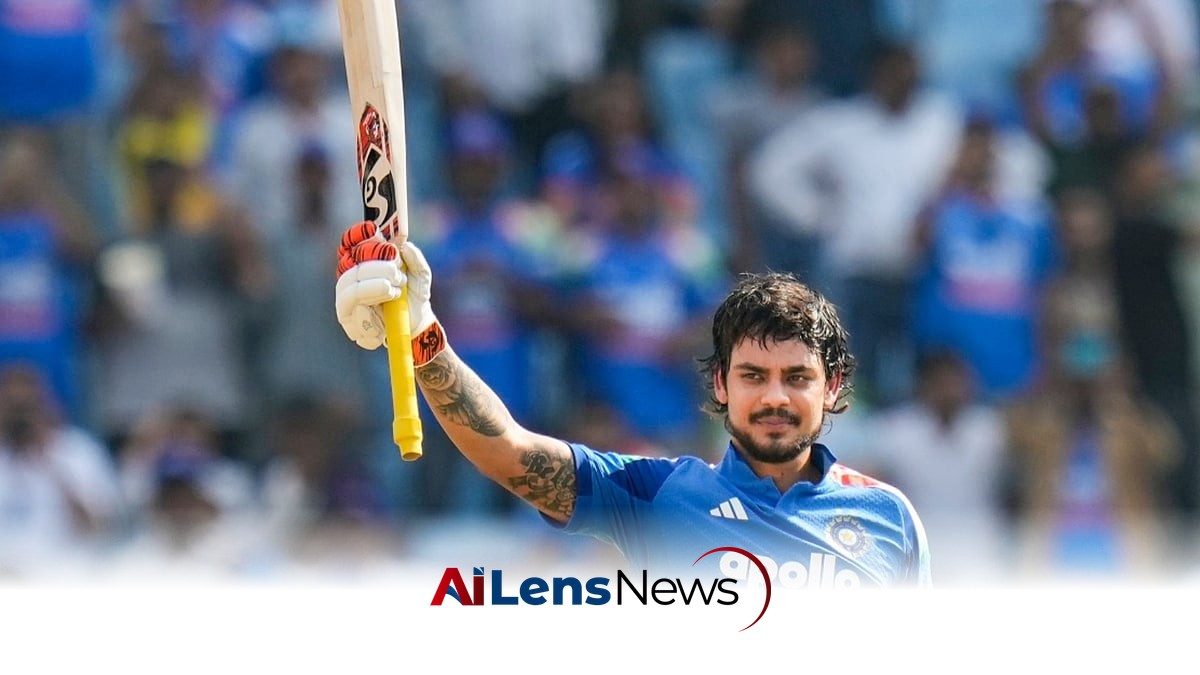


Indian wicketkeeper Ishan Kishan emphasizes focus on performance over external distractions as he leads the team to victory against Zimbabwe.
New Delhi, India Jul 26, 2026 ALN: Indian wicketkeeper-batter Ishan Kishan is unfazed by the noise surrounding Abhishek Sharma and Vaibhav Sooryavanshi's explosive batting and wants to stay focused on doing the job he is meant to do.
On Saturday, India lost Abhishek (8) and Sooryavanshi (20) inside three overs to be reduced to 29/2, but Kishan anchored the innings with a 44-ball 81 to power India to 219/5. His effort helped India beat hosts Zimbabwe by 90 runs in the second T20I and seal the series 2-0 ahead of Sunday's final match.
"I don't give so much focus to what's happening outside," said the 28-year-old after registering his second fifty in three T20I innings. This statement reflects a common sentiment among athletes, especially in high-pressure environments, where external distractions can often derail performance. Kishan's ability to maintain focus on his role is indicative of his maturity as a player.
Abhishek Sharma has been known for some time for his fearless batting style, which has earned him a significant following among fans and analysts alike. However, since the much-anticipated debut of Sooryavanshi, the spotlight has largely been on the teenage prodigy. His youth and the excitement surrounding his potential have drawn comparisons to other young talents in cricket, creating a narrative that can overshadow the contributions of more experienced players like Kishan.
But Kishan, who is equally aggressive in his approach, is not bothered by the noise. "I know the way I have to play and what's important is to just be in the moment," he said. This perspective is crucial in cricket, where the mental aspect of the game often plays as significant a role as physical skill. By concentrating on his own performance rather than comparing himself with others, Kishan exemplifies a professional mindset that is essential for success at the highest level.
Kishan elaborated on the importance of the No. 3 batter's role, especially when the team loses early wickets. "Everyone can have that image in the team. But as a number three batter, you need to understand what's important when two wickets are down early." This statement highlights the strategic thinking required in cricket, where each position has specific responsibilities that can significantly impact the game's outcome.
After India's early wobble, the left-hander showed maturity and paced his innings brilliantly. He brought up his fifty in 31 balls, before adding the next 31 runs in just 13 deliveries to shift gears. His ability to accelerate the scoring rate when needed is a hallmark of a top-order batsman and showcases his understanding of game situations.
His trademark onside play was the highlight of the innings, with Kishan repeatedly clearing the mid-wicket region with powerful strokes. This not only demonstrates his technical proficiency but also his confidence in executing high-risk shots, which can be a game-changer in limited-overs cricket. "You want to keep going. You want to take your chances or build a partnership," he said, emphasizing the dual strategy of aggression and collaboration that is vital in T20 formats.
Kishan added that staying present in the middle is key. "When you are in those 22 yards, you just need to be aware of what's happening around you and what you want from the game." This awareness is crucial for any player, as it allows them to adapt to changing match conditions and make informed decisions.
From losing his central contract in early 2024 to making a comeback just before India's triumphant 2026 T20 World Cup campaign, Kishan has once again established himself in India's white-ball setup. This journey illustrates the often tumultuous nature of a professional sports career, where setbacks can lead to moments of self-reflection and growth. Reflecting on his journey, he said he had two choices: "Either I want to cry about it or I want to work hard and get into the team." Kishan's choice to work hard rather than succumb to disappointment speaks volumes about his character and determination.
He emphasized the importance of focusing on what can be controlled during difficult phases. "When things are not going your way, it's better to think about performance rather than feeling sorry about things which are not in your control." This advice is applicable not only in sports but in various aspects of life, where resilience and a proactive approach can lead to better outcomes.
Kishan credited his family and friends for helping him stay positive during the tough period. "A lot of support came from my friends and family," he said. "They made sure I stayed positive and happy. I did my part, but a lot of people were involved in this journey." This acknowledgment of support systems highlights the collaborative nature of success, where individual achievements are often bolstered by the encouragement of others.
Kishan also spoke about young Sooryavanshi, who overcame a difficult start to international cricket by smashing his maiden fifty in India's seven-wicket win in the first T20I. The 15-year-old had endured a tough debut series in England, scoring 14, 13, and 15, with Jofra Archer's short-ball strategy troubling him twice. Such challenges are common for young players entering the international arena, where the pressure can be intense and the learning curve steep.
Kishan believes Sooryavanshi has the ability to succeed but needs to stay away from distractions that come with early fame. "Vaibhav is actually very smart. He knows what he is doing," Kishan said. This recognition of Sooryavanshi's intelligence and potential is encouraging, as it suggests that he possesses the mental fortitude required to navigate the rigors of professional cricket.
However, Kishan stressed the importance of keeping the youngster grounded. "When you represent India, you have to know what to focus on." This advice serves as a reminder of the responsibilities that come with representing a national team, where personal ambitions must often be balanced with team goals.
"Me, Abhishek, Axar bhai, and many others keep telling him to think about cricket, not social media or outside noise." This statement underscores the collective responsibility of senior players to mentor younger teammates, fostering an environment where emerging talents can thrive without being overwhelmed by external pressures.
Kishan said a player like Sooryavanshi can change games if he stays focused. "If he stays on the pitch, the difference he can create for the team is huge. A player who can attack from the first ball can take you to 80-90 runs in the powerplay." This insight into Sooryavanshi's potential highlights the strategic advantage of having aggressive players at the top of the order, capable of setting the tone for the innings.
The wicketkeeper-batter added that senior players want Sooryavanshi to learn from their mistakes. "When you have such a player and you know that he is very young, you will never want him to be distracted for the wrong reasons. So our job as a team, we are like brothers and he comes from my place, so we just have to be happy, focus on the important things, the mistakes we have made in our starting, he should not do that. He should enjoy his cricket, like he is doing now." This camaraderie among players reflects the familial bonds that often develop within sports teams, creating a supportive environment that can enhance performance and morale.
In summary, Ishan Kishan's recent performances and his insights into maintaining focus amid rising stars in Indian cricket illustrate the complexities of professional sports. His ability to navigate personal challenges, support younger teammates, and maintain a strong mental game sets a positive example for aspiring cricketers. As Indian cricket continues to evolve with new talents emerging, the balance between individual brilliance and team cohesion remains crucial for sustained success on the international stage.
To learn more about the latest developments in Cricket, stay updated with our exclusive reports and analyses on AiLensNews.

