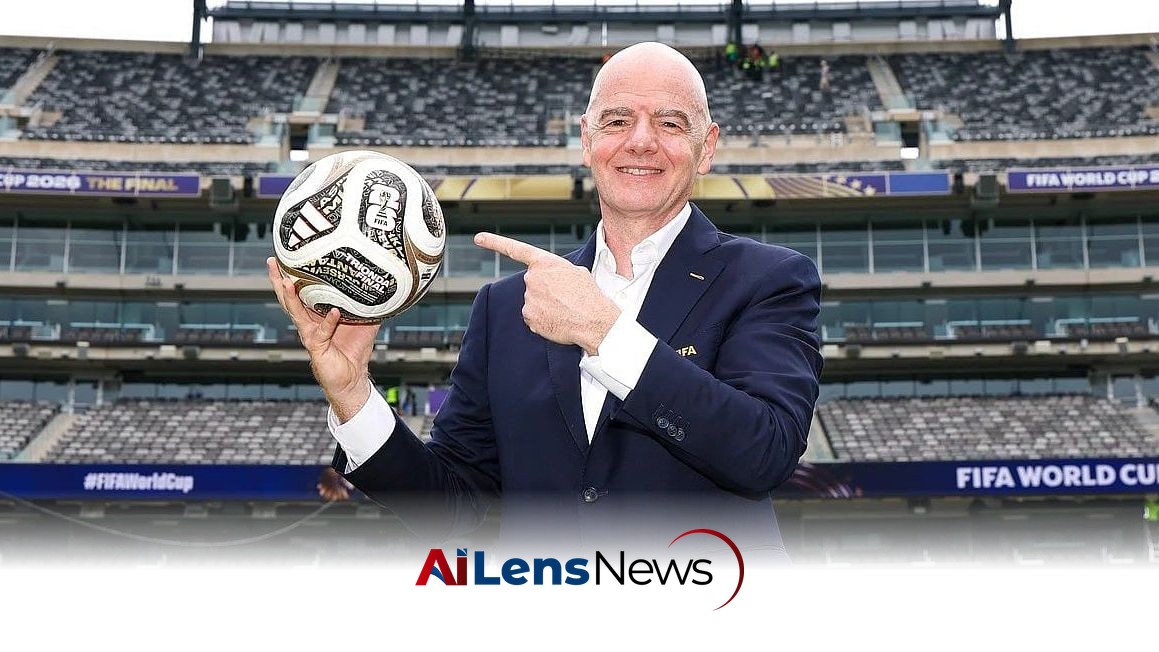


The IOC is urged to probe FIFA president Gianni Infantino for alleged political interference in the reversal of Folarin Balogun's World Cup suspension.
New Delhi, India Jul 16, 2026 ALN: Lausanne [Switzerland]: The International Olympic Committee (IOC) has received a complaint seeking an investigation into FIFA president Gianni Infantino over alleged breaches of political neutrality, including his reported role in the reversal of United States striker Folarin Balogun’s one-match suspension during the FIFA World Cup 2026, reported Reuters.
The complaint, filed by advocacy group FairSquare, alleges that Infantino violated the IOC’s rules on political neutrality through multiple actions linked to US President Donald Trump. Among the key issues raised is the suspension of Balogun’s automatic one-match ban, which allowed the forward to feature in the United States’ Round of 16 clash against Belgium on July 6.
Folarin Balogun, a promising striker who has garnered attention for his performances, was shown a straight red card in the 64th minute of the USA’s Round of 32 victory over Bosnia and Herzegovina for a challenge on Tarik Muharemovic. The nature of the challenge, which was deemed dangerous by the referee, resulted in an automatic one-match suspension under FIFA regulations, which typically do not allow for appeals in such cases. This strict adherence to rules is intended to maintain the integrity of the game and ensure that players are held accountable for their actions on the field.
However, the situation took a dramatic turn on July 5, when FIFA announced on its website: “By operation of Article 27 FDC, the implementation of the automatic match suspension for USA player Folarin Balogun is suspended for a probationary period of one (1) year.” This announcement came just one day before the crucial match against Belgium, sparking widespread speculation and controversy regarding the motivations behind the decision. No further explanation accompanied the decision, leading to questions about the integrity of FIFA’s processes and the influence of external political pressures.
Infantino acknowledged receiving a phone call from President Trump, who had publicly urged FIFA to review the incident surrounding Balogun’s red card. The involvement of a high-profile political figure in a sports decision raised eyebrows and led to accusations of political interference. Infantino, however, denied that Trump’s call had any bearing on the outcome of the situation, asserting that the decision was made independently by FIFA's judicial bodies.
Trump defended his intervention, stating, “All I did was ask for a review because I didn’t think it was a foul.” He further elaborated, “And, you know, again, I’m good at this stuff. I didn’t think it was a foul. I thought it was two great athletes that crashed into each other and got entangled.” Trump’s comments highlight a broader trend in sports where political figures sometimes seek to influence outcomes, either directly or indirectly, which can lead to significant ramifications for the integrity of the sport.
Praising FIFA’s decision, Trump remarked, “I think they made a really brilliant decision. I think the referee’s call was horrible, and nobody talks about that. They talk about the red card like it’s fine, nobody talks about the referee’s decision to red card.” This sentiment underscores the contentious nature of refereeing decisions in football, which are often scrutinized and debated among fans, players, and officials alike. Balogun ultimately played against Belgium as the United States were eliminated 4-1 from the tournament, a result that left many questioning the impact of the suspension reversal on the team’s performance.
In the aftermath of the incident, Infantino maintained that FIFA’s judicial bodies function independently, stating, “Their independence is essential to the credibility and integrity of football, and this must always be respected.” This assertion is critical in the context of the ongoing debate about the role of external influences in sports governance. Many stakeholders in the sporting community advocate for strict adherence to rules and regulations to ensure fairness and transparency in decision-making processes.
FairSquare’s complaint argues that Infantino, who has also served as an IOC member since 2020, is bound by the Olympic Charter and the IOC Code of Ethics, which require strict political neutrality. The implications of this investigation could be significant, not only for Infantino and FIFA but also for the IOC, which has been increasingly scrutinized for its handling of political issues in sports. The intersection of politics and sports has been a contentious topic, with various organizations striving to maintain a clear boundary to preserve the integrity of athletic competition.
The IOC’s investigation into Infantino could set a precedent for how political interference in sports is handled in the future. If the allegations are substantiated, it may lead to calls for stricter enforcement of political neutrality within international sports organizations. This could also prompt a broader discussion about the role of politics in sports, particularly as global events, such as the World Cup and the Olympics, often attract significant political attention and involvement.
In recent years, there have been numerous instances where political figures have attempted to exert influence over sporting events, raising questions about the autonomy of sports governing bodies. The ongoing scrutiny of FIFA’s decisions, particularly under Infantino’s leadership, has highlighted the challenges faced by the organization in navigating the complex relationship between politics and sports. As the investigation unfolds, it will be crucial for both FIFA and the IOC to demonstrate their commitment to upholding the principles of fairness, transparency, and integrity in the face of such allegations.
Ultimately, the outcome of this investigation may have far-reaching implications for the future of sports governance, as it could either reinforce the importance of political neutrality or expose the vulnerabilities within the system that allow for external influences to sway decisions. As the world continues to grapple with the intersection of politics and sports, the findings of the IOC's inquiry will likely be closely monitored by stakeholders across the globe, from athletes and fans to governing bodies and political leaders.
To learn more about the latest developments in Basketball, stay updated with our exclusive reports and analyses on AiLensNews.

