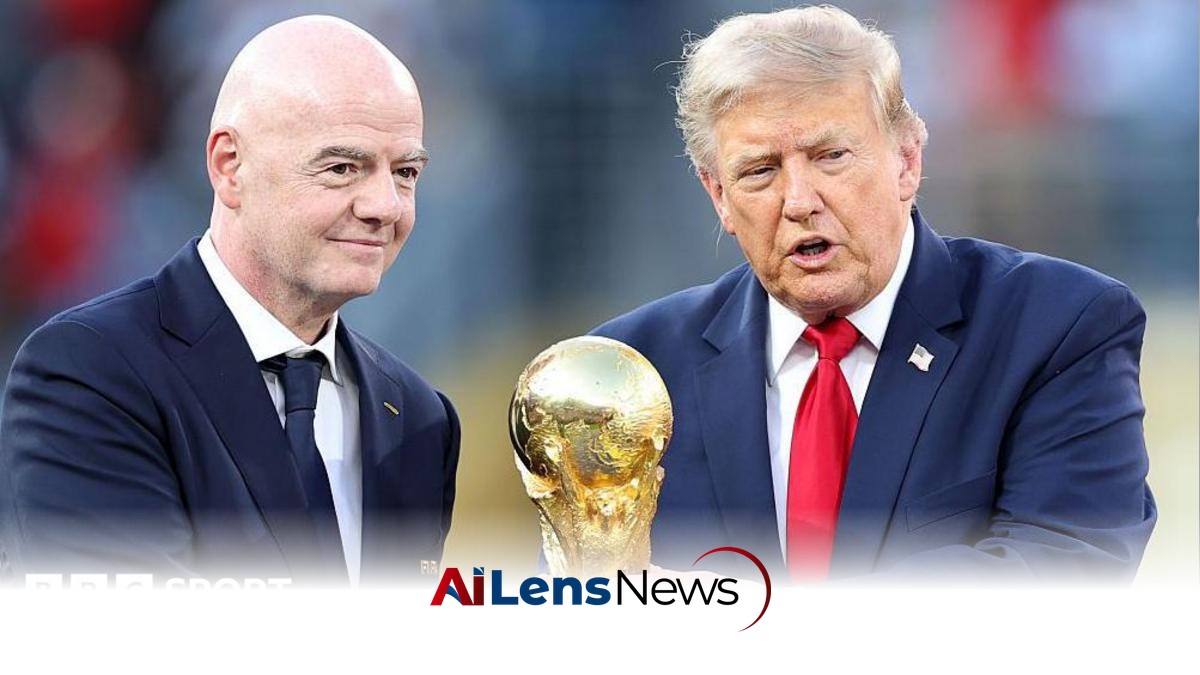


The IOC has stated it will not investigate FIFA President Gianni Infantino, deeming a complaint regarding political neutrality outside its jurisdiction.
New Delhi, India Jul 24, 2026 ALN: The International Olympic Committee (IOC) has announced it will not pursue an investigation into FIFA President Gianni Infantino, stating that a recent complaint falls outside its scope.
The complaint was lodged by the human rights campaign group FairSquare, which alleged that Infantino breached the IOC's charter by failing to maintain political neutrality. This was reportedly due to his support for U.S. President Donald Trump.
During the World Cup, Trump admitted to contacting Infantino regarding a red card issued to U.S. striker Folarin Balogun. The forward was set to miss an important match against Belgium after being sent off in a previous game against Bosnia-Herzegovina.
However, following Trump's intervention, Balogun's one-match ban was suspended for a year, with no specific reasons provided, other than a rule allowing for such suspensions.
Balogun participated in the match, which ended in a 4-1 defeat for the U.S. against Belgium.
Infantino has been an IOC member since 2020. According to the Olympic charter, IOC members are prohibited from accepting mandates or instructions from governments or organizations that could interfere with their independence.
The IOC clarified that the complaint against Infantino is outside the jurisdiction of its ethics commission. They stated, "The current complaint, regarding the FIFA president, pertains solely to the international federation's governance decisions and management, which are beyond the IOC's code of ethics."
This statement from the IOC came shortly after reports that the Norwegian Federation was contemplating a formal complaint to FIFA's ethics committee regarding the suspension of Balogun's ban.
NFF President Lise Klaveness expressed that the federation has reacted with "strong concern" and will decide on filing a complaint at its next board meeting. The federation has previously lodged a complaint regarding FIFA's decision to award its first Peace Prize to Trump.
The context of this situation is rooted in the longstanding principle of political neutrality that governs both the IOC and FIFA. The Olympic Charter emphasizes the importance of political independence, stating that the Olympic Movement must be free from any political, religious, or racial interference. Similarly, FIFA's statutes underscore the need for its officials to maintain neutrality and avoid any actions that could be perceived as politically motivated.
Gianni Infantino's presidency has not been without controversy. His leadership has been marked by significant debates surrounding FIFA's governance, transparency, and ethical conduct. Infantino has faced scrutiny over various issues, including the organization's handling of human rights concerns, particularly in relation to the World Cup in Qatar, and the awarding of tournaments to countries with questionable human rights records.
The complaint by FairSquare highlights a growing concern among human rights advocates regarding the intersection of s and politics. The influence of political figures in s governance can lead to questions about the integrity of ing organizations and their commitment to ethical standards. Infantino's alleged communication with Trump raises alarms about potential breaches of neutrality and the implications for FIFA's reputation.
Moreover, the suspension of Balogun's ban, reportedly influenced by Trump's intervention, has sparked debate over the fairness and transparency of disciplinary actions within FIFA. Critics argue that such interventions could undermine the integrity of the organization and set a concerning precedent for future governance. The Norwegian Federation's consideration of a formal complaint to FIFA's ethics committee indicates that the matter is being taken seriously within the community.
The implications of this situation extend beyond the immediate concerns regarding Infantino and the FIFA governance structure. It reflects broader issues of accountability and ethical conduct in s organizations, which have increasingly come under scrutiny in recent years. The relationship between s and politics is often fraught with tension, and incidents such as this can have lasting effects on public perception and trust in governing bodies.
In the realm of international s, the principle of political neutrality is not merely a bureaucratic requirement; it is foundational to the legitimacy of organizations like FIFA and the IOC. These bodies are expected to function independently of political pressures to ensure fair competition and equitable treatment of athletes. A breach of this principle, as alleged in the case of Infantino, could have serious ramifications for FIFA's credibility and its ability to govern effectively.
As the situation unfolds, it will be critical to monitor how FIFA responds to the concerns raised by various stakeholders, including human rights organizations and national federations. The outcome of the Norwegian Federation's potential complaint could set a precedent for how FIFA addresses similar allegations in the future. Furthermore, it raises questions about the role of s organizations in maintaining their independence from political influence and ensuring that their governance structures are transparent and accountable.
In conclusion, while the IOC has decided not to investigate Infantino, the underlying issues raised by the complaint remain pertinent. The intersection of s, politics, and ethics continues to be a complex and evolving landscape, and the actions taken by FIFA and other governing bodies in response to these challenges will be closely watched by the global community.
This incident underscores the need for rigorous adherence to ethical standards within international s organizations. As public awareness of human rights issues and political interference in s grows, governing bodies may find themselves under increased pressure to demonstrate their commitment to neutrality and integrity. The ongoing dialogue surrounding these issues will likely influence future policies and practices within FIFA and similar organizations, as they navigate the challenging terrain of maintaining independence while engaging with powerful political figures.
Ultimately, the resolution of this matter may serve as a litmus test for FIFA's commitment to ethical governance and its ability to uphold the principles of fairness and neutrality that are essential to the integrity of international s.
To learn more about the latest developments in Football (Soccer), stay updated with our exclusive reports and analyses on AiLensNews.

