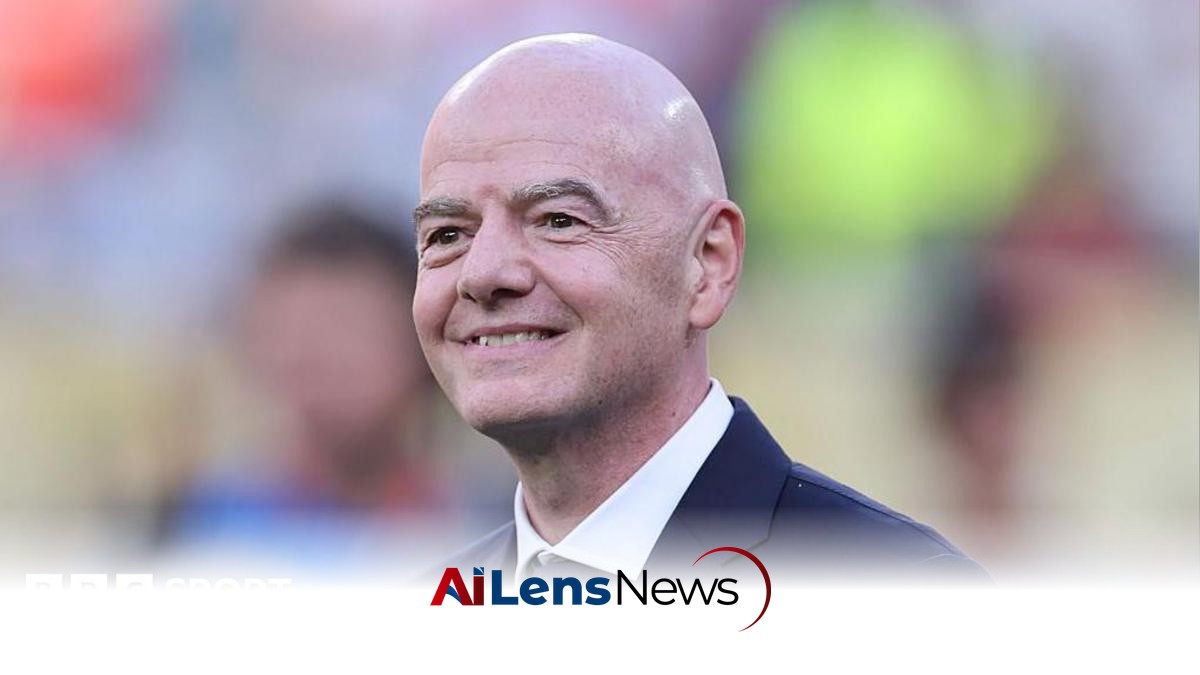


FIFA President Gianni Infantino calls for critics to meditate or watch matches rather than spread negativity about his leadership and the World Cup.
New Delhi, India Jul 27, 2026 ALN: FIFA President Gianni Infantino has told critics to "meditate, pray or watch a match" instead of "spreading hate and false rumours" about his leadership, the governing body, and the World Cup.
In a 15-slide post on his personal Instagram account—reposted to FIFA's eight million followers—Infantino addressed "those behind their pens and papers, behind their screens" to affirm his belief that, while they were "busy planting seeds of hate", FIFA was delivering the "greatest event on earth". This statement comes amid a backdrop of increasing scrutiny and criticism directed at FIFA and its leadership, particularly regarding the organization of the World Cup and its handling of various controversies.
The World Cup is not just a ing event; it is a global phenomenon that attracts millions of viewers and participants from around the world. Infantino's assertion that the tournament "celebrated humanity at its best" reflects a common narrative among s leaders who view such events as opportunities for unity and global camaraderie. However, this perspective is often challenged by critics who point to the various social, political, and economic issues that can arise in conjunction with such large-scale events.
Looking ahead, the 2026 tournament is set to be a landmark event, as it will be co-hosted by three countries: the United States, Canada, and Mexico. Infantino has expressed confidence in the security and safety of the tournament, stating it would guarantee "100% safety and security, only joy and happiness". This emphasis on safety is particularly pertinent given the heightened security concerns that have accompanied major international ing events in recent years, especially in the wake of various incidents of violence and unrest.
Infantino downplayed several of the tournament's high-profile controversies and hailed the involvement of Iran, who featured at the World Cup despite their ongoing conflict with co-hosts the United States, as a success. His comments highlight FIFA's role in attempting to bridge divides through , but they also raise questions about the complexities of international relations and the political implications of hosting such events. The situation with Iran is particularly delicate, as the nation has faced criticism for its human rights record and treatment of its citizens.
His claims that FIFA "worked tirelessly to unite two countries at war" starkly contrast with the perspective of Iran's head coach Amir Ghalenoei, who stated his team were the "most oppressed" at the World Cup. This disconnect illustrates the challenges FIFA faces in balancing the ideals of as a unifying force with the realities of political tensions and national grievances. Iran's participation was marred by logistical issues, including visa delays that affected key staff members and the revocation of ticket allocations for fans. These challenges underscore the complexities of international diplomacy and the difficulties in executing a seamless tournament when political tensions are high.
Infantino attempted to address these concerns in his remarks, stating, "You mentioned the few people denied visas and overlooked the millions who were approved, from all parts of the world. Because unites the world, and it was impressively demonstrated this summer." This statement reflects a broader narrative in which ing events are seen as opportunities for connection and understanding, despite existing political barriers.
Doubling down on the tournament's safety, Infantino asserted there were "zero incidents, zero violence, just joy, emotions, happiness, unity, and togetherness". However, this assertion is complicated by ongoing investigations into various incidents that occurred during the tournament. FIFA is currently looking into allegations of altercations involving Argentina's players and backroom staff following their loss in the World Cup final, as well as allegations of racist abuse towards American social media influencer IShowSpeed. Additionally, there were reports of supporters being arrested at multiple matches, including after England's semi-final against Argentina in Atlanta. These incidents raise questions about the effectiveness of FIFA's measures to ensure safety and security during the tournament.
Infantino also addressed criticism surrounding the standard of officiating at the tournament, particularly concerns about political interference following the suspension of a one-match ban for USA forward Folarin Balogun, which was reportedly influenced by US President Donald Trump's intervention. UEFA described the decision as "unprecedented, incomprehensible, and unjustifiable", while the Norwegian Federation is considering filing a formal complaint to FIFA's ethics committee. This situation highlights the ongoing debates about the integrity of officiating in and the potential for political influence in s governance.
Infantino argued that such decisions are not out of the ordinary, claiming similar rulings are "routine and widely accepted in some of the biggest leagues worldwide". He added, "It's curious that the same countries employing these practices are the ones criticising." This response may reflect a defensive posture in the face of mounting criticism, as FIFA continues to navigate the complex landscape of international governance.
Furthermore, the International Olympic Committee has stated it will not investigate Infantino for any possible breaches of political neutrality, as the complaint from human rights campaign group FairSquare falls outside the jurisdiction of its ethics commission. This decision underscores the challenges of enforcing political neutrality in s, particularly in an era where many view s as intertwined with broader social and political issues.
In his closing remarks, Infantino advised his opponents to "show some love" and "respect" to a tournament where "people came together as families, as fans, as one". This call for unity and positivity is a common refrain among s leaders, who often emphasize the power of to bring people together, transcending boundaries and differences. He concluded, "To everyone who missed our beautiful game, the emotions, the celebrations, the laughter, the crying, the deception and the joy. To all of you who missed watching kids, babies, grandparents and parents come together for the beautiful game... sorry that you were so consumed by hate and criticism that you missed it all." This sentiment reflects a desire for a more harmonious discourse surrounding FIFA and its events, despite the challenges that persist.
Infantino emphasized, "Our world needs love, not hate; tolerance, not division; celebration, not mourning. To those spending their time and energy hating us, please take a moment to reflect, meditate, pray or watch a match and truly observe the faces, the eyes, the emotions. Because only our beautiful game can deliver such an extraordinary show, a show where everyone becomes one and reconnects as humans." This appeal for reflection and connection through highlights the enduring belief in the power of to foster understanding and community, even in the face of significant challenges and criticisms.
He expressed pride in his role as FIFA President, stating, "It's a great feeling to have contributed, even a little, to this show." This statement encapsulates the complexities of leadership within FIFA, as Infantino navigates the dual roles of promoting the while addressing the myriad criticisms that accompany such a high-profile position. As FIFA continues to evolve and adapt to the changing landscape of international , the balance between celebration and accountability remains a critical challenge for its leadership.
To learn more about the latest developments in Football (Soccer), stay updated with our exclusive reports and analyses on AiLensNews.

