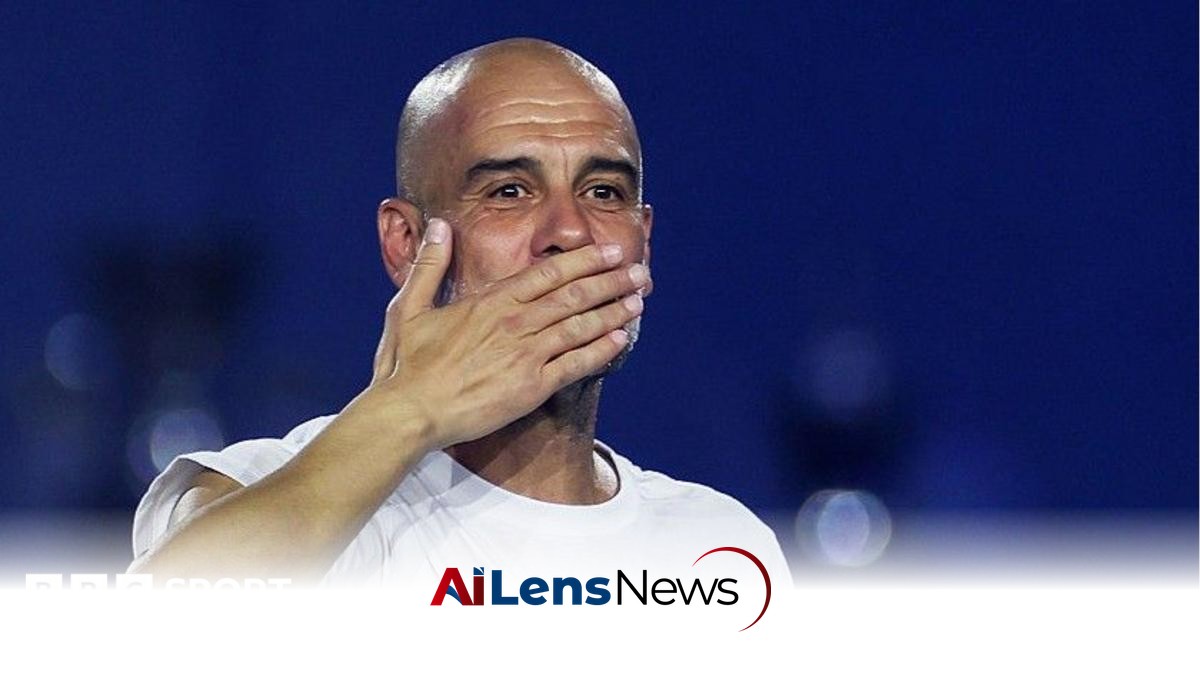


Pep Guardiola has officially turned down the opportunity to coach the Italian national team, opting instead for a break from .
New Delhi, India Jul 24, 2026 ALN: Pep Guardiola has turned down the chance to coach the Italian national side.
Earlier this week, Italian Federation (FIGC) president Giovanni Malago stated that discussions had taken place with Guardiola, who left Manchester City this summer after a decade of success. Malago mentioned that "exceptions" could be made regarding Guardiola's salary to entice him into the role.
Guardiola's decision not to take the reins of the Italian national team comes at a time when the FIGC is actively seeking a new direction for the national squad. The federation is under pressure to rejuvenate the team following a series of disappointing performances on the international stage, including the failure to qualify for the last three World Cups. This has raised questions about the effectiveness of the current coaching strategies and player development within the country.
On Thursday, FIGC technical director Paolo Maldini revealed that Italy initially approached former player Carlo Ancelotti, who is currently managing Brazil. Ancelotti has decided to remain in his position, leading to Guardiola's decision. Ancelotti's commitment to Brazil suggests that he is focused on building a legacy with the South American team, which also reflects the competitive nature of international coaching where national teams are increasingly investing in high-caliber coaching talent.
Guardiola has informed the FIGC of his intention to take a break from coaching, allowing him to rest, spend more time with his family, and travel. Despite the attractive salary and the opportunity to shape the role as he wished, Guardiola ultimately declined the offer. His decision underscores the importance he places on personal time and well-being, especially after an intense decade managing Manchester City, where he led the team to numerous domestic and international titles, including multiple Premier League championships and the UEFA Champions League.
This decision leaves former Italy playmaker Andrea Pirlo, now the head coach of Dubai-based United FC, as the leading candidate to guide Italy through a challenging Nations League group featuring France, Belgium, and Turkey, as well as the qualification process for Euro 2028. Pirlo, who has a deep understanding of Italian both as a player and a coach, could bring a fresh perspective to the national team. However, his relative inexperience at the international level poses its own set of challenges.
The FIGC's efforts to secure one of the most successful coaches in the world highlight the challenges Italy faces after failing to qualify for three consecutive World Cups. This unprecedented situation has not only affected the team's morale but has also led to a broader discussion about the state of Italian , including the development of young talent and the tactical philosophies employed at both club and national levels.
In recent years, Italy has seen a decline in its traditional dominance in international . Once a powerhouse known for its defensive solidity and tactical acumen, the national team has struggled to find a consistent identity and style of play that resonates with its rich ing heritage. The lack of success in major tournaments has prompted calls for a comprehensive review of the youth development systems in place, as well as the need for innovative approaches to coaching and player selection.
The FIGC's pursuit of Guardiola also reflects the increasing trend among national federations to seek out elite coaches to lead their teams. As the landscape of international evolves, the demand for coaches who can adapt to new strategies and foster a winning mentality becomes paramount. Guardiola's track record of success at club level makes him an attractive candidate, and his decision to decline the offer may prompt the FIGC to reconsider its approach moving forward.
Furthermore, the implications of Guardiola's decision extend beyond the immediate coaching vacancy. It raises questions about the allure of national team roles compared to club management, especially for high-profile coaches. The intensity and scrutiny that come with managing a national team can be daunting, particularly in a country like Italy, where is deeply ingrained in the national identity. The expectation to succeed quickly can lead to a high-pressure environment that not all coaches are willing to embrace.
As the FIGC continues its search for a new coach, it must also consider the long-term vision for the national team. This includes the integration of younger players into the senior squad, fostering a competitive spirit, and developing a cohesive tactical framework that can compete on the international stage. The upcoming Nations League matches and the Euro 2028 qualification process will serve as critical tests for the new coach, whoever that may be.
In conclusion, Pep Guardiola's decision to turn down the opportunity to coach the Italian national team has significant implications for the FIGC and the future of Italian . As the federation looks to rebuild and re-establish Italy as a formidable force in international , the choice of the next head coach will be pivotal. The challenges ahead are considerable, but with the right leadership and vision, there is potential for a resurgence in Italian that could restore the pride and success that the nation has historically enjoyed.
The search for a new head coach also comes at a time when the FIGC is under scrutiny not only for the national team's performance but also for its governance and overall strategy. The federation has faced criticism for its decision-making processes and the perceived disconnect between the management and the grassroots of Italian . As the FIGC looks to the future, it will need to address these issues to ensure a united front for the national team.
Moreover, the decline of Italian on the international stage is a reflection of broader trends in European , where tactical innovations and player development have become increasingly important. Countries like France and Germany have invested heavily in youth academies and coaching education, leading to a new generation of talented players who are making their mark in international competitions. Italy must find a way to adapt to these changes while remaining true to its ing identity.
Ultimately, the decision of Guardiola not to take on the role may serve as a wake-up call for the FIGC. It highlights the need for a strategic overhaul that not only focuses on immediate results but also on sustainable development for the future of Italian . The federation must be willing to embrace change, invest in its youth systems, and cultivate a winning mentality that can translate to success on the international stage.
To learn more about the latest developments in Football (Soccer), stay updated with our exclusive reports and analyses on AiLensNews.

