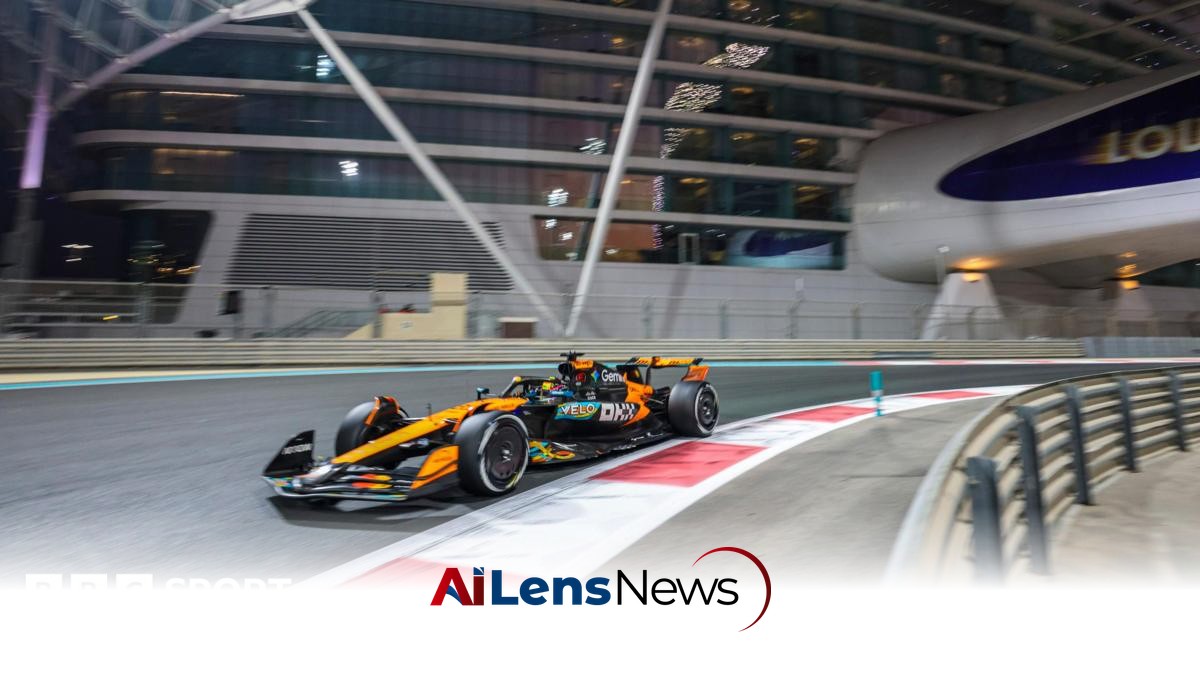


F1 president Stefano Domenicali warns that the 2026 championship could end in Europe if the Middle East conflict disrupts races in Qatar and Abu Dhabi.
New Delhi, India Jul 29, 2026 ALN: F1 president Stefano Domenicali has announced that the 2026 championship may conclude in Europe if the ongoing conflict in the Middle East makes it impossible to hold the season-closing races in Qatar and Abu Dhabi.
Domenicali shared this information during a call with F1 media, stating that a final decision would be made by the "middle of September." He confirmed that the races in Qatar and Abu Dhabi are currently scheduled and sold out, indicating strong interest despite the geopolitical tensions. The F1 calendar, which typically features a diverse lineup of global venues, is facing unprecedented challenges due to the instability in the Middle East.
"For us today, the races in Qatar and Abu Dhabi are confirmed," Domenicali remarked. "By the way, they are already sold out. That is an incredible sign of how much the is bigger than the problem that our world is living through." This comment underscores the resilience of the and its fanbase, as well as the potential economic implications for the host countries, which invest significantly in hosting these high-profile events.
However, he cautioned that if the situation does not improve, a decision will be made before mid-September. "If this will not be possible, the end of the season will be in Europe, because we cannot go to other places," he added. This statement reflects the growing concern among s organizations about the impact of geopolitical conflicts on international events. The F1 calendar has been increasingly reliant on races in the Middle East, which have become key fixtures in the championship due to lucrative sponsorship deals and investments in infrastructure.
While Domenicali did not specify where the final race would be held if Qatar and Abu Dhabi are canceled, the Imola circuit in Italy is considered a strong candidate. Imola has a rich history in motor and has hosted numerous F1 races, making it a familiar and favored option among fans and teams alike. Additionally, the return to Europe for the season finale could provide a sense of normalcy and stability in an otherwise tumultuous season.
F1 has already faced challenges this season, having to cancel races in Bahrain and Saudi Arabia due to the ongoing US-Israel conflict with Iran. This situation has prompted a re-evaluation of the calendar and the viability of certain venues. In response, Malaysia has stepped in to host a race in September, replacing Bahrain. This change highlights the flexibility and adaptability of the F1 organization, as it seeks to maintain a full racing schedule despite external pressures.
Despite these disruptions, Domenicali is determined to ensure that there will be another race after the Las Vegas Grand Prix on November 21. He noted, "There was a possibility of having two races in Las Vegas, but we don't want to ruin, let me put it this way, a jewel that is growing by undervaluing what we are doing there." The Las Vegas Grand Prix is seen as a significant addition to the F1 calendar, tapping into the lucrative North American market and attracting a new audience to the .
He also acknowledged the competition with the NFL during that time of year, stating, "We need to avoid any kind of situation that would put us in front of something that, of course, is still quite big in the US." This recognition of competing interests underscores the strategic planning that goes into scheduling races, as F1 aims to maximize viewership and attendance without conflicting with major ing events.
Looking ahead, the opening race next year is set to return to Bahrain after two years in Australia, due to the timing of the Muslim holy month of Ramadan. Domenicali confirmed that contingency plans are in place should the conflict continue. "So far, the calendar that will be presented, let's say in autumn, will be as a sort of a normal plan," he said. "But in case the situation in the Middle East is not resolved, we have options, different plans. And the trigger for that, of course, is at the end of the year." This proactive approach indicates F1's commitment to maintaining a robust racing schedule while being prepared for unforeseen circumstances.
He emphasized the goal of maintaining a target of 24 races across different countries for the next year. Achieving this goal will require careful consideration of logistics, safety, and political stability in the host nations. The global nature of F1 means that it is often at the mercy of international relations, making it essential for the organization to remain agile and responsive to changing conditions.
Engine Rules and Future Regulations
This year's new engines, featuring a 50-50 split between internal combustion and electrical power, have faced criticism from drivers for limiting their ability to push the limits on the track. While the move towards hybrid technology aligns with global trends in sustainability, it has sparked debate among drivers and teams regarding the balance between performance and environmental responsibility. Domenicali acknowledged this concern but noted that the overall action on the track has been positively received by fans.
He stated, "There is a lot of action on the track. People are loving it. They are focused on what is happening on the track." This feedback suggests that while the technical regulations may be contentious, the excitement and competitiveness of the races remain intact. F1's ability to engage fans is crucial for its long-term success, especially in a landscape where motor faces increasing competition from other entertainment options.
He also mentioned that steps are being taken to reduce the impact of energy recovery on driving in the coming seasons. This initiative reflects a commitment to improving the driving experience while still adhering to evolving environmental standards. Domenicali has encouraged drivers to express their opinions constructively, stating, "We are not here to put tape on the mouth of anyone. The beauty of motor is that everyone can have an opinion, but the opinion is an opinion." This open dialogue is essential for fostering a collaborative environment where innovation can thrive.
Looking to the future, he indicated that there is a plan to simplify regulations while ensuring sustainability and electrification in F1 cars. The aim is to create a package that allows drivers to push their limits while adhering to new environmental standards. This balance is crucial for maintaining the 's relevance in a rapidly changing automotive landscape, where sustainability is becoming a central focus for manufacturers and consumers alike.
Most engine manufacturers are open to the idea of a V8 architecture, but discussions are ongoing regarding the inclusion of turbochargers. The goal remains to retain a significant proportion of electrical power to ensure relevance to road cars. This consideration is particularly important as F1 seeks to align itself with the automotive industry's shift towards electrification and hybrid technology.
In conclusion, as the F1 season progresses, the organization is navigating through geopolitical challenges while striving to maintain the excitement and integrity of the . The ability to adapt to external pressures while continuing to engage fans and stakeholders will be critical for F1's future. The ongoing dialogue regarding technical regulations and the potential for new venues underscores the dynamic nature of the championship, as it seeks to balance tradition with innovation in an ever-evolving global landscape.
To learn more about the latest developments in Formula 1 & Motorsports, stay updated with our exclusive reports and analyses on AiLensNews.

