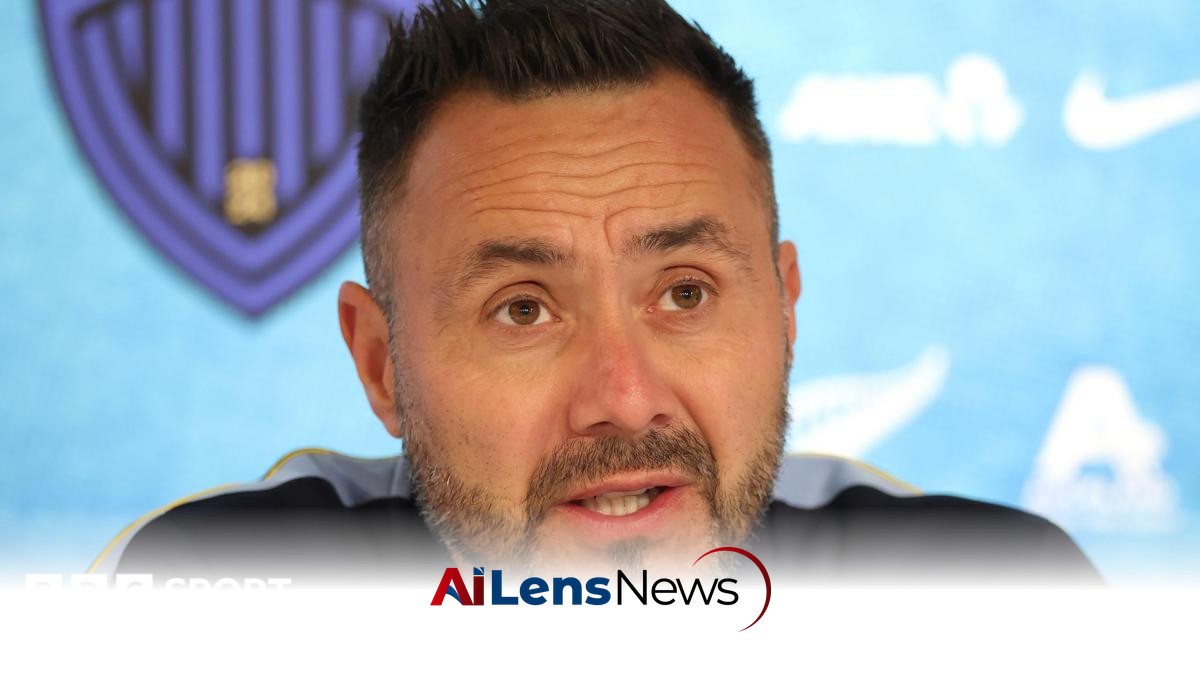


Tottenham manager Roberto de Zerbi has advised players who are not content at the club to consider leaving, emphasizing the importance of motivation.
New Delhi, India Jul 25, 2026 ALN: Tottenham manager Roberto de Zerbi's recent comments regarding player satisfaction have sparked discussions about the dynamics within the club as they navigate the current summer transfer window. The Italian manager, who took charge of Tottenham at the end of March, has emphasized that players who are not content at the club should consider seeking opportunities elsewhere. This statement comes against the backdrop of uncertainty surrounding the future of young midfielder Lucas Bergvall, who has been the subject of transfer interest from Nottingham Forest.
Since his appointment, de Zerbi has been tasked with not only improving the team's performance but also fostering a positive environment for players. His assertion that players should be "proud and happy" to represent Tottenham aligns with his broader vision of creating a motivated squad. In a competitive league like the Premier League, where the stakes are high and the pressure is immense, player morale can significantly influence performance on the pitch. De Zerbi's approach signals a clear message: commitment and enthusiasm are essential for success.
Bergvall, who joined Spurs from Swedish club Djurgarden in 2024, has found playing time limited since de Zerbi took over. His initial appearance under the new manager was during a challenging 1-0 defeat against Sunderland, after which he made only four substitute appearances. Given the recent influx of talent into the squad, including high-profile signings such as Sandro Tonali and Mateus Fernandes, competition for places has intensified, particularly in midfield. Tottenham's rejection of Nottingham Forest's initial £38 million bid for Bergvall suggests that the club values his potential, but the player’s happiness and willingness to fight for his place are crucial considerations.
De Zerbi's comments about Bergvall and other players reflect a broader trend in where clubs are increasingly aware of the importance of mental well-being and job satisfaction for athletes. Many clubs are now prioritizing the psychological aspects of player management, understanding that a happy player is often a more productive one. De Zerbi's direct approach may also serve to clarify expectations within the squad, allowing players to make informed decisions about their futures.
As Tottenham continues to reshape its squad, the manager has indicated that the transfer market is far from closed. The club's recent signings, including defenders Jan Paul van Hecke, Andy Robertson, and Marcos Senesi, illustrate a strategic effort to bolster the team's defensive capabilities. De Zerbi's focus on completing the attacking positions suggests that the club is not only looking to strengthen its squad but also to build a team that can compete at the highest levels. This proactive approach to the transfer market is essential for a club that aspires to return to the top echelons of English .
De Zerbi's comments about Bergvall and the ongoing transfer activities highlight the importance of strategic planning in player management. Clubs must balance immediate needs with long-term goals, ensuring that they have a mix of experienced players and emerging talents. The decision-making process around players like Bergvall will likely involve discussions with the club's ing director Johan Lange and chief executive Vinai Venkatesham, emphasizing the collaborative nature of player management in modern .
In terms of player injuries, Tottenham has faced challenges with key players such as Mohammed Kudus and Dejan Kulusevski. Both players have been sidelined due to injuries, with Kudus recovering from a thigh issue and Kulusevski dealing with a knee problem. De Zerbi's updates on their conditions suggest that the club is taking a cautious approach to their rehabilitation, prioritizing their long-term health over a rushed return to action. This reflects a growing understanding within that player welfare is paramount, and clubs must be diligent in managing injuries to avoid longer-term setbacks.
Meanwhile, Tottenham midfielder Xavi Simons has shared his harrowing experience following a serious anterior cruciate ligament injury. His account highlights the physical and emotional toll that injuries can take on players. Simons described the initial days following his injury as some of the worst of his life, marked by pain and distress. His reflections serve as a reminder of the challenges athletes face beyond the pitch, including mental health struggles and the pressure of recovery timelines. As clubs become more aware of these issues, they are increasingly implementing support systems for players to help them cope with the psychological impact of injuries.
Overall, de Zerbi's statements and the current situation at Tottenham reflect a critical juncture for the club as they prepare for the upcoming season. With ongoing discussions about player satisfaction, transfer strategies, and injury management, Tottenham is navigating a complex landscape that requires careful consideration of both ing and human factors. The club's ability to balance these aspects will be crucial as they aim to build a competitive team capable of challenging for honors in the Premier League and beyond.
In conclusion, the summer transfer window presents both challenges and opportunities for Tottenham Hotspur. As the club looks to enhance its squad and create a positive environment for its players, the interplay between player happiness, competitive spirit, and strategic acquisitions will be pivotal in shaping the team's fortunes in the coming season. De Zerbi's leadership style, focusing on motivation and satisfaction, will undoubtedly play a significant role in this process, as Tottenham seeks to re-establish itself as a force in English .
In light of these developments, the implications for Tottenham extend beyond just the immediate transfer window. The club's approach under de Zerbi could set a precedent for how they manage player relations in the future. With the Premier League becoming increasingly competitive, clubs that fail to prioritize player satisfaction may find themselves at a disadvantage. Tottenham's willingness to engage in open discussions about player happiness could attract potential signings who value a supportive environment.
Furthermore, the emphasis on mental well-being and job satisfaction aligns with a broader movement within s, where the psychological aspects of performance are gaining recognition. As clubs invest in mental health resources and support systems, players may feel more empowered to voice their concerns and pursue opportunities that align with their career aspirations. This shift could lead to a more transparent and collaborative atmosphere within clubs, fostering a culture where players are encouraged to communicate their needs.
As the transfer window progresses, Tottenham's ability to navigate these complexities will be tested. The decisions made regarding players like Bergvall, and the club's overall transfer strategy, will be closely monitored by fans, analysts, and rival clubs alike. The balance between retaining talent and allowing players to seek new opportunities will be crucial in shaping the squad's future dynamics. De Zerbi's leadership and vision will play a pivotal role in steering Tottenham through this transitional period, as they aim to build a squad that not only competes but thrives in the demanding landscape of the Premier League.
In summary, the current situation at Tottenham Hotspur underscores the importance of player satisfaction and mental well-being in modern . De Zerbi's candid remarks reflect a growing awareness of these issues, and the club's proactive approach to transfers and player management will be key as they look to enhance their competitive edge. As Tottenham prepares for the upcoming season, the interplay between player happiness, strategic acquisitions, and a supportive environment will be critical in shaping the club's success on and off the pitch.
To learn more about the latest developments in Football (Soccer), stay updated with our exclusive reports and analyses on AiLensNews.

