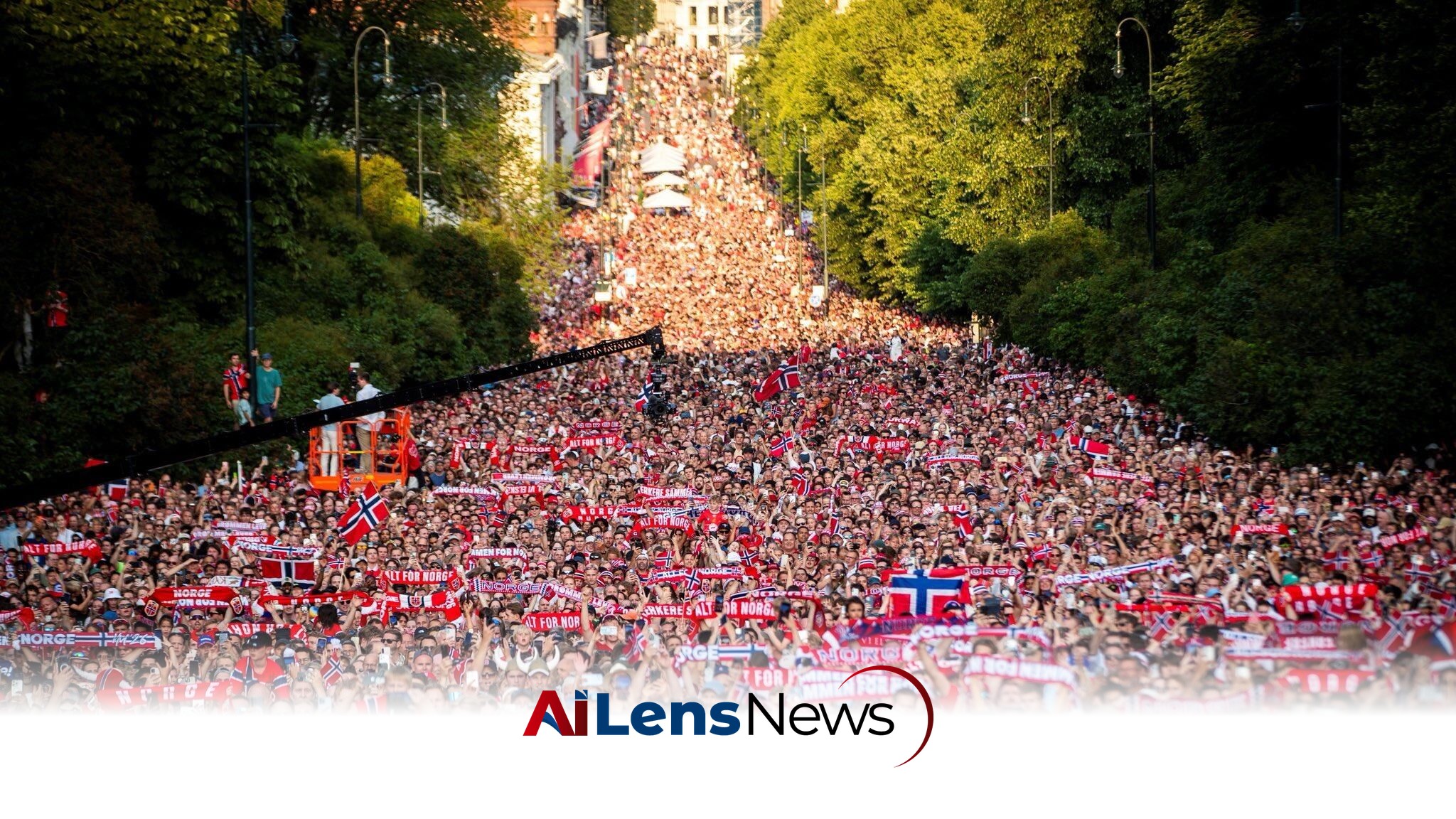


Oslo welcomed home the national football team with a massive celebration after their remarkable World Cup quarter-final run, despite a loss to England.
Oslo, Norway Jul 14, 2026 ALN: Tens of thousands of fans gathered outside Norway's Royal Palace to welcome the national team players who returned home from their historic run to the FIFA World Cup quarter-finals. The atmosphere was electric, filled with chants, cheers, and the unmistakable pride of a nation celebrating a significant achievement in the world of sports.
An estimated 90,000 supporters filled the palace square, giving the team a rousing welcome despite their 2-1 extra-time defeat to England in Miami on Saturday. This loss, while disappointing, marked Norway's best-ever performance at a FIFA World Cup, a milestone that resonates deeply within the nation's football history. Prior to this tournament, Norway had not advanced beyond the group stage in previous World Cups, making this journey particularly poignant for fans and players alike.
Football, or soccer as it is known in some parts of the world, has been an integral part of Norwegian culture for over a century. The national team, known as the "Landslaget," has had its ups and downs, but this latest achievement is a testament to the growth and development of the sport in Norway. The team's journey to the quarter-finals has not only united fans but has also sparked interest among the youth, inspiring a new generation of players. The success of the team is likely to encourage more young athletes to pursue football, potentially leading to a stronger pipeline of talent for the national squad in the years to come.
As the squad appeared on stage, players and fans joined together in the now-iconic "Viking Row" celebration that became a symbol of Norway's memorable tournament. This celebration, characterized by synchronized movements and chants, has its roots in Norway's Viking heritage, reflecting a sense of unity and strength among the players and supporters alike. The Viking Row has transcended mere celebration; it has become a cultural phenomenon that embodies the spirit of teamwork and resilience. This connection to Norway's historical identity adds a layer of depth to the celebration, allowing fans to feel a part of something larger than just a sporting event.
According to Norwegian broadcaster NRK, shaking hands with the king and rowing with the rest of the royal family and what is said to have been around 88,000 attendees, was followed by an almost two-hour-long bus parade down Karl Johans gate. This street, which runs through the heart of Oslo, has historically been the site of significant national celebrations, making it a fitting location for the team’s return. The bus parade allowed fans to express their joy and gratitude for the players' efforts, creating a festive atmosphere throughout the city. The sight of the bus winding through the streets, adorned with flags and flanked by jubilant supporters, was a vivid representation of national pride.
The next stop was another round of rowing at Radhusplassen, before the bus continued into the late-night hours of central Oslo. Radhusplassen, the square in front of the Oslo City Hall, is a prominent location for public gatherings and celebrations, making it a symbolic site for the team's triumph. The players' presence in such iconic locations underscores their importance to the nation and the pride they have instilled in their supporters. This visibility helps to solidify the players' status as national heroes, further intertwining their identities with the cultural fabric of Norway.
"I don't think anyone could have imagined this. The support we've received has been beyond all expectations, both in the US and here at home in Norway. It's been absolutely incredible to see," said Martin Odegaard, one of the standout players of the tournament. His comments reflect the overwhelming sense of pride felt by the team and the nation, highlighting the emotional connection between the players and their fans. This connection is crucial in fostering a supportive environment for the team, as it can motivate the players to strive for excellence on the pitch.
Norway coach Stale Solbakken expressed his astonishment at the scale of the celebration, stating, "the King prepared us for what was coming. We were a little surprised too, that it was so huge. Otherwise, there were some healthy football discussions." His remarks indicate that the team not only received royal acknowledgment but also engaged in meaningful conversations about the future of football in Norway, emphasizing the importance of continued development in the sport. Such discussions could lead to strategic planning and investment in areas that would bolster the national team’s competitiveness in future tournaments.
However, the team's top scorer Erling Haaland and Sander Berge were unable to attend the public celebration as they had another flight for a vacation. Their absence, while disappointing for fans, highlights the demanding nature of professional sports, where players often have tight schedules and commitments that can take precedence over celebrations. "They both stopped by and talked to the king, but we were four or five hours late. They had to move on to catch the plane, but they have been inside the Palace and had their conversation with King Harald. They have followed the plan all the way until they had to leave," Solbakken was quoted by NRK. This indicates the level of commitment that players maintain, balancing their professional responsibilities with personal time. The fact that they made an effort to meet with the king demonstrates their respect for the occasion and the significance of their achievements.
The significance of Norway's World Cup journey cannot be overstated. It has not only brought joy to the nation's fans but has also instigated discussions about the future of Norwegian football. The success on the world stage is likely to lead to increased investment in youth programs, training facilities, and grassroots initiatives aimed at nurturing young talent. The hope is that this achievement will serve as a catalyst for sustained success in future international competitions. This could mean a shift in how football is approached at all levels in Norway, with a focus on long-term development rather than short-term results.
Moreover, the global visibility gained from the World Cup performance may attract sponsorships and partnerships that can provide additional resources for the national team and its development programs. As football continues to evolve, the lessons learned from this tournament can inform strategies to enhance Norway's competitive edge in international football. The ability to attract investment and sponsorships is crucial for the growth of any sports program, and Norway's recent success may provide a unique opportunity to build a more robust football infrastructure.
In conclusion, Norway's historic journey in the FIFA World Cup quarter-finals has united the nation in celebration and pride. The overwhelming support from fans and the royal family underscores the importance of football in Norwegian society. As the team looks ahead to future challenges, there is a renewed sense of optimism and determination among players, coaches, and supporters alike. This moment in history will undoubtedly be remembered as a pivotal point for Norwegian football, one that may inspire future generations to reach even greater heights on the international stage. The legacy of this tournament may not just be measured in victories but in the lasting impact it has on the sport within Norway, fostering a culture of excellence and ambition.
To learn more about the latest developments in Basketball, stay updated with our exclusive reports and analyses on AiLensNews.

