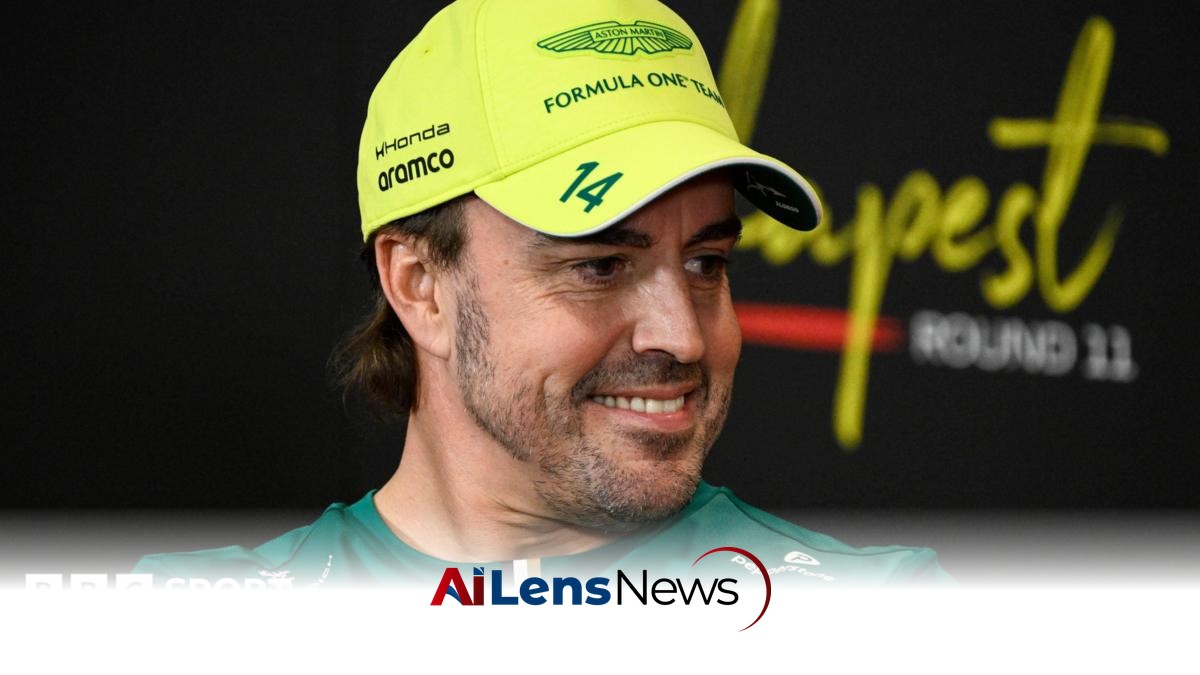


Fernando Alonso expresses optimism regarding Aston Martin's significant car upgrade for the Hungarian Grand Prix, while urging caution in expectations.
New Delhi, India Jul 23, 2026 ALN: Fernando Alonso says he is "optimistic" about the major upgrade Aston Martin are introducing at the Hungarian Grand Prix, but has cautioned against expecting too much.
Aston Martin are set to unveil a heavily revised car, which features less weight, including a new chassis, and a significant aerodynamic change. This upgrade marks a pivotal moment for the team, as it is their first major enhancement of the season after beginning the year with a car and engine that have struggled to compete with the front-runners in 1.
The 2023 season has been a challenging one for Aston Martin, as they have found themselves trailing behind their competitors. The team’s performance in the early races was particularly disappointing, and they have been working diligently to rectify their shortcomings. Alonso, a seasoned veteran in the , expressed his cautious optimism regarding the upcoming race in Budapest, stating, "Budapest is a friendly circuit for us. Power is not the most important here, but we update the car and not the engine yet." This reflects the unique characteristics of the Hungarian Grand Prix, where the circuit's layout emphasizes handling and cornering rather than sheer power.
Alonso's focus for the weekend is not solely on potential positions or lap times, but rather on understanding the car's performance and direction. He noted, "I am more into the weekend, understanding the direction of the car, if we are in a good path and we can unlock finally the performance." This approach highlights the importance of data analysis and feedback in 1, where teams constantly evaluate their vehicles' performance to make informed decisions about setup and strategy.
Aston Martin’s decision to introduce all their new parts at once, rather than employing a more traditional strategy of incremental upgrades, is a significant factor in their current situation. This approach was taken as the team aimed to maximize the efficiency of their budget within the constraints of the spending cap imposed by the FIA. However, this strategy has also meant that Aston Martin has fallen further behind the competition, particularly in the last two races at Silverstone and Spa, where they struggled due to the underwhelming performance of their Honda engine.
During the recent Spanish Grand Prix, which is known for its technical and demanding nature, Aston Martin found themselves four seconds off the pole position and more than three seconds behind the leading teams, including the Racing Bulls and Audi. Alonso's reluctance to make predictions about the team's performance in Hungary is understandable, given the inconsistent gaps they have experienced to the midfield in their last five races. He remarked, "I am not thinking on numbers or positions. In the last five races we have very different gaps to the midfield." This inconsistency underscores the unpredictability of 1, where various factors, including track conditions and car setups, can greatly influence performance.
Other teams have opted for a more conventional upgrade strategy, introducing smaller improvements over several races, which allows them to gradually close the performance gap. Alonso pointed out this contrast, saying, "The other teams opted for a more conventional upgrade path, bringing 0.1-0.2secs every few races and then you end up with a second in race 12." This highlights the differing philosophies teams adopt when it comes to car development and the implications of those choices on their competitiveness throughout the season.
As for the Honda engine, it remains unchanged for the Hungarian Grand Prix, with the Japanese manufacturer planning to introduce a development engine at the Dutch Grand Prix following the four-week summer break. Aston Martin's Chief Technical Officer, Adrian Newey, acknowledged the team's challenging start to the season, stating, "It became quite obvious very quickly that we were not going to be competitive in the early races." He explained that the decision to halt developments during the first half of the season was a painful yet necessary choice to allow the team to regroup and focus on long-term improvements.
Newey's comments reflect a broader strategy within the team to prioritize thorough research and development for future seasons, particularly with the 2026 car on the horizon. He expressed a sense of optimism about the future, emphasizing the need to take a step back and reassess their approach, stating, "So, we took the painful but I believe correct decision to not do any developments through the first half of the year, knowing that that would actually mean, as everybody else develops, of course, the gap to the front would actually get bigger." This perspective illustrates the complexities of 1, where teams must balance immediate performance with long-term viability.
Alonso needs 'enjoyment' and 'adrenaline' to continue
As the 2023 season progresses, Alonso, who is set to celebrate his 45th birthday on July 29, finds himself at a crossroads regarding his future in 1. With his contract expiring at the end of the season, Alonso is evaluating whether to continue racing in the . He has made it clear that he is committed to Aston Martin for the long term, regardless of his decision about his racing future, stating, "I do have a contract, so I'm not moving." However, he has also indicated that his choice to remain in F1 will not be solely influenced by the success of the upcoming upgrades.
One of the critical factors for Alonso is whether the current generation of F1 engines provides him with the level of excitement and adrenaline he seeks as a driver. He has expressed concerns about the high levels of energy management required with the latest engine technology, particularly on high-speed circuits like Spa and Silverstone, where the demands of the car can detract from the driving experience. In contrast, the Hungarian circuit is expected to allow for a more engaging driving experience, as it is slower and less reliant on power management.
Alonso's reflections on the challenges of the current car and engine technology highlight the importance of driver satisfaction in the . He stated, "I have a pretty clear picture of the team that we will fix all the problems. They take time but I have no doubts Adrian will provide the best car on the grid sooner or later. I would like to see the first steps with this package." This optimism is tempered by his need for enjoyment in his racing career, which he emphasized by stating, "I feel fresh, motivated and fast but I need to enjoy what I do." His candid remarks about the lack of enjoyment in recent races underscore the emotional and psychological aspects of competing at the highest level of motor.
Alonso's candid assessment of his experiences in recent races serves as a reminder of the human element in 1, where drivers are not only athletes but also individuals with personal motivations and desires. As he navigates this critical juncture in his career, Alonso's focus on enjoyment and adrenaline may resonate with fans and fellow competitors alike, highlighting the passion that drives individuals in the world of motor. As the Hungarian Grand Prix approaches, all eyes will be on Alonso and Aston Martin to see if their ambitious upgrade will yield the results they hope for, and if it will reignite the spark of excitement that has defined Alonso's storied career.
To learn more about the latest developments in Formula 1 & Motorsports, stay updated with our exclusive reports and analyses on AiLensNews.

