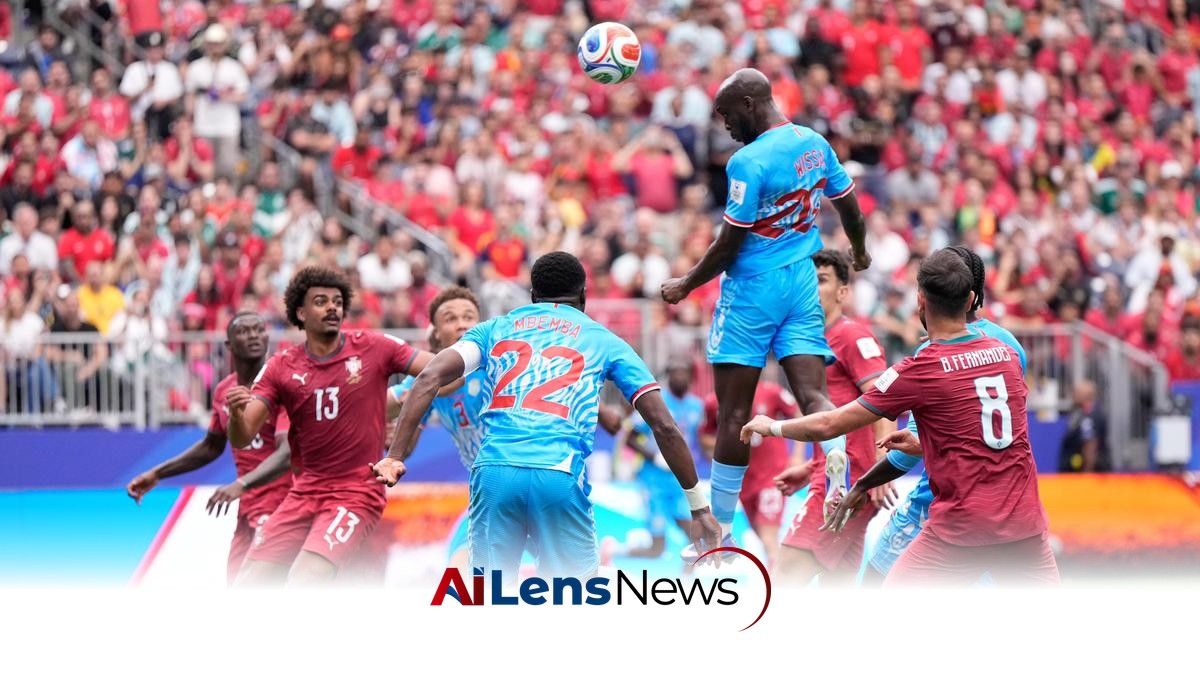


DR Congo secures its first-ever World Cup point with a 1-1 draw against Portugal in Houston.
Washington DC, United States Jul 2, 2026 ALN: The FIFA World Cup 2026 has already proven to be a platform for remarkable moments, and one such instance occurred during the match between Portugal and the Democratic Republic of Congo (DR Congo). The game, held in Houston on June 17, 2026, ended in a 1-1 draw, a result that marked a significant milestone for DR Congo as they scored their first-ever goal in World Cup history. This match not only highlighted the evolving narrative of the tournament but also underscored the changing dynamics of international football, where teams from traditionally less dominant footballing nations are beginning to make their mark.
Yoane Wissa, a forward known for his aerial ability and tenacity, scored the historic goal for DR Congo, heading the ball past the Portuguese goalkeeper. This moment not only brought joy to the Congolese team and their supporters but also highlighted the progress of African teams in the global football arena. The draw also marked DR Congo's first point in a World Cup group stage, a testament to their growing competitiveness on the world stage. The achievement is particularly significant given the historical context of African nations in World Cups, where they have often struggled to advance past the group stages. DR Congo’s performance can be seen as a beacon of hope, signaling a shift in the fortunes of African football.
For Portugal, the match was an opportunity to showcase their depth and talent, featuring a squad that many analysts consider one of the strongest in their footballing history. Cristiano Ronaldo, at the age of 41, made his sixth World Cup appearance, tying the record for the most World Cup participations held by Lionel Messi of Argentina. Ronaldo's longevity at the top level of football is a testament to his exceptional physical conditioning and skill. However, despite his legendary status and extensive experience, Ronaldo's influence on the game was limited, as he struggled to find the rhythm and impact expected from a player of his caliber. This raises questions about the balance between experience and youth in high-stakes matches, especially as teams evolve and adapt to new playing styles.
Portugal's roster is filled with elite players, including Bruno Fernandes, a midfield maestro known for his vision and passing ability; Bernardo Silva, who brings creativity and pace; and young talents like Vitinha and Joao Neves, who represent the bright future of Portuguese football. Rafael Leao, with his explosive speed and dribbling, adds another layer of threat to their attack, while Ruben Dias provides solidity in defense. However, despite their star-studded lineup, Portugal found it challenging to break down a well-organized DR Congo defense. The tactical setup of DR Congo, which emphasized discipline and resilience, proved effective in stifling the Portuguese attack, showcasing the importance of strategic planning in tournament football.
The match was a showcase of the competitive spirit that defines the World Cup, with both teams creating several opportunities to score. Portugal dominated possession but struggled to convert their chances into goals. This inability to capitalize on possession is a recurring theme in football, often leading to frustration among teams that fail to convert dominance into tangible results. DR Congo, on the other hand, displayed resilience and tactical discipline, which allowed them to frustrate the Portuguese attack and ultimately earn a valuable point. The tactical battle between the two teams serves as a reminder of the complexities involved in modern football, where mere possession does not guarantee success.
This encounter also serves as a reminder of the unpredictability of football, particularly in a tournament setting where underdog teams can rise to the occasion. DR Congo's performance against a footballing powerhouse like Portugal underscores the evolution of the game, where teams from traditionally underrepresented nations are beginning to assert themselves on the global stage. The African continent has produced a wealth of talent in recent years, and DR Congo's achievement could inspire future generations of players. The success of such teams can lead to increased investment in football infrastructure and training programs within their countries, fostering a new generation of talent.
As the tournament progresses, both teams will be looking to build on this result. Portugal, with their wealth of experience, will aim to leverage their talent and tactical nous to advance further in the competition. The expectation for the Portuguese team is high, given their rich footballing history and the potential within their squad. They will need to find a way to convert their possession into goals in upcoming matches to ensure they progress to the knockout stages. This pressure can often lead to intense scrutiny from fans and media alike, as the weight of expectations can influence player performances.
For DR Congo, this draw represents a significant boost in confidence as they continue their World Cup journey. The team will look to capitalize on this momentum, using the experience gained from facing a top-tier opponent like Portugal to improve their performance in future matches. Their ability to hold a team of Portugal's caliber to a draw could galvanize the squad, instilling a belief that they can compete with the best in the world. This newfound confidence can be crucial in a tournament setting, where psychological resilience often plays a key role in a team's success.
The implications of this match extend beyond just the points earned. It serves as a pivotal moment in DR Congo's footballing history, symbolizing their growth and potential. The achievement could lead to increased support and investment in football within the country, fostering grassroots development and encouraging young players to pursue their dreams of playing at the highest level. Such developments can have a long-term impact on the footballing landscape of the region, as success on the international stage can inspire a generation of players and fans alike.
In conclusion, the 1-1 draw between Portugal and DR Congo at the FIFA World Cup 2026 is a reflection of the unpredictable nature of football and the growing competitiveness of international teams. As both teams prepare for their next matches, the lessons learned and the experiences gained from this encounter will undoubtedly play a crucial role in shaping their respective campaigns. The tournament continues to be a stage where history is made, and the world watches as teams strive for glory on the grandest stage of them all. This match not only contributed to the narrative of the 2026 World Cup but also serves as a reminder of the ever-evolving nature of football, where every match can redefine the expectations and aspirations of nations.
To learn more about the latest developments in Football (Soccer), stay updated with our exclusive reports and analyses on AiLensNews.

